Monday, 11 April 2011

Czarna Madonna z Montserrat/ Montserrat's Black Madonna

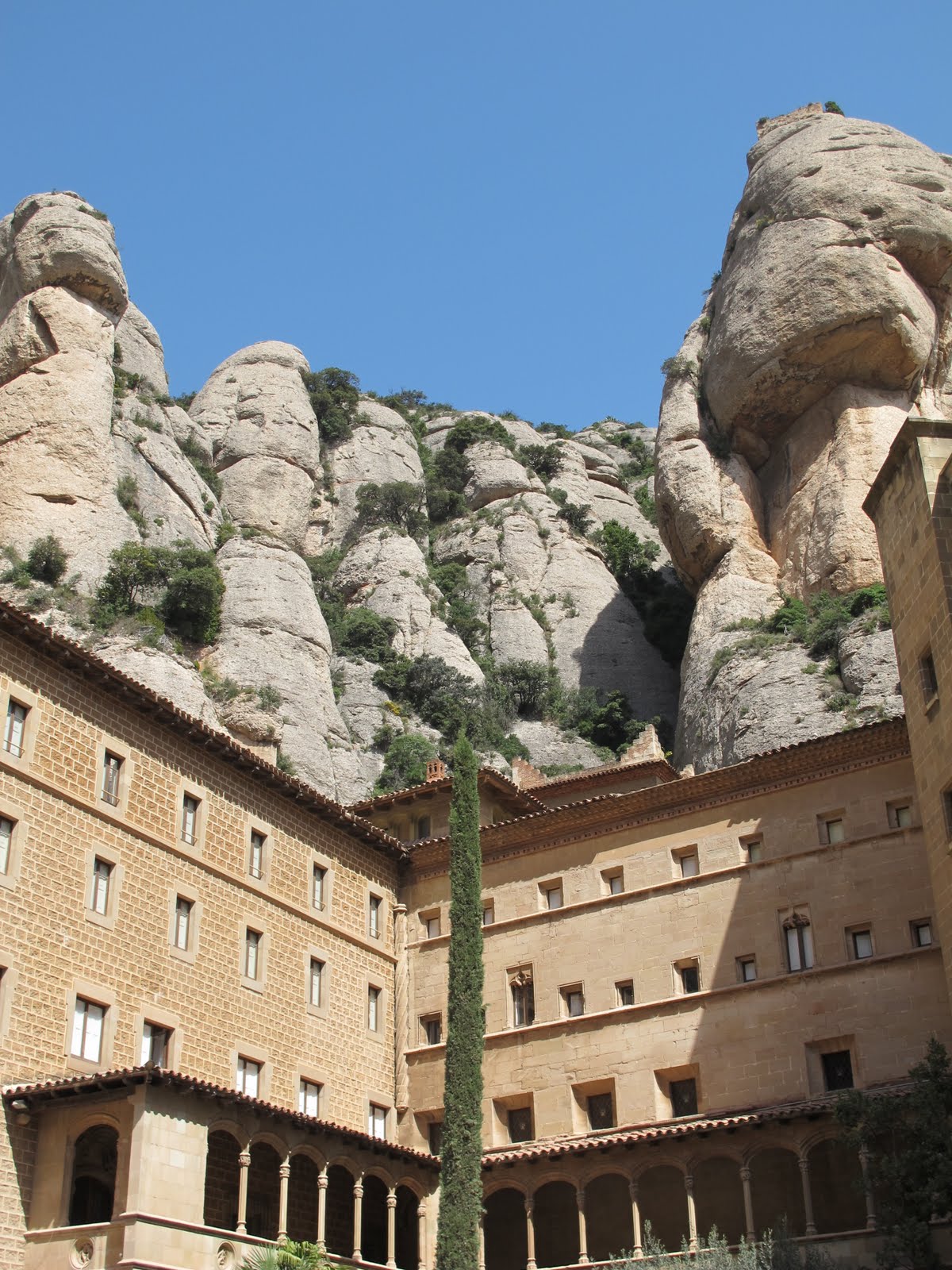
Montserrat to kolejne miejsce na naszej mapie podróży po Katalonii. Nie tylko zresztą naszej, bowiem ten benedyktyński klasztor, położony wśród dziwnych, osobliwych skał (które inspirowały Gaudiego), przyciąga tłumy. Jest to najważniejszy ośrodek religijny w Katalonii, choć turyści religijni stanowią zaledwie niewielki procent zwiedzających to niezwykle miejsce. Jednych przyciąga Czarna Madonna, innych piękne widoki i szlaki turystyczne parku naturalnego.


My chcieliśmy zobaczyć (czy raczej posłuchać) sławnego chłopięcego chóru gregoriańskiego „Escolania”, który o 12 w niedzielę wykonuje Ave Maria ( w dni powszednie chyba o 13 śpiewa hymn Virolai, ale lepiej zawsze sprawdzić na ich stronie dokładne godziny). Przyjechaliśmy na ostatnią chwilę, bowiem musieliśmy zostawić samochód na dolnym parkingu (ten przy samym klasztorze był pełen) i podjechaliśmy kolejką. W bazylice takie tłumy, że chór owszem słyszeliśmy, ale nic nie widzieliśmy i z oddychaniem też nie było łatwo. Po 10 min wyszliśmy, a potem dzięki YouTube wysłuchałam na spokojnie. A w samej bazylice zachwyciły mnie przepiękne lampy.


Czarnej Madonna, zwana La Moreneta, to drewniana figurka, przedstawiająca matkę Boską z Dzięciątkiem. Legenda głosi, że została wyrzeźbiona przez samego świętego Łukasza, a przywieziona do Katalonii przez świętego Piotra (nowoczesne badania udowodniły jednak, że jest to tylko legenda, bowiem rzeźba powstała wiele później). W VIII wieku ukryto ją przed Maurami, którzy pobili chrześcijan i podbili Półwysep Iberyjski. Figurkę Czarnej Madonny odnaleziono pod koniec IX wieku w jednej z grot masywu Montserrat, z czym wiąże się kolejny cud, mianowicie figurki nie można było ruszyć. Miejscowa ludność wybudowała kaplicę w Montserrat, a w X wieku benedyktyni wznieśli tu klasztor. Zakonnicy rozgłosili cuda, które się działy za sprawą figurki Matki Boskiej, dzięki czemu do Montserrat przybywały tłumy pielgrzymów. Dzisiaj też nie brakuje wiernych, którzy w jakiejś intencji zapalają świeczkę. W 1811 klasztor został zniszczony przez wojska napoleońskie, zabijając wielu zakonników .Za panowania Franco klasztor stał się ośrodkiem opozycji, symbolem i ostoją nacjonalizmu katalońskiego.



W 1881 Madonna z Montserrat została oficjalnie patronką Katalonii.
Montserrat to oprócz klasztoru i pustelni także park górski, tak więc jeśli planuje się zwiedzanie należy przyjechać przygotowanym: wygodne buty to podstawa, choć zdarzają się panienki w szpileczkach tak jak u nas na szlaku na Morskie Oko. W Montserracie możemy także przejść się szlakiem do Santa Cova (Święta Jaskinia), gdzie znaleziona najprawdopodobniej została La Moreneta. Bardziej leniwi podjadą kolejką, ale i tak czeka ich 20 minutowy spacer. Podjechać można także na inny punkt widokowy, skąd można podziwiać niezwykle kształty góry Montserrat.
Zresztą, co tu dużo pisać, zdjęcia mówią same za siebie.


Montserrat is another spot on our touristic map of Catalonia that we have visited. Not only us, as this Benedictine monastery, situated among weird, undulating rocks (that inspired Gaudi), attracts crowds. It is the most important religious center in Catalonia, although the religious tourists are just a small percentage of visitors who come to this extraordinary place. Of course, some are pilgrims visits Black Madonna, however atheists also enjoy it for its beautiful views and hiking trails in the National Park.


We wanted to see (or rather listen to) the famous boy's choir, Escolania, performing Gregorian chants who at 12 on Sunday sing Ave Maria (on weekdays, at 1pm they sing Virolai, but it is always better to check on their website the exact schedule). We arrived at the last minute, because we had to park the car at the lower parking lot (the one at the monastery was full) and get there by the Montserrat funicular railways. The Basilica was so packed that we could only listen to the choir, not being able to see a thing and we had some troubles breathing with so many people around. After 10 minutes we decided to leave and then at home, thanks to youtube, listen calmly to beautiful interpretation of hymns. In Basilica I was fascinated by beautifully decorated lamps.


Black Madonna, known also as La Moreneta, is a wooden statue, dating from the twelfth century, showing : The Black Madonna and Christ Child. Legend has it that it was carved by St. Luke himself, and brought to Catalonia by St. Peter's (modern investigations showed, however, that this is only a legend, because the sculpture was created much later). In the eighth century, it was hidden from the Moors, who conquered the Iberian Peninsula.The Black Madonna statue was found at the end of the ninth century in one of the caves of the massif of Montserrat, and here comes the other legend, nobody could move the figure. Local people built a chapel in Montserrat, which in the tenth century transformed into the Benedictine monastery. Soon afterwards the Madonna statue earned a fame as there were numerous miracles happening so crowds and crowds of pilgrims were visiting Montserrat. Today there are also many visitors who light a candle with some intention. In 1811 the monastery was destroyed by Napoleon's army, many monks were killed. During Franco dictatorship, monastery wase a center of opposition, the symbol and stronghold of Catalan nationalism.


In 1881, Madonna of Montserrat was officially named the patroness of Catalonia.

Montserrat is not limited just to the monastery, there are some hermitages, and a big natural park, so if you plan to visit it, you must come prepared: comfortable shoes are essential (still there were some are girls in high heels). In Montserrat you can also walk to the Santa Cova (Holy Cave), where La Moreneta was probably found. More lazy tourist can reach it by funicular, but still have to walk 20 min (the views are totally worth this small effort). You can take funicular to another lookout point where you can admire strange shapes of Montserrat rocks.
A picture is worth a thousand words, instead of writing more about Montserrat, just verify it yourself.

Tuesday, 5 April 2011

Kosmiczny świat/ Magical world

Już od kilku tygodni Nuno chciał się wybrać do Cosmocaixa, niezwykłego muzeum, które w 2006 zdobyło nagrodę Europejskiego Muzeum Roku. Najpierw niepogoda, potem dla odmiany pogoda, którą wykorzystaliśmy na wycieczkę do Figueras, potem wizyta rodziny S. zmusiła do opóźnienia tej wizyty. W końcu jednak mieliśmy sobotnie popołudnie wolniejsze, a wietrzna pogoda nie zachęcała na plażowania, więc wybór padł na to połączenie centrum nauki i muzeum (coś jak nasze muzeum Kopernika otwarte niedawno, Cosmocaixa działa od 2005).

Za kilka euro (wejście tylko za 3 euro, my płaciliśmy połowę, ponieważ płaciliśmy kartą Caixa, banku który patronuje muzeum w ramach swojej akcji socjalnej) mamy dostęp do tysięcy rożnych eksponatów wyjaśniających zasady fizyki, pokazujących , jak zmieniał się nasz wszechświat, mamy wstęp na wystawy czasowe, w naszym przypadku o recyklingu i dinozaurach. Stanowiska doświadczalne, prezentacje, które zachęcają do dotykania, naciskania, uczestniczenia aktywnego, a nie tylko podziwiania z bezpiecznej odległości muzealnych eksponatów. Już od wejścia zagłębiamy się w inny świat, schodzimy klatką, która wije się wokół zasuszonego drzewa.


W tym muzeum każdy może poczuć się jak dziecko. Ja przypominałam sobie nieliczne doświadczenia na lekcji chemii, działania pryzmatu, Nuno bawił się eksponatami, wspólnie przenieśliśmy się do innej strefy klimatycznej spacerując w zatopionym lesie tropikalnym.
Innowacyjne podejście do nauki, poprzez zabawę, nowoczesny sprzęt i różnorodność tematyki, to wszystko znajdziemy na 5 piętrach jednego z najbardziej interesujących muzeów nauki. Wystawa obejmuje między innymi Amazoński Las, Ścianę Geologiczną, Planetarium i wiele innych.


Muzeum to jest szczególnie ciekawym miejscem dla dzieci, prowadzi akcje “dotknij”, wiele warsztatów oraz prezentacji wyjaśniających tajemnice naszego świata i kosmosu. Z tego powodu większość odwiedzających stanowiły rodziny z dziećmi, my zaś zawyżaliśmy średnią wiekową :) Nauka poprzez zabawę to motto przewodnie tego najfajniejszego chyba muzeum w Barcelonie.


For several weeks we were planning to go to CosmoCaixa where Nuno really wanted to go as this is the type of museums he really enjoys. It was opened in 2005, and in 2006 was awarded the European Museum of the Year. We were postponing this visit, first due to good weather and choosing to go to Figueres instead, then due to S. family visit, but this Saturday finally we chose to discover this science center/ museum.

The Caixa bank is co-financing the museum as part of its social program of cultural events, so the entrance is fee is really low, 3 euros and 50% discount if you pay with Caixa card- which Nuno happens to have. After paying few euros you enter a totally different world of science, right after the entrance, you walk down the staircase, in the middle of which there is dried Amazonian tree sustained by some wires- walking down the stairs you submerge into a magical place. You have access to thousands of different exhibits explaining principles of physics, showing how our universe has changed. There are temporary exhibitions, in our case : one about recycling and other about dinosaurs.


The main principle of this place is to get yourself lost in experimenting, you basically go from one stand to another, push buttons and observe. You don´t observe from a safe distance like in a “normal” museum, all the contrary, you touch, you pull, you jump, you participate. In this museum, everybody can feel like a child, a small child that is interested in everything, just curious about the world, wanting to know how and why things work the way they work. I remembered with nostalgia a few experiments that our chemistry teacher showed us to explain certain mechanisms.


Nuno was playing with exhibits, with a wide smile on his face and showing me things he found interesting. We also moved to a different climate zones when we were walking through a flooded tropical forest that recreates Amazonian microclimate.
Innovative approach to learning through fun, modern equipment and the diversity of the subjects, 5 floors full of exhibits, it all convert CosmoCaixa into one of the most interesting science museums. The regular visit includes the Amazon Forest, Geological wall, the Planetarium and many others temporary exhibitions and conferences.


CosmoCaixa is an interesting place, especially for children, there are many workshops and presentations to revel fascinating mysteries of our world and cosmos. For this reason, most of the visitors are families with children, we were above the average age. Learning through fun is the motto of what I thing is the coolest museum in Barcelona.


Sunday, 3 April 2011

Korrida zakupowa/ Shopping corrida

Przypadkiem znaleźliśmy się na Pl. Espanya w dniu otwarcia nowego centrum handlowego. Czekaliśmy na Nuno oglądając pokaz magicznych fontann, a potem musieliśmy wypełnić sobie jakoś czas zanim pojechaliśmy na lotnisko odebrać Magdę.

Istne tłumy waliły wszystkimi dostępnymi wejściami do Arenas de Barcelona, policja musiała kierować ruchem nie tylko samochodów, ale także przechodniów. W środku kolejki nawet do ruchomych schodów, jedne się zepsuły (awaria w dzień inauguracji to chyba źle świadczy o jakości wykonania), więc stworzył się gigantyczny korek. Większość ludzi jednak przyszła nie po to, żeby oddać się konsumpcyjnej żądzy kupowania, ale aby zobaczyć efekt przebudowy dawnej areny korridy zamienionej w centrum handlowe. Kiedyś arena walki byków, wzniesiona w 1900 roku, w stylu mauretańskim, obecnie centrum handlowe z 126 sklepami, restauracjami, 12 salami kinowymi, siłownią/ Spa. Arenas de Barcelona to także niezły punkt widokowy- 300 metrowy pasaż wokół krawędzi dachu pozwalający podziwiać niezwykłą panoramę miasta.
Projekt zaadaptowania areny korridy w galerię handlową ciągnął się latami, miał się skończyć już dawno, ale budowa została wstrzymana na kilka miesięcy na skutek wzajemnych oskarżeń kilku firm zaangażowanych w inwestycję. Widać, że gonił ich termin, bowiem inauguracja nie była do kończ gotowa- siłownia nie gotowa, wstawiono na szybko kilka rowerków i orbitreków, na klatce schodowej można się było potknąć o druty i pozostałości po budowie, w windzie lustra zaklejone kartonem. Na dodatek trafiliśmy na protest grupy antykapitalistów bojkotujących otwarcie centrum.


Oficjalna strona centrum Arenas de Barcelona tutaj. Pod wersją angielską spot promocyjny. A ja zapraszam do wejścia na taras widokowy.


By pure coincidence we found ourselves at Pl. Espanya the same day the big inauguration of a shopping centre took place. We were waiting for Nuno, watching the magic fountains show, and afterwards we needed to fill the time before picking Magda from the airport. There were so many people, all trying chaotically to make their way to enter Arenas de Barcelona, police had to direct not only car traffic but also pedestrians. Inside, it was so crowded that you could barely move, there were queues to escalators, one of them even broke down o the first day (it has to be a bad sign and bad publicity for the company who installed it) so we witnessed a massive traffic jam created by shoppers. Most of the people, however, didn’t come there to spend money to satisfy their consumerist desires but to see the effect of restoration of the former bullfighting arena transformed into a shopping center. Once a bullring, built in 1900, in the Moorish style, now is a modern shopping mall with 126 shops, restaurants, 12 cinema rooms, gym / spa. Arenas de Barcelona is also a panoramic viewpoint –roof with 300 meter long passage allows you to admire a spectacular view of the city. The project to adapt the bullfights ring into a shopping mall went on for years, it was supposed to be finished a long time ago, but construction was paralyzed for several months because of accusations of several companies involved in investment against each other. You can see that they were behind the schedule and the place even if inaugurated, wasn’t finished- gym was empty, they put only few bicycles and treadmills, the staircase was a dangerous place where you could stumble over some wires or other objects typical of a construction site, in the elevator the mirrors were covered with cartoon (maybe mirrors hadn’t even been installed yet). In addition, there was a group of anti-capitalist protesting against opening of the commercial center.


Official website of the shopping mall of Arenas de Barcelona can be found here. You can also check the ad. And personally I invite you to check the panoramic view.

Saturday, 2 April 2011

Problem z kawą/ Problem with coffee

Moja mama nie funkcjonuje normalnie bez kofeiny, ja na co dzień ogranicza się do zielonej herbaty, a kawę piję jedynie na mieście. Mama nie mogła uwierzyć, że nie mamy żadnego źródła kofeiny w mieszkaniu, więc po śniadaniu musieliśmy obowiązkowy zrobić przystanek na kawę.
Zamówić kawę w Hiszpanii wbrew pozorom nie jest tak łatwo (na studiach na iberystyce nie uczą, że nie wystarczy zamówić po prostu un café czy café co leche). Nas konieczność zmusiła do nauczenia się podstawowych rodzajów kawy, a Magdę zdziwiło, że nie może tu po prostu zamówić macchiato, albo że nie wszędzie serwują cappuccino.

1. Un café solo – to odpowiednik naszego espresso, bardzo mocne, bez mleka, serwowane w małej filiżaneczce.
2. Un cortado – to kawa z małą ilością mleka.
3. Un café con leche- większa filiżanka kawy z odrobiną kawy i dużą ilością ciepłego mleka.
4. El café americano- ma więcej kawy niż café solo, ale nie we wszystkich częściach Hiszpanii można zamówić bez zadziwienia kelnera.
5. Podczas upałów można zamówić un granizado de café‚ o un café con hielo- pierwsze jest kawą podaną z rozdrobnionym lodem, a drugie kawą, do której dodane są kostki lodu w całości.
6. Un carajillo to kawa z koniakiem, typowy rodzaj kawy w Katalunii. Podobno z tego powodu odbywają się także kontrole policyjne w godzinach porannych.

Oprócz tych podstawowych wersji, można złożyć także bardziej spersonalizowane zamówienie. Z większą ilością wody, mlekiem ciepłym lub zimnym, nawet bezkofeinową.

W krajach latynoskich kawa stanowi ważną część kultury, w Portugalii prawie nie przyjęły się sieciówki, w Hiszpanii w Starbucksie przeważają turyści, we Włoszech to samo. Trzeba więc opanować kod kawowy, żeby się zintegrować i nie być tylko guiri (czyli pogardliwe określenie na turystę).


To say that my mum can’t imagine life without coffee is not enough, she just can’t function without it. Personally I just drink green tea on a daily basis, ordering coffee rarely and always in a café. After recovering from a big surprise that was discovering that we don’t have any
source of caffeine in the apartment, my mum decided that we had to stop for a coffee after breakfast.

Ordering coffee in Spain is not as easy as it can see. At my Iberian studies they didn’t teach that it isn’t enough to simply order un café). I was forced to learn the basic types of coffee served in Spain, and Magda was surprised that she couldn’t just order macchiato or that not everywhere cappuccino was served.

1. Un café solo - is the equivalent of espresso, very strong, without milk, served in a small cup.
2. Un cortado - a coffee with with a small amount of warm milk.
3. Un café con leche-a bigger cup of coffee with a string coffee (very little of it) and warm milk
4. El café americano- it has more coffee than café solo, but in most parts of Spain waiters wouldn’t know this type of coffee.
5. During the summer you can order un granizado de café‚ o un café con hielo-
the first is the espresso served with crushed ice and the second is espresso served with ice cubes.
6. Un carajillo is coffee with cognac, commonly drunk in Cataluña.

In addition to the coffee versions mentioned above, you can also make a more personalized order: stronger/ more water/milk, milk hot/cold, even decaf.

In latin countries, coffee is an important part of culture, in Portugal coffee chains almost don’t exist, in Spain in Starbucks you see almost only tourists, in Italy even ordering cappuccino at wrong time of the day is considered a sin. So learning a coffee code is a must if you don’t want to be considered a guiri (derogatory term used to describe a tourist)


Monday, 28 March 2011

Stare samochody, słońce i Sitges/ Old cars, sun and Sitges

Wizyta rodziców i Magdy rozpocznie chyba tradycję spotkań rodzinnych w różnych miastach :)
Trzy lata temu chodziliśmy całymi godzinami po Barcelonie, wchodziliśmy do muzeów, do najważniejszych atrakcji turystycznych. Tym razem mogliśmy skupić się bardziej na chłonięciu klimatu miasta, wolne spacery, jedzenie w nieturystycznych knajpach, gdzie na podłodze pełno jest serwetek. Do tego mały shopping w Zarze.

W sobotę odbywał się 53 rajd samochodów zabytkowych na trasie Barcelona-Sitges , pierwszy raz odbył się w 1959. Była to inicjatywa urzędu promocji miasta Sitges, inicjatywa ta była wypadkową chęci stworzenia jakiejś cyklicznej atrakcji podczas miesięcy zimowych oraz entuzjazmu i zapału kilku fanów zabytkowych aut. W pierwszej edycji wzięły udział 23 samochody, z każdym rokiem rally cieszył się większą popularnością, nie tylko wśród miłośników starych pojazdów czterokołowych, ale wśród Katalończyków i turystów także.


W sobotę wybraliśmy się więc pod Łuk Triumfalny, gdzie miała miejsce wystawa starych samochodów, która przyciągnęła spory tłumek. Niestety nie dało się wejść bez przepustki za ogrodzenia, ale niektóre samochody i z odległości kilku metrów zrobiły na nas wrażenie.


W niedzielę samochody przejechały ulicami Barcelony i krętą, wąską stromą drogą udały się do Sitges. Około 70 starych aut, wszystkie wyprodukowane przed 1924, zadbane, wypucowane, sprawnie działające, jadące malowniczą nadmorską trasą to niecodzienny widok.

My się załapaliśmy nie tylko na wystawę pod Łukiem Triumfalnym, ale także na przejazd samochodów na finałowym odcinku pod katedrą w Sitges. Po 2 dniach w Barcelonie, mama wpadła na pomysł kilkugodzinnego wypadu poza miasto. Zaliczyliśmy przystanek w Garraf, a potem udaliśmy się do Sitges i trafiliśmy akurat na przejazd aut, na dodatek staliśmy akurat na zakręcie, gdzie wszystkie samochody zmuszone były się zatrzymać, więc udało się nam zrobić zdjęcia z bliska.


Kolejną atrakcją jest strój uczestników, którzy ubrani są w stroje pochodzące z lat, w których powstał ich samochód.
Nagradzane są najlepiej utrzymane auta i te które zachowały najwięcej części oryginalnych, przyznaje się pięć nagród w każdej kategorii wiekowej samochodu (do 1908, między 1909 a 1914, 1915-1920 i 1921-1928). Do tego dodatkowe punkty przyznaje się za najbardziej pomysłowe i wpasowujące się w klimat epoki przebranie.


Oficjalna strona całej imprezy, na której można zobaczyć trasę, zdjęcia, historię (jeśli komuś nie starczyła moja opowieść, albo rozbudziła apetyt na więcej), tutaj: http://www.rallyesitges.com/

After family reunion in Barcelone (my parents and Magda decided to visit at the same time) it may become a tradition, next time meeting in another city :) Three years ago, when we met as well, we walked and walked for hours, entering all museums, all major touristic attractions. This time we could focus more on just enjoying the city, its atmosphere, just wandering around, eating in places which floor is covered with napkins. And of course a small shopping in Zara.


On Saturday, the 53th Vintage Car Rally Barcelona- Sitges took place, the first one held in 1959. It was an initiative of the touristic office to promote the city of Sitges, it was a sum of wanting to create some regular event held during winter months and enthusiasm and passion of a few fans of vintage automobiles. The first edition counted with 23 vintage cars, from then on, every year more and more old vehicles participated and it gained popularity, not only among fans of vintage cars, but among Catalans and tourists as well.


On Saturday we decided to go to Arc de Triomf where all the cars were exhibited, shiny in the sun. There were quite a crowd and unfortunately it was impossible to enter the restricted area without a pass, but still we were quite impresses by some of the cars. On Sunday, cars paraded through the streets of Barcelona and then along the coastline (impressive, narrow, curvy and steep road) to Sitges. About 70 old cars, all manufactured before 1924, gleaming, polished, cared for, well-functioning, on this scenic coastal route- it was without a doubt unusual view. After admiring the cars at Barcelona's Parc de la Ciutadella , we also witnessed the parade of the cars that ended in front of the cathedral. We happened to be in Sitges, cause after two days in Barcelona, my mum had the idea to spend few hours outside the city, preferably on the beach. We stopped in Garraf, and then made it to Sitges. We found a space just on the curve where all the cars were obliged to stop or at least slow down, so we could take some close-up photos.


Another attraction was the look of the participants who were all dressed up in costumes from the same years when their car was produced. There are rewards for the best cared for cars, five awards are granted in each age category (produced till 1908, between 1909 and 1914, 1915-1920 and 1921-1928). You get extra points for the costume, so some of them are really as from the past.


If you want to visit the official site of the event, where you can see the route, photos, history (if my story isn’t detailed enough), just click http://www.rallyesitges.com/

Monday, 11 April 2011

Czarna Madonna z Montserrat/ Montserrat's Black Madonna

Montserrat to kolejne miejsce na naszej mapie podróży po Katalonii. Nie tylko zresztą naszej, bowiem ten benedyktyński klasztor, położony wśród dziwnych, osobliwych skał (które inspirowały Gaudiego), przyciąga tłumy. Jest to najważniejszy ośrodek religijny w Katalonii, choć turyści religijni stanowią zaledwie niewielki procent zwiedzających to niezwykle miejsce. Jednych przyciąga Czarna Madonna, innych piękne widoki i szlaki turystyczne parku naturalnego.


My chcieliśmy zobaczyć (czy raczej posłuchać) sławnego chłopięcego chóru gregoriańskiego „Escolania”, który o 12 w niedzielę wykonuje Ave Maria ( w dni powszednie chyba o 13 śpiewa hymn Virolai, ale lepiej zawsze sprawdzić na ich stronie dokładne godziny). Przyjechaliśmy na ostatnią chwilę, bowiem musieliśmy zostawić samochód na dolnym parkingu (ten przy samym klasztorze był pełen) i podjechaliśmy kolejką. W bazylice takie tłumy, że chór owszem słyszeliśmy, ale nic nie widzieliśmy i z oddychaniem też nie było łatwo. Po 10 min wyszliśmy, a potem dzięki YouTube wysłuchałam na spokojnie. A w samej bazylice zachwyciły mnie przepiękne lampy.


Czarnej Madonna, zwana La Moreneta, to drewniana figurka, przedstawiająca matkę Boską z Dzięciątkiem. Legenda głosi, że została wyrzeźbiona przez samego świętego Łukasza, a przywieziona do Katalonii przez świętego Piotra (nowoczesne badania udowodniły jednak, że jest to tylko legenda, bowiem rzeźba powstała wiele później). W VIII wieku ukryto ją przed Maurami, którzy pobili chrześcijan i podbili Półwysep Iberyjski. Figurkę Czarnej Madonny odnaleziono pod koniec IX wieku w jednej z grot masywu Montserrat, z czym wiąże się kolejny cud, mianowicie figurki nie można było ruszyć. Miejscowa ludność wybudowała kaplicę w Montserrat, a w X wieku benedyktyni wznieśli tu klasztor. Zakonnicy rozgłosili cuda, które się działy za sprawą figurki Matki Boskiej, dzięki czemu do Montserrat przybywały tłumy pielgrzymów. Dzisiaj też nie brakuje wiernych, którzy w jakiejś intencji zapalają świeczkę. W 1811 klasztor został zniszczony przez wojska napoleońskie, zabijając wielu zakonników .Za panowania Franco klasztor stał się ośrodkiem opozycji, symbolem i ostoją nacjonalizmu katalońskiego.


W 1881 Madonna z Montserrat została oficjalnie patronką Katalonii.
Montserrat to oprócz klasztoru i pustelni także park górski, tak więc jeśli planuje się zwiedzanie należy przyjechać przygotowanym: wygodne buty to podstawa, choć zdarzają się panienki w szpileczkach tak jak u nas na szlaku na Morskie Oko. W Montserracie możemy także przejść się szlakiem do Santa Cova (Święta Jaskinia), gdzie znaleziona najprawdopodobniej została La Moreneta. Bardziej leniwi podjadą kolejką, ale i tak czeka ich 20 minutowy spacer. Podjechać można także na inny punkt widokowy, skąd można podziwiać niezwykle kształty góry Montserrat.
Zresztą, co tu dużo pisać, zdjęcia mówią same za siebie.


Montserrat is another spot on our touristic map of Catalonia that we have visited. Not only us, as this Benedictine monastery, situated among weird, undulating rocks (that inspired Gaudi), attracts crowds. It is the most important religious center in Catalonia, although the religious tourists are just a small percentage of visitors who come to this extraordinary place. Of course, some are pilgrims visits Black Madonna, however atheists also enjoy it for its beautiful views and hiking trails in the National Park.


We wanted to see (or rather listen to) the famous boy's choir, Escolania, performing Gregorian chants who at 12 on Sunday sing Ave Maria (on weekdays, at 1pm they sing Virolai, but it is always better to check on their website the exact schedule). We arrived at the last minute, because we had to park the car at the lower parking lot (the one at the monastery was full) and get there by the Montserrat funicular railways. The Basilica was so packed that we could only listen to the choir, not being able to see a thing and we had some troubles breathing with so many people around. After 10 minutes we decided to leave and then at home, thanks to youtube, listen calmly to beautiful interpretation of hymns. In Basilica I was fascinated by beautifully decorated lamps.


Black Madonna, known also as La Moreneta, is a wooden statue, dating from the twelfth century, showing : The Black Madonna and Christ Child. Legend has it that it was carved by St. Luke himself, and brought to Catalonia by St. Peter's (modern investigations showed, however, that this is only a legend, because the sculpture was created much later). In the eighth century, it was hidden from the Moors, who conquered the Iberian Peninsula.The Black Madonna statue was found at the end of the ninth century in one of the caves of the massif of Montserrat, and here comes the other legend, nobody could move the figure. Local people built a chapel in Montserrat, which in the tenth century transformed into the Benedictine monastery. Soon afterwards the Madonna statue earned a fame as there were numerous miracles happening so crowds and crowds of pilgrims were visiting Montserrat. Today there are also many visitors who light a candle with some intention. In 1811 the monastery was destroyed by Napoleon's army, many monks were killed. During Franco dictatorship, monastery wase a center of opposition, the symbol and stronghold of Catalan nationalism.


In 1881, Madonna of Montserrat was officially named the patroness of Catalonia.

Montserrat is not limited just to the monastery, there are some hermitages, and a big natural park, so if you plan to visit it, you must come prepared: comfortable shoes are essential (still there were some are girls in high heels). In Montserrat you can also walk to the Santa Cova (Holy Cave), where La Moreneta was probably found. More lazy tourist can reach it by funicular, but still have to walk 20 min (the views are totally worth this small effort). You can take funicular to another lookout point where you can admire strange shapes of Montserrat rocks.
A picture is worth a thousand words, instead of writing more about Montserrat, just verify it yourself.

Tuesday, 5 April 2011

Kosmiczny świat/ Magical world

Już od kilku tygodni Nuno chciał się wybrać do Cosmocaixa, niezwykłego muzeum, które w 2006 zdobyło nagrodę Europejskiego Muzeum Roku. Najpierw niepogoda, potem dla odmiany pogoda, którą wykorzystaliśmy na wycieczkę do Figueras, potem wizyta rodziny S. zmusiła do opóźnienia tej wizyty. W końcu jednak mieliśmy sobotnie popołudnie wolniejsze, a wietrzna pogoda nie zachęcała na plażowania, więc wybór padł na to połączenie centrum nauki i muzeum (coś jak nasze muzeum Kopernika otwarte niedawno, Cosmocaixa działa od 2005).

Za kilka euro (wejście tylko za 3 euro, my płaciliśmy połowę, ponieważ płaciliśmy kartą Caixa, banku który patronuje muzeum w ramach swojej akcji socjalnej) mamy dostęp do tysięcy rożnych eksponatów wyjaśniających zasady fizyki, pokazujących , jak zmieniał się nasz wszechświat, mamy wstęp na wystawy czasowe, w naszym przypadku o recyklingu i dinozaurach. Stanowiska doświadczalne, prezentacje, które zachęcają do dotykania, naciskania, uczestniczenia aktywnego, a nie tylko podziwiania z bezpiecznej odległości muzealnych eksponatów. Już od wejścia zagłębiamy się w inny świat, schodzimy klatką, która wije się wokół zasuszonego drzewa.


W tym muzeum każdy może poczuć się jak dziecko. Ja przypominałam sobie nieliczne doświadczenia na lekcji chemii, działania pryzmatu, Nuno bawił się eksponatami, wspólnie przenieśliśmy się do innej strefy klimatycznej spacerując w zatopionym lesie tropikalnym.
Innowacyjne podejście do nauki, poprzez zabawę, nowoczesny sprzęt i różnorodność tematyki, to wszystko znajdziemy na 5 piętrach jednego z najbardziej interesujących muzeów nauki. Wystawa obejmuje między innymi Amazoński Las, Ścianę Geologiczną, Planetarium i wiele innych.


Muzeum to jest szczególnie ciekawym miejscem dla dzieci, prowadzi akcje “dotknij”, wiele warsztatów oraz prezentacji wyjaśniających tajemnice naszego świata i kosmosu. Z tego powodu większość odwiedzających stanowiły rodziny z dziećmi, my zaś zawyżaliśmy średnią wiekową :) Nauka poprzez zabawę to motto przewodnie tego najfajniejszego chyba muzeum w Barcelonie.


For several weeks we were planning to go to CosmoCaixa where Nuno really wanted to go as this is the type of museums he really enjoys. It was opened in 2005, and in 2006 was awarded the European Museum of the Year. We were postponing this visit, first due to good weather and choosing to go to Figueres instead, then due to S. family visit, but this Saturday finally we chose to discover this science center/ museum.

The Caixa bank is co-financing the museum as part of its social program of cultural events, so the entrance is fee is really low, 3 euros and 50% discount if you pay with Caixa card- which Nuno happens to have. After paying few euros you enter a totally different world of science, right after the entrance, you walk down the staircase, in the middle of which there is dried Amazonian tree sustained by some wires- walking down the stairs you submerge into a magical place. You have access to thousands of different exhibits explaining principles of physics, showing how our universe has changed. There are temporary exhibitions, in our case : one about recycling and other about dinosaurs.


The main principle of this place is to get yourself lost in experimenting, you basically go from one stand to another, push buttons and observe. You don´t observe from a safe distance like in a “normal” museum, all the contrary, you touch, you pull, you jump, you participate. In this museum, everybody can feel like a child, a small child that is interested in everything, just curious about the world, wanting to know how and why things work the way they work. I remembered with nostalgia a few experiments that our chemistry teacher showed us to explain certain mechanisms.


Nuno was playing with exhibits, with a wide smile on his face and showing me things he found interesting. We also moved to a different climate zones when we were walking through a flooded tropical forest that recreates Amazonian microclimate.
Innovative approach to learning through fun, modern equipment and the diversity of the subjects, 5 floors full of exhibits, it all convert CosmoCaixa into one of the most interesting science museums. The regular visit includes the Amazon Forest, Geological wall, the Planetarium and many others temporary exhibitions and conferences.


CosmoCaixa is an interesting place, especially for children, there are many workshops and presentations to revel fascinating mysteries of our world and cosmos. For this reason, most of the visitors are families with children, we were above the average age. Learning through fun is the motto of what I thing is the coolest museum in Barcelona.


Sunday, 3 April 2011

Korrida zakupowa/ Shopping corrida

Przypadkiem znaleźliśmy się na Pl. Espanya w dniu otwarcia nowego centrum handlowego. Czekaliśmy na Nuno oglądając pokaz magicznych fontann, a potem musieliśmy wypełnić sobie jakoś czas zanim pojechaliśmy na lotnisko odebrać Magdę.

Istne tłumy waliły wszystkimi dostępnymi wejściami do Arenas de Barcelona, policja musiała kierować ruchem nie tylko samochodów, ale także przechodniów. W środku kolejki nawet do ruchomych schodów, jedne się zepsuły (awaria w dzień inauguracji to chyba źle świadczy o jakości wykonania), więc stworzył się gigantyczny korek. Większość ludzi jednak przyszła nie po to, żeby oddać się konsumpcyjnej żądzy kupowania, ale aby zobaczyć efekt przebudowy dawnej areny korridy zamienionej w centrum handlowe. Kiedyś arena walki byków, wzniesiona w 1900 roku, w stylu mauretańskim, obecnie centrum handlowe z 126 sklepami, restauracjami, 12 salami kinowymi, siłownią/ Spa. Arenas de Barcelona to także niezły punkt widokowy- 300 metrowy pasaż wokół krawędzi dachu pozwalający podziwiać niezwykłą panoramę miasta.
Projekt zaadaptowania areny korridy w galerię handlową ciągnął się latami, miał się skończyć już dawno, ale budowa została wstrzymana na kilka miesięcy na skutek wzajemnych oskarżeń kilku firm zaangażowanych w inwestycję. Widać, że gonił ich termin, bowiem inauguracja nie była do kończ gotowa- siłownia nie gotowa, wstawiono na szybko kilka rowerków i orbitreków, na klatce schodowej można się było potknąć o druty i pozostałości po budowie, w windzie lustra zaklejone kartonem. Na dodatek trafiliśmy na protest grupy antykapitalistów bojkotujących otwarcie centrum.


Oficjalna strona centrum Arenas de Barcelona tutaj. Pod wersją angielską spot promocyjny. A ja zapraszam do wejścia na taras widokowy.


By pure coincidence we found ourselves at Pl. Espanya the same day the big inauguration of a shopping centre took place. We were waiting for Nuno, watching the magic fountains show, and afterwards we needed to fill the time before picking Magda from the airport. There were so many people, all trying chaotically to make their way to enter Arenas de Barcelona, police had to direct not only car traffic but also pedestrians. Inside, it was so crowded that you could barely move, there were queues to escalators, one of them even broke down o the first day (it has to be a bad sign and bad publicity for the company who installed it) so we witnessed a massive traffic jam created by shoppers. Most of the people, however, didn’t come there to spend money to satisfy their consumerist desires but to see the effect of restoration of the former bullfighting arena transformed into a shopping center. Once a bullring, built in 1900, in the Moorish style, now is a modern shopping mall with 126 shops, restaurants, 12 cinema rooms, gym / spa. Arenas de Barcelona is also a panoramic viewpoint –roof with 300 meter long passage allows you to admire a spectacular view of the city. The project to adapt the bullfights ring into a shopping mall went on for years, it was supposed to be finished a long time ago, but construction was paralyzed for several months because of accusations of several companies involved in investment against each other. You can see that they were behind the schedule and the place even if inaugurated, wasn’t finished- gym was empty, they put only few bicycles and treadmills, the staircase was a dangerous place where you could stumble over some wires or other objects typical of a construction site, in the elevator the mirrors were covered with cartoon (maybe mirrors hadn’t even been installed yet). In addition, there was a group of anti-capitalist protesting against opening of the commercial center.


Official website of the shopping mall of Arenas de Barcelona can be found here. You can also check the ad. And personally I invite you to check the panoramic view.

Saturday, 2 April 2011

Problem z kawą/ Problem with coffee

Moja mama nie funkcjonuje normalnie bez kofeiny, ja na co dzień ogranicza się do zielonej herbaty, a kawę piję jedynie na mieście. Mama nie mogła uwierzyć, że nie mamy żadnego źródła kofeiny w mieszkaniu, więc po śniadaniu musieliśmy obowiązkowy zrobić przystanek na kawę.
Zamówić kawę w Hiszpanii wbrew pozorom nie jest tak łatwo (na studiach na iberystyce nie uczą, że nie wystarczy zamówić po prostu un café czy café co leche). Nas konieczność zmusiła do nauczenia się podstawowych rodzajów kawy, a Magdę zdziwiło, że nie może tu po prostu zamówić macchiato, albo że nie wszędzie serwują cappuccino.

1. Un café solo – to odpowiednik naszego espresso, bardzo mocne, bez mleka, serwowane w małej filiżaneczce.
2. Un cortado – to kawa z małą ilością mleka.
3. Un café con leche- większa filiżanka kawy z odrobiną kawy i dużą ilością ciepłego mleka.
4. El café americano- ma więcej kawy niż café solo, ale nie we wszystkich częściach Hiszpanii można zamówić bez zadziwienia kelnera.
5. Podczas upałów można zamówić un granizado de café‚ o un café con hielo- pierwsze jest kawą podaną z rozdrobnionym lodem, a drugie kawą, do której dodane są kostki lodu w całości.
6. Un carajillo to kawa z koniakiem, typowy rodzaj kawy w Katalunii. Podobno z tego powodu odbywają się także kontrole policyjne w godzinach porannych.

Oprócz tych podstawowych wersji, można złożyć także bardziej spersonalizowane zamówienie. Z większą ilością wody, mlekiem ciepłym lub zimnym, nawet bezkofeinową.

W krajach latynoskich kawa stanowi ważną część kultury, w Portugalii prawie nie przyjęły się sieciówki, w Hiszpanii w Starbucksie przeważają turyści, we Włoszech to samo. Trzeba więc opanować kod kawowy, żeby się zintegrować i nie być tylko guiri (czyli pogardliwe określenie na turystę).


To say that my mum can’t imagine life without coffee is not enough, she just can’t function without it. Personally I just drink green tea on a daily basis, ordering coffee rarely and always in a café. After recovering from a big surprise that was discovering that we don’t have any
source of caffeine in the apartment, my mum decided that we had to stop for a coffee after breakfast.

Ordering coffee in Spain is not as easy as it can see. At my Iberian studies they didn’t teach that it isn’t enough to simply order un café). I was forced to learn the basic types of coffee served in Spain, and Magda was surprised that she couldn’t just order macchiato or that not everywhere cappuccino was served.

1. Un café solo - is the equivalent of espresso, very strong, without milk, served in a small cup.
2. Un cortado - a coffee with with a small amount of warm milk.
3. Un café con leche-a bigger cup of coffee with a string coffee (very little of it) and warm milk
4. El café americano- it has more coffee than café solo, but in most parts of Spain waiters wouldn’t know this type of coffee.
5. During the summer you can order un granizado de café‚ o un café con hielo-
the first is the espresso served with crushed ice and the second is espresso served with ice cubes.
6. Un carajillo is coffee with cognac, commonly drunk in Cataluña.

In addition to the coffee versions mentioned above, you can also make a more personalized order: stronger/ more water/milk, milk hot/cold, even decaf.

In latin countries, coffee is an important part of culture, in Portugal coffee chains almost don’t exist, in Spain in Starbucks you see almost only tourists, in Italy even ordering cappuccino at wrong time of the day is considered a sin. So learning a coffee code is a must if you don’t want to be considered a guiri (derogatory term used to describe a tourist)


Monday, 28 March 2011

Stare samochody, słońce i Sitges/ Old cars, sun and Sitges

Wizyta rodziców i Magdy rozpocznie chyba tradycję spotkań rodzinnych w różnych miastach :)
Trzy lata temu chodziliśmy całymi godzinami po Barcelonie, wchodziliśmy do muzeów, do najważniejszych atrakcji turystycznych. Tym razem mogliśmy skupić się bardziej na chłonięciu klimatu miasta, wolne spacery, jedzenie w nieturystycznych knajpach, gdzie na podłodze pełno jest serwetek. Do tego mały shopping w Zarze.

W sobotę odbywał się 53 rajd samochodów zabytkowych na trasie Barcelona-Sitges , pierwszy raz odbył się w 1959. Była to inicjatywa urzędu promocji miasta Sitges, inicjatywa ta była wypadkową chęci stworzenia jakiejś cyklicznej atrakcji podczas miesięcy zimowych oraz entuzjazmu i zapału kilku fanów zabytkowych aut. W pierwszej edycji wzięły udział 23 samochody, z każdym rokiem rally cieszył się większą popularnością, nie tylko wśród miłośników starych pojazdów czterokołowych, ale wśród Katalończyków i turystów także.


W sobotę wybraliśmy się więc pod Łuk Triumfalny, gdzie miała miejsce wystawa starych samochodów, która przyciągnęła spory tłumek. Niestety nie dało się wejść bez przepustki za ogrodzenia, ale niektóre samochody i z odległości kilku metrów zrobiły na nas wrażenie.


W niedzielę samochody przejechały ulicami Barcelony i krętą, wąską stromą drogą udały się do Sitges. Około 70 starych aut, wszystkie wyprodukowane przed 1924, zadbane, wypucowane, sprawnie działające, jadące malowniczą nadmorską trasą to niecodzienny widok.

My się załapaliśmy nie tylko na wystawę pod Łukiem Triumfalnym, ale także na przejazd samochodów na finałowym odcinku pod katedrą w Sitges. Po 2 dniach w Barcelonie, mama wpadła na pomysł kilkugodzinnego wypadu poza miasto. Zaliczyliśmy przystanek w Garraf, a potem udaliśmy się do Sitges i trafiliśmy akurat na przejazd aut, na dodatek staliśmy akurat na zakręcie, gdzie wszystkie samochody zmuszone były się zatrzymać, więc udało się nam zrobić zdjęcia z bliska.


Kolejną atrakcją jest strój uczestników, którzy ubrani są w stroje pochodzące z lat, w których powstał ich samochód.
Nagradzane są najlepiej utrzymane auta i te które zachowały najwięcej części oryginalnych, przyznaje się pięć nagród w każdej kategorii wiekowej samochodu (do 1908, między 1909 a 1914, 1915-1920 i 1921-1928). Do tego dodatkowe punkty przyznaje się za najbardziej pomysłowe i wpasowujące się w klimat epoki przebranie.


Oficjalna strona całej imprezy, na której można zobaczyć trasę, zdjęcia, historię (jeśli komuś nie starczyła moja opowieść, albo rozbudziła apetyt na więcej), tutaj: http://www.rallyesitges.com/

After family reunion in Barcelone (my parents and Magda decided to visit at the same time) it may become a tradition, next time meeting in another city :) Three years ago, when we met as well, we walked and walked for hours, entering all museums, all major touristic attractions. This time we could focus more on just enjoying the city, its atmosphere, just wandering around, eating in places which floor is covered with napkins. And of course a small shopping in Zara.


On Saturday, the 53th Vintage Car Rally Barcelona- Sitges took place, the first one held in 1959. It was an initiative of the touristic office to promote the city of Sitges, it was a sum of wanting to create some regular event held during winter months and enthusiasm and passion of a few fans of vintage automobiles. The first edition counted with 23 vintage cars, from then on, every year more and more old vehicles participated and it gained popularity, not only among fans of vintage cars, but among Catalans and tourists as well.


On Saturday we decided to go to Arc de Triomf where all the cars were exhibited, shiny in the sun. There were quite a crowd and unfortunately it was impossible to enter the restricted area without a pass, but still we were quite impresses by some of the cars. On Sunday, cars paraded through the streets of Barcelona and then along the coastline (impressive, narrow, curvy and steep road) to Sitges. About 70 old cars, all manufactured before 1924, gleaming, polished, cared for, well-functioning, on this scenic coastal route- it was without a doubt unusual view. After admiring the cars at Barcelona's Parc de la Ciutadella , we also witnessed the parade of the cars that ended in front of the cathedral. We happened to be in Sitges, cause after two days in Barcelona, my mum had the idea to spend few hours outside the city, preferably on the beach. We stopped in Garraf, and then made it to Sitges. We found a space just on the curve where all the cars were obliged to stop or at least slow down, so we could take some close-up photos.


Another attraction was the look of the participants who were all dressed up in costumes from the same years when their car was produced. There are rewards for the best cared for cars, five awards are granted in each age category (produced till 1908, between 1909 and 1914, 1915-1920 and 1921-1928). You get extra points for the costume, so some of them are really as from the past.


If you want to visit the official site of the event, where you can see the route, photos, history (if my story isn’t detailed enough), just click http://www.rallyesitges.com/