Showing posts with label jedzenie/food. Show all posts

Wednesday, 15 October 2014

Sardynki w Essaouira/ Sardines in Essaouira

W Essouira spędziliśmy 2 leniwe dni. Czasu było wystarczająco, nie musieliśmy się nigdzie spieszyć. Był długi spacer po plaży i wypoczynek przy basenie. W Essouira kupiliśmy większość pamiątek- czyli kolorowe ceramiczne misy i miseczki, bo sprzedawcy nie są tak namolni, jak w Marakeszu. Doznaliśmy jednak rozczarowania, że nie byli aż tak skorzy do negocjacji. Po kilku minutach pertraktacji proponowane ceny nadal były bardzo zawyżone, więc w końcu kupiliśmy wszystko na stoiskach z ustalonymi z góry cenami (ciekawostka: wszystkie były prowadzone przez kobiety) i zapłaciliśmy mniej.


We spent two lazy days in Essaouira. We didn’t have to rush anywhere, we just relaxed and took it easy. We took a long walk on the beach and relaxed by the pool. It was in Essouira where we bought most of our souvenirs: smaller and bigger colorful ceramic bowls. It just seemed easier and less overwhelming as street sellers were not that pushy, they left more space than those in Marrakesh. We were disappointed that they seemed unwilling to negotiate as much as we expected them. After few minutes of bargaining they would not lower the price to some acceptable level. The final result was that we bought all the things in a stand with fixed prices (funny fact, all the stalls with fixed prices that we saw were run by women) and we ended up paying less than what we were offered after tough bargaining.

Ale nie o zakupach miał być ten post. Ja nawet zakupów zbytnio nie lubię. Essaouira jest miastem portowym. A w porcie, jak wiadomo, łowi się ryby. A my lubimy ryby i owoce morza. Tak więc wybór miejsca na kolację nie był trudny. 


I wasn’t supposed to blog about shopping. I even do not like to go for shopping. Essaouira is a port city. And in the port, as  we all know, fish are caught. We  like fish and seafood. So deciding what to eat for dinner was easy


Poszperałam w internecie i na jakimś blogu podróżujących smakoszów (jak po polsku powiedzieć foodie?) przeczytałam, że najbardziej autentycznym miejscem jest hala rybna znajdująca się w medynie. Pewnie innych wystraszyły komentarze, że miejsce jest niehigieniczne czy inne tego typu argumenty, bo pełno było lokalnych, a z obcokrajowców nie było poza nami nikogo. Wiadomo, że do wszystkiego trzeba podchodzić z rozsądkiem, lepiej nie jeść sałatek, bo nie wiadomo czy warzywa są dobrze umyte i jakiej jakości była woda. Kranówkę i otwartą wodę też trzeba omijać szerokim krokiem. Nam po zjedzeniu grillowanych sardynek, kalmarów i krewetek nic się nie stało (ja naiwnie wierzę, że cola zabija wszystkie bakterie i to dzięki temu nie mieliśmy żadnych przebojów żołądkowych, ale to moja teoria). Nie będę nikogo przekonywać, ale uważam, że to ciekawe doświadczenie: od wybierania ryb, po ustalenie ceny końcowej (po odrzuceniu połowy oferowanych nam ryb, bo nie wiem czemu pan sprzedawca myślał, że bylibyśmy w stanie zjeść 3 razy więcej niż zamówiliśmy i ignorował nas trochę, jak mówiliśmy, że starczy).


I found a foodie post mentioning fish hall located in the medina as being the real deal and a truly authentic place to eat fresh fish. Probably other tourists got scared with the comments stating that the place is dirty, unsanitary and should be avoided as it was full with locals but we the only foreigners there. Of course you have to be alert and pay attention to where and what you eat. It would be better to skip the salad (as you don’t know if veggies were washed properly and what was the quality of water), avoid tap water and opened water bottles. We ate grilled sardines, squid and shrimps and we were perfectly fine afterwards (I have my theory that it is all thanks to coke that kills all bacteria, but that's just my small silly theory). I will not try to convince anyone to go to a certain place to eat, but I think it's an interesting experience: you choose your own fish, you bargain for the final price, you see it being grilled next to you. We had to pay attention as the eager fishmonger wanted to put 3 times as much fish as we wanted pretending he didn’t hear or understand us when we were saying: 6 sardines, that’s enough, we don’t need more…


Następnego dnia poszliśmy z rana do twierdzy Kasbah de la Skala, z której rozciąga się widok na Atlantyk i plażę. Nie wiem czy też tak macie, ale na Nuno widok morza czy oceanu działa uspokajająco i może spędzić dłuższą chwilę wpatrując się w horyzont i wdychając morski zapach.


The next day we went in the morning to see the fortress of Kasbah de la Scala, which overlooks the Atlantic Ocean and the beach. I don’t know how about you, but Nuno is immediately soothed by the view of the sea/ocean/big water and could spend quite a long while just staring at the horizon and smell the sea and breathing fresh air.


Z biało-niebieską zabudową miasteczka idealnie komponują się łódki i rybackie kutry zacumowane w porcie. Z murów można poobserwować rybaków czyszczących sieci czy ryby i porobić pocztówkowe zdjęcia.

White-and-blue seaside village, colorful fishing boats in the harbor- in other words, you have a postcard picture to share on Facebook, instagram or pinterest :) City walls make a good observation point when you can spot fishermen cleaning the nets and preparing the fish.


Podobała Wam się Essaouira?Może kogoś przekonałam, że warto tam się wybrać.  My byśmy chętnie wrócili…


I hope you have enjoyed posts about Essaouira and that maybe you visit it one day. We wouldn’t mind to come back there again someday…


Wednesday, 8 October 2014

Smaki Maroka i lekcja gotowania/ Tastes of Morocco and cooking class

Jeśli miałabym wybrać sobie zawód marzeń i ktoś magicznie by mi taką robotę zaproponował, to wiem doskonale kim bym chciała być. Takim Anthony Bourdain w spódnicy. Co jest bowiem lepszego od jedzenia, picia i podróżowania? Niestety, na razie praca w korporacji jest rzeczywistością, choć mam nadzieję, że nie na całe życie. Ale podczas podróży jedzenie dominuje zdecydowanie nad muzeami i innymi takimi „atrakcjami”. Z czym jedzeniowo kojarzy się Maroko? Tadżiny i kuskusy w różnych odmianach, przesłodkie desery, świeżo wyciśnięty sok z pomarańczy, kilogramy daktyli, przyprawy o zapachu tak intensywnym, że aż kręci ci się w nosie. Było pysznie i jakoś magicznie tym razem waga została w miejscu (albo tak mi się zdaje). Może to zasługa przechodzonych godzin i ograniczonego do minimum jedzenia słodyczy (które po prostu były dla mnie za słodkie)?


If somebody asked me what my dream job was and could miraculously offer me it for life, I wouldn’t hesitate for a second. The answer would be simple: I would be kind of female version of Anthony Bourdain. There is nothing better than to combine eating, drinking with travelling, at least I can’t imagine there is. For now, I am stuck in my 9 to 5 work, corporate world is my reality. When we travel, eating is definitely more important for us than museums or similar "attractions". When you think Morocco, you immediately picture tagines, couscous, super sweet desserts, freshly squeezed orange juice, kilograms of dates, spices… Somehow during week we spent in Morocco, even when eating all I wanted, I magically didn’t put any weight. Was it all the walking? Or maybe the fact I almost didn’t touch any sweets as they were too… sweet for my taste (don’t get me wrong, I love desserts, but there need to be right balance, too sweet is just not my thing)?


Myślę, że długo w mojej pamięci zostaną idealne śniadania zjedzone na dachu naszego riadu w Marakeszu: sok pomarańczowy, domowej robot konfitury i marokańskie naleśniki zjedzone na świeżym powietrzu z widokiem na Medinę.

Albo zaskakująco pyszne połączenie mięsa i słodkich dodatków (miód, cynamon) w -marokańskiej pastilli, którą zamawialiśmy, gdy już nam się znudził tadżin? Wcześniej myślałam, że nie będę mieć dość kuchni marokańskiej, ale problemem było to, że w większości miejsc menu było takie same, a po zjedzeniu 3 (mimo że z różnym nadzieniem i dodatkami) tadżinów, mieliśmy ochotę na coś innego.


I will not forget the perfect breakfast eaten on the roof of our riad in Marrakesh: fresh orange juice, homemade jams and Moroccan pancakes eaten on the terrace overlooking the Medina.

Or a surprisingly delicious combination of meat and sweet honey and cinnamon –Moroccan pastilla, that we ordered once we got bored of tagine. I would never expect that you can actually end up fed up with those typical Moroccan dished. The problem  was that every single place had almost the same things on the menu. And after eating 3 tagines, delicious and with different ingredients, we just wanted something else.


W takich sytuacjach przesytu tymi daniami, zawsze jest kilka innych opcji: pyszna i sycąca zupa harira, grillowane mięso oraz dobry chleb. Do tego litry słodkiej miętowej herbaty, której picie jest osobnym rytuałem.

So when you are done eating them, try dlicious and filling harira soup, grilled meet and good bread. And drink liters and liters of sweet mint tea. It is a separate ritual.


Jedno jest pewne, każdy smakosz znajdzie coś dla siebie. Nam najbardziej smakowały dania, które sami przygotowaliśmy pod okiem i z wytycznymi Samiry. Na przystawkę sałatka z grillowanych pomidorów i papryki, briouate (czyli małe trójkątne ciasteczka z ciasta podobnego do filo, z nadzieniem serowym, przyprawami i kolendrą), na główne danie tadżin z jagnięciny z migdałami i śliwkami a na deser orzeźwiająca sałatka z pomarańczy z  wodą różaną. Pierwszy raz uczestniczyliśmy w lekcji gotowania, ale było to tak udane doświadczenie, że przy następnej podróży spróbujemy też znaleźć czas. Gotowanie poprzedzone było zakupami na lokalnym souku, dzięki czemu zaopatrzyłam się w przyprawy na kilka miesięcy i mogłam poobserwować życie Marokańczyków. Z Samirą, której uśmiech nie schodził z twarzy ani na chwilę, byliśmy pod ochroną i nikt nas nie zaczepiał. Mogliśmy więc bezkarnie gapić się na towary i zaglądać w głąb sklepików. Ciekawe doświadczenie, bo rzeźnik w Marakeszu wygląda zupełnie inaczej niż ten europejski, do którego jesteśmy przyzwyczajeni.


One thing is sure, every foodie will find something delicious. What we liked the most was a 4 course meal that we prepared under the supervision and guidance of lovely Samira. For an appetizer we had warm salad with grilled tomatoes and peppers, briouate (small triangular pastries made from phyllo-like dough, filled with cheese, spices and coriander), for the main course we made lamb tagine with almonds and plums and for dessert, a refreshing salad of oranges with rosewater. It was our first cooking class, and it was such a fun experience that we will definitely try to find some offers during the upcoming trips (not that we have anything planned already). Before the cooking class, we went shopping at the local souk, where I also bought spices. This time shopping was a nice experience, as we were accompanied by always smiling Samira and nobody harassedous. So we could observe the locals and have a look at the stalls and small shops. It was an interesting experience, as a butcher in Marrakesh looks completely different than the European one, you see livestock around and the aroma of spices is intense…


Zgłodniałam… Na szczęście mam jeszcze kilka daktyli, które zostały z kilograma zakupionego w Marakeszu. A w weekend chyba zrobimy tadżin, bo jedną z pamiątek (oprócz daktyli, przypraw i kilku kolorowych ceramicznych naczyń), jakie przywieźliśmy to właśnie gliniane naczynie do tadżin.

A wy wzięliście kiedyś udział w kursie gotowania? Albo po powrocie do domu odtworzyliście jakieś dania poznane podczas podróży? Czy jako pamiątki kupujecie może właśnie jakieś lokalne produkty?


I’m getting hungry ... Fortunately, I still have some dates left (we bought a kilo to bring back as an edible souvenir). I may even make a tagine on Saturday, as apart from dates, spices and few colorful ceramic dishes, we also bought a tagine clay pot.

Have you ever took a part in a cooking class? Or when you get home you try to recreate recipes of the dishes you ate during your trip? Or maybe you ring some local products as souvenirs?


Tuesday, 12 November 2013

Rozpusta jedzeniowa we Włoszech/ Italian food indulgence


Pierwotnie post miał nosić tytuł: Ile kilo można przytyć podczas tygodniowego pobytu we Włoszech, ale to  a) za długi tytuł i b)musiałabym się przyznać o ile ciężsi wsiadaliśmy do samolotu z Malpensie. 
Po powrocie do blogowania moja siostra dopomina się postów z odwiedzin w Como i Cinque Terre, moja mama wolałaby najpierw poczytać o wspólnych wakacjach w Portugalii, Nuno chyba o Maderze, jeszcze inni woleliby bieżące posty z Irlandii. Kilkumiesięczna przerwa w pisaniu ma swoje poważne konsekwencje, ale powoli, pomalutku, nadrabiam wszystko.  Możecie zasugerować na facebooku, o czym chcielibyście czytać, pomoże mi to w ustaleniu priorytetów. 

Nie jest tajemnicą, że lubimy sobie dobrze zjeść. Jedzenie jest dla nas na tyle ważne, że przed wyjazdem częściej szukam dobrych lokali niż np. muzeów czy innych atrakcji turystycznych. Dlatego też na pierwszy rzut pójdzie jedzeniowa fotorelacja (a raczej fotograficzne udokumentowanie naszego „małego” obżarstwa)  z pobytu w Como i okolicach oraz w regionie Cinque Terre. Trochę obwiniam moją siostrę i jej znajomych, że zabrali nas do fantastycznych knajpek na pyszne jedzenie i namawiali na kolejny kawałek pizzy czy jeszcze jeden kieliszeczek limoncello. Ale na wyjazdach nie uświadczysz w nas silnej woli i łatwo poddawaliśmy się pokusie spróbowania kolejnego wybornego likieru czy zrobienia przerwy na jeszcze jedno aperitivo. 


Aperitivo to sposób na pobudzenie apetytu, to kwintesencja włoskiego stylu życia, rytuał, który uwielbiam. To taki pretekst, by zwolnić na chwilę, przysiąść i obserwować.  Na północy najczęściej jako aperitivo pije się Spritz (koktajl z Prosecco, Aperolem lub Campari i gazowaną wodą- wodę można pominąć :) albo po prostu kieliszek prosseco. Do tego, w zależności od baru, podają małe przekąski- oliwki, chipsy, sery, kawałki pizzy, etc. Nie wiem, ile przerw na aperitivo zrobiliśmy podczas naszych włoskich mini wakacji, ale Mi ha piacutto molto, na tyle, że po powrocie zaopatrzyliśmy się w Aperol i Prosseco.  Szkoda tylko, że irlandzka pogoda choć trochę bardziej nie przypomina tej we Włoszech.

Każdy region Włoch słynie z innych dań, w  Ligurii i Cinque Terre nie można nie spróbować między innymi focacci, pesto, ravioli. W jednym z miasteczek trafiliśmy na sagra ravioli di marisco-czyli taki jarmark, święto poświęcone jedzeniu (w tym przypadku ravioli z nadzieniem z owocami morza), na które schodzi się cała wieś. Były i tańce, i strzelnica z fantami, ale najważniejsze było jedzenie (no i może fakt, że dzbanek dobrego domowego wina kosztował 3€). Jeśli macie okazję, zrezygnujcie z restauracji na rzecz takich lokalnych jarmarków czy targów, bo atmosfera jest niesamowita, a jedzenie tanie i dobre. 


Jednego dnia Magda zrobiła tiramisu, a jej koleżanka Sara, pizzocheri, danie typowe regionu valtellina i baaardzo pożywne (czytaj: po zjedzeniu nie mogliśmy się ruszać). Pizzocheri to rodzaj makaronu, serwowany jest z ziemniakami, serem, masłem i kapustą. Normalnie je się to danie zimą, na rozgrzanie,  ale zrobiono dla nas wyjątek.  W Como zjedliśmy też występujące (chyba tylko w tym)  w jeziorze ryby: lavarello i pesce persico.

Włochy zawsze kojarzą mi się z dobrym jedzeniem i tym razem się nie rozczarowaliśmy. Widokowo też było przepięknie (coś w tym jest, że Włochy zawsze pojawiają się wysoko w rankingu najpiękniejszych krajów świata), miasteczka Cinque Terre są tak kolorowe i urocze, że wszystkie zdjęcia wyglądają jak pocztówki, a będąc w Como zazdrościliśmy Magdzie, że ma takie widoki na co dzień. 


Czy wy też jesteście takimi foodie w podróży?  Jak ważne jest dla Was, co i gdzie zjecie na wyjeździe? Jeśli też lubicie sobie pojeść na wakacjach, zapraszam do facebookowej galerii po więcej zdjęć (nie zapomnijcie ‘polubić’ strony facepagu bloga, brakuje mi zaledwie kilku lubiących do 250).


The title for this post was supposed to be: How many kilos you can put on  during a week while on holidays in Italy, but a)it is simple way too long for a title and b) I'd have to admit how much we gained before taking the plane back to Ireland. 

As I am back to the world of travel blogging, my sister keeps asking for the post on our visit to Como and Cinque Terre, my mom would prefer to read first about our great holidays in Portugal, Nuno about Madeira, others prefer more up-to-date posts on our Irish life. After few months of neglecting this small blog, I am way behind with telling you about our bigger and smaller trips. Poco a poco, I will make up, if you have your preferences, just let me know on facebook, it may help me prioritize. 


It's no secret that we like to eat well.  Food is such an important part of our travels that I spend much more time looking for a nice places to eat than on research on museums or other typical touristic attractions. So before I share with you where we went during our trip to Italy, I will share with your some foodie photos (well, maybe I should write a proof of being guilty of eating and drinking too much). I blame it all on my sister and her friends who took us to some great places and made us eat deep-fried pizza as a starter for a normal pizza and to always drink one more limoncello. We weren’t that innocent, as we never say no to a delicious meal, especially when on holidays, we rarely can escape the temptation to try some new flavors and we stop for too many food-related breaks (in Italy they even have a name for it: the famous aperitivo time).

Aperitivo is the essence of Italian lifestile, a simple ritual that I love. It's the excuse to slow down for a moment, sit down and observe the world. In Northern Italy, Spritz (cocktail of Prosecco, Aperol or Campari and sparkling water-you can always skip water) or glass of prosseco is the most commonly served as aperitivo. Depending on a bar, you get some snacks together with a drink, be it olives, cheese, potato chips, peanuts, small slices of pizza, etc. I lost count how many times we stopped for aperitivo during our Italian mini-vacation, but Mi ha piacutto molto, we liked the ritual so much that after some time we bought a bottle of Aperol and prosseco. Shame that the Irish weather isn’t bit more like in Italy.


Every single region in Italy is famous for different dishes.  In Liguria and the Cinque Terre one must try  focaccia, pesto, ravioli, among other piatti. We were lucky to be in one of the  villages we visited during sagra ravioli di marisco. Sagra is a local festival dedicated to food (in this case ravioli stuffed with seafood), whole village gathers (I think we were the only foreigners there) to eat, dance,  win small prize in a raffle. Food is cheap and delicious, wine is cheap, and I mean 3€ per jar of house wine! Here for that price you won’t even get a pint. So if you ever have the chance to go to a sagra instead of eating in a restaurant, go for it. The atmosphere is great and food is even better. 

One day Magda made tiramisu, and her friend Sara, pizzocheri, a dish typical for Valtellina region that was soo delicious and and sooooo filling (read: after eating, we could not move). Pizzocheri  is a type of pasta, served with potatoes, cheese, butter and cabbage. It’s supposed to be a winter dish to warm you up, but an exception was done and we ate it in June. For the last dinner we were taken to a nice restaurant by the Como lake and were told to try fish from the lake: lavarello and pesce persico.


When I think of Italy, I picture something delicious, I imagine a glass of wine, sun, good mood. Italy never disappoints me, I don’t remember any disappointing dish, and this visit was no different. It was also beautiful as I had a change to visit a new region, the colorful and charming Cinque Terre and stunning region of Como lake (I’m just bit jealous that my sis lives in such a nice place). 

Are you a foodie and a traveler? How important is food for you when you are travelling? If you are a foodie, like us, you may like this facebook gallery (don’t forget to ‘like’ my fanpage, I am so close to reach 250 likes).

Monday, 11 March 2013

Guest post by Aggy: Five Indonesian Food to Die For


Lubię chodzić do restauracji, by próbować dań z różnych krajów. Takich, gdzie już byłam i przez smakowanie smaków, powiedzmy włoskich, na chwilę przenieść się do restauracji, gdzie nasz znajomy zabrał nas na najlepszą w naszym życiu pizzę. Albo do kuchni krajów, gdzie jeszcze nie byliśmy, ale mamy ogromną ochotę pojechać. 

Dzisiejszy post jest postem gościnnym napisanym przez Aggy z Dream Explore Wander (nie wiem czy pamiętacie, jakiś czas temu napisałam posta gościnnego o Bukareszcie właśnie na post Aggy), która przedstawia nam najlepsze i najbardziej typowe dania swojego kraju, Indonezji. Ostrzeżenie: posta najlepiej przeczytać po posiłku, czytanie „na głoda” może skończyć się napadem ataku głodu.

Every once in a while I like to go to a restaurants that specialise in a cuisine of some more or less exotic country. If it is a country I already visited, my eating, let’s say something Italian, I can imagine for a while I’m in Italy where our friend from Roma took us to a place where we had the best pizza in our life! Or we go to the places to have some meal from a country we dream of going.

Today's post is a guest post written by Aggy from Dream Explore Wander (you may remember her, as some time ago I wrote a guest post about Bucharest that is available on her blog). She shows us the best and most typical dishes from her country, Indonesia. Be warned: it’s better not to read the post before eating, as you may end up very hungry.  


 Five Indonesian Food to Die For


Indonesia. Many boast about the undoubtedly beautiful islands, the clear blue sky, the stunning beaches, the lush forests and its natures and of course the hot, tropical weather. However for me, there is nothing I love more than its food. Yes, I am a proud foodie, and I am also proud to say that my home country has the most delicious food in the whole world. 

I was born in the town of Yogyakarta, which is located in the Java island, the most populous island in Indonesia. Almost all my life I have been accustomed to Javanese cuisines and other cuisines coming from other islands which has become a favourite in our island. I don’t think one blog post is enough to describe my love for Indonesian food, but here are five favourite Indonesian food which I highly recommend you to try when you visit my home country!

Satai
The “proper” or I’d like to say the more “posh” way to say this cuisine is satai, but us locals like to call it sate - check out the “ai” replaced by “e”. It sounds more down-to-earth when you pronounce it like that. Sate is basically meat put in a skewer and grilled, the best sate are known to be grilled traditionally over hot charcoal. There many kinds of sate: chicken, beef, mushroom, fish, lamb, pork - you name it, we’ve got it! But my two favourite sate are the classic chicken and mushroom. The chicken or mushroom are usually marinated before the grilling process, take a bite from a sate and you will see that it’s bursting with flavours. Chicken sate is best served with peanut sauce with a drizzle of sweet, dark soy sauce. The mushroom sate is served the same. Both sate is best eaten with fresh cut chilli (if you’re a fan of chilli like me) and shallots. 


Gado-Gado and Lotek
You’d be amazed how easy it is to be a vegetarian in Indonesia. Exotic fruits and vegetable are easily found in local markets, we are huge fan of soya beans too. Gado-gado and lotek are one of those quick dishes, you can say it’s our McDonalds since they are so easy to make and considered to be a fast food. It’s definitely a healthy lunch/dinner option when you’re in a rush. Both almost has the same ingredients: spinach, green beans, bean sprouts, tofu, cabbage served with peanut sauce (yes, we are a fan of peanut sauce). The difference is in the sauce, although both have the same based ingredients, in gado-gado the sauce has extra coconut milk. The serving of the sauce is also different, in gado-gado the sauce is put on top of the vegetables whereas in lotek the sauce is mixed together. In gado-gado they also put boiled egg, potatoes, cucumber and tomatoes.

Soto
This is a famous dish in Indonesia which you can easily get in Java. Like sate, there are different kind of soto even for a classic chicken soto, there can be many version. Soto is hot, refreshing soup. The one I like most is chicken soto with clear chicken broth filled with pieces of shredded chicken, cabbage, bean sprouts and rice. The key ingredient is the broth, we say that if the broth is good then the whole soup is undoubtedly delicious. Soto is usually eaten with side dishes like fried tempe (soyabean), tofu and quail egg sate. It’s so simple and delicious.


Bakso
Bakso is also a type of soup, and is a popular street “snack”. Bakso is made from meatballs, usually made from beef, served with hot beef broth garnished with spring onion and fried shallots. You can have fried meatballs, pangsit (Indonesian crispy wonton) and tofu with it too if you prefer.  It is sometimes considered as snack because it’s light food. People tend to add rice or noodles when they want to have it as lunch. It’s one of those food that you eat when catching up with the girls or just having a good gossip.


Gudeg
I have to tell you about gudeg. The people of Yogyakarta are known for their sweet tooth, we even put a little bit of sweetness into our savoury meal and gudeg is one of them. When you go to a gudeg stall, you will find a lot of dishes and a portion of gudeg is a combination of it all. Usually you will find brown egg, brown tempe and brown tofu - all brown because they have all been cooked with dark, sweet soya sauce and other spices thus the brown colour. There is also krecek in gudeg which is beef skin cooked in red, spicy sauce. The main ingredient of gudeg is jack fruit. The young jack fruit is also brown-coloured as it has been steamed with palm sugar before leaving a soft, sweet taste. Gudeg can vary in different cities in Indonesia, but the sweet type is most popular in Yogyakarta. My town is known as a gudeg city and is known to have the best ones!

And there you have it the five Indonesian food to die for. Of course all food are best eaten with krupuk which is crackers, very popular in Indonesia. For me, without krupuk something is missing when I’m eating. The most famous krupuk is made from shrimp and has the most scrumptious taste. There are different krupuk for different meals, but that would be another post :)

Have I made you drool and pack your bags to Indonesia yet? I hope I have. 


Zachęcam do zaglądania na bloga Aggy, która niedawno zaczęła nową serię postów poświęconych jedzeniu- Dewlicious. Tu macie linki do jej bloga, twitter i facebooka. A jeśli macie ochotę napisać gościnnego posta dla mnie o jedzeniu, proszę o kontakt.

If you liked the guest post, here are all the link you need to follow Aggy’s blog: blog, twitter and facebook fan page. She’s recently started her own food-related post series- Dewlicious. And if you feel like writing a guest, food-related post for me, please feel free to contact me. 


Monday, 14 January 2013

Experiencing Food in Seville by Cat Gaa


Pora dziś na post z serii ‘Smaczny świat’, której to serii przedsmak mieliście już w grudniu. Nie ruszymy się z półwyspu iberyjskiego. Dziś, dzięki Cat, poznamy, co i jak jedzą i pija w Andaluzji (kuchnia Hiszpanii jest bowiem tak zróżnicowana, że nawet jeśli już wystarczająco was zanudziłam specjalnościami  Katalonii, to mam nadzieję, że kilka nowych rzeczy z tego postu gościnnego wyczytacie). Staram się pisać wszystkie posty w 2 językach, ale jest to dość czasochłonne, dlatego postanowiłam, że postów gościnnych z lenistwa nie będę tłumaczyć. Zawsze jest google translator i zgadywanie o czym jest post patrząc na zdjęcia.

Czytam wiele blogów expatów mieszkających i piszących z Hiszpanii i blog Cat jest jednym z moich ulubionych, zapraszam zatem do zajrzenia na jej bloga, facebooka oraz twittera. I mam nadzieje, że uda mi się Caat poznać osobiście, bo jest szansa, że zawita ona na Zieloną Wyspę, zamiast botellón na świeżym powietrzu będzie  jednak siedzenie w pubie :)


In December I posted a teaser for my new series of guest posts that I will be featuring on my blog starting from today. The first post from ‘Tasty world’ series was available only in Polish as I decided not to translate guest posts (hopefully photos gave you a vague idea of how tasty Portuguese dishes are, and maybe one day some other gust bloggers will write about this country or his favourite Portuguese food). Today, we still are in the Iberian Penisula, and thanks to Cat from Sunshine and Siestas we will find out what and how people in Andalucia eat and drink.

There are many blogs written by expats in Spain, and Cat’s is in my personal top 3, so if you still haven’t discovered it, check her website, facebook and twitter. I hope that I meet her soon, as she may be coming to Ireland soon, instead of botellón we may just stick to a nice old Irish pub.


Experiencing Food in Seville

Like many Mediterranean cultures, the sobremesa – what happens around the dinner table – is important. Dining experiences are often transformed into business meetings, family gatherings and informal get-togethers that bring people to eat, drink and be merry.

Seville’s dining scene is no exception, and it’s coming to call the streets lined with bars and restaurants a sevillano’s living room. Eating out in the capital of Andalusia is a memorable lesson in socializing in this bustling city, whose warm climate and sprinkling of plazas are inviting during the entire year.


De tapas como un Sevillano – Eating like a Sevillian

Meals
For most Spaniards, mealtime is an important gathering, and people eat up to five times a day! Breakfast is important in Seville, usually consisting of a toasted sandwich of olive oil, crushed tomato and sliced Iberian ham with coffee and orange juice, but the midday meal is the largest. Typically eaten between 1:30 and 3:30 in the afternoon, la comida is heavy, has several plates and often lasts for a few hours. Dinner tends to be lighter and served after 8pm. Sevillanos linger in restaurants, moving from beer to coffee to liqueurs or mixed drinks, all in the name of a leisurely lunch and the urgency of celebrating food and life.


Merienda
Even after a large meal, there’s always room for merienda, or a midafternoon snack. Between 5 and 6 p.m., many sevillanos meet friends for a coffee and pastry, often stretching into the long hours of afternoon. Common are chocolate pastries and petit fours, though ice cream can be substituted in during the hot summer months. While many coffee houses are present on Seville’s ancient streets, crammed between gastrobars and chain fashion stores, Confiteria La Campana is the most beloved. A long bar displaying treats for every taste is attended to by workers dressed in pinstripes and aprons, providing an Old World Charm for patrons. Its outdoor tables in Plaza de la Campana are inviting for a rest between shopping or sightseeing.


El Tapeo
Spain’s gastronomy has long been the subject of heralding and high critique, and its tapas scene, called el tapeo, is one of the most famous aspects of food culture in Seville. Small dishes of hot or cold food are a popular way to snack before a meal or even eat, and tend to cost between 1,80€ and 4,00€ in Seville. Oftentimes, eating three or four are enough for a meal, but do as the sevillanos and eat just one at each bar, washed down with a beer or sherry, and move on to the next place. The tapeo in Seville can be found in any neighborhood, but the crowded bars are packed for a reason! Be sure to try sevillano classics, like fried fish, a small sandwich of minced meat called a montaíto de pringá or gazpacho, a cold, tomato-based soup. The tapeo is the busiest on the weekends during meal times.


De copas como un Sevillano – Drinking like a Sevillian

De botellines
Seville’s local beer, Cruzcampo, is the best remedy for blazing days in the Hispalense, as locals call the city. Small glass bottles of beer, called a botellín, or small bottle, are kept chilled and are a sevillano’s choice of beverage with a meal. Botellines go hand in hand with the city’s most memorable dishes. Great places to witness la vidasevillana are Plaza del Salvador, home to a salmon-pink cathedral, and Plaza de los Botellines in the Macarena neighborhood.


De copitas
Cocktail bars, called bares de copas, are popular ways to pass weekend afternoons between mealtimes. Sevillanos love gin tonics and trendy bars, which are easy to find in the center and around the Maestranza bullring. Just don’t expect a Cosmo or Martini – copas in Spain are generally ordered with a brand of liquor and a refreshment, complemented with a slice of lemon. If you’re specifically looking for a cocktail, try The Second Bar on CallePlacentines, or else you’ve got the lion’s share of places to enjoy a bit of booze and the social scene.

De terraza
During the hot summer months, many discos move their bartenders to the rooftops of the cities or near the river, where the nighttime air invites sevillanos to the streets after closing them in their homes during the hot daytime hours. The establishments, called terrazas, often afford gorgeous views of the city at a premium, but they’re worth it! Roof, located inside the Casa Romana Hotel, has incredible vistas of the Cathedral and Salvador, whereas Puerto de Cuba pulsates late into the night right along the Guadalquivir River.


A trip to Seville is not complete without delving into the eating culture that makes the city’s culture accessible, familiar and fun. From the tart, brine-soaked olives to the flaky pastries, Seville’s food scene is one of its greatest traits – and certainly the most delicious!

Cat Gaa left the skyscrapers of Chicago for the olive groves of Andalusia five years ago. A fan of the tapeoand a cold Cruzcampo beer with the sun on her face, she publishes at Sunshine and Siestas, a lifestyle blog that combines all of the things she most loves: food, travel and the language mistakes that make her the effervescent guiri in her group of friends. Follow her on twitter and Instagram at @sunshinesiestas.


Wednesday, 12 December 2012

Smaczny świat/ Tasty world


Uwielbiam odkrywać nowe miejsca. Uwielbiam też odkrywać nowe smaki. Z połączenia tych dwóch składników- podróżowania i jedzenia powstał pomysł serii gościnnych postów „Smaczny świat”. Od jakiegoś już czasu chciałam stworzyć cykl postów zadedykowanych kuchniom czy potrawom różnych zakątków świata. W wielu krajach kuchnia i jedzenie to ważny element kultury i osobiście uwielbiam czytać blogi, które między posty podróżnicze wplatają wątki kulinarne. A jeśli do tego jeszcze SA one zobrazowane apetycznymi zdjęciami, to już przepadłam. 

Moja siostra przeglądając nasze zdjęcia z Brazylii, skomentowała, że połowa zdjęć przedstawia nas jedzących lub pijących, albo co gorsza, na zdjęciu jest wyłącznie jedzenie. Pewnie trochę przesadziła, ale faktem jest, że czasem potrafimy sobie odmówić  zwiedzenia  kolejnego zabytku, ale nigdy nie przepuścimy okazji, by posmakować jakiegoś lokalnego przysmaku. Nie wiem czy się ze mną zgodzicie, ale uważam, że niepełne jest poznanie miasta, regionu, czy kraju który odwiedzamy, jeśli nie zjemy w nim kilku posiłków (oczywiście w barach i restauracjach, gdzie stołują się lokalni mieszkańcy).

Zaprosiłam do współpracy kilku bloggerów, dla których jedzenie jest ważnym dodatkiem do zaliczania zabytków podczas podróży. Będziecie mogli poczytać ich gościnne posty od stycznia 2013, jeśli też jesteście smakoszami, którzy podróżują albo turystami, którzy lubią jeść i chcielibyście włączyć się do mojego projektu „Smaczny świat”, proszę o kontakt na maila lub kontakt przez facebooka.

A żeby narobić Wam smaku, już jutro będzie można przeczytać o kuchni, która najbliższa jest mojemu sercu. Zgadniecie o jaką chodzi?


I love to discover new places. But I also love to discover new flavors. I always say that I am a foodie who travels or someone who can’t travel without tasting new local dishes. Travel and eating are kind of inseparable for me, so I’ve came up with an idea of starting a series of guest posts called “Tasty world”. I’ve wanted to start this project for some time now as I believe that in many countries, food is an important part of culture, and personally I love to read blogs where you can find not only posts about travel  but also tasty culinary entries. And if they happen to include some appetizing photos, then I’m lost!

When my sister was looking at our pictures from Brazil, she commented ironically that half of them showed us eating or drinking, or worse, there was only food captured.  She may have exaggerated, but it’s true that sometimes we skip a visit to yet another famous monument, but we never miss  the opportunity to taste a local dish. Do you agree that you can’t say that you know a place (be it city, region or country) without having at least few meals there (I don’t need to add that they should be ordered in bars and restaurants where locals eat).

I invited a few bloggers to take part in my project, for all of them food is an important part of every trip. Just be patient, as it is only in January that you will read their delicious entries. If you are a foodie yourself and want to write a guest post, please contact me via email or facebook and I’ll get back to you with more details.

Tuesday, 4 December 2012

Kolorowa feeria smaków na Boqueria/ Colorful taste of Boqueria


Po wizycie na targowisku w Porto, dziś zapraszam was na najbarwniejszy mercado, jaki do tej pory widziałam. Pamiętam mój zachwyt, gdy po raz pierwszy weszłam na najstarszy barceloński targ mieszczący się przy najbardziej turystycznej ulicy miasta, Ramblas. To najbardziej kolorowe miejsce Barcelony,  nie licząc może Parku Guell ze słynną kolorową ławką z mozaiki Mam nadzieję, że dzięki kolorowym zdjęciom uda mi się przekonać Was, że zaglądanie na takie „codzienne” miejscówki jest tak samo emocjonujące, jak zwiedzanie znanych zabytków. Na pewno jest smaczniejsze!


Targ Boqueria jest niezwykle fotogenicznym miejscem, a to dzięki sprzedawcom, którzy dbają o prezentację swoich produktów. Nikt tam po prostu nie wrzuci pomidorów do skrzynki czy niezdarnie rozłoży bananów na blacie. Sprzedawcy do perfekcji opanowali misterne układanie piramidek z owoców czy warzyw i sprytnie zza lady wyjmują sztuki, które potem sprzedają (w ten sposób nie niszczą dekoracji). Stragany podzielone są na sektory, każdy specjalizuje się w innym asortymencie, mamy zatem dział rybny, gdzie wprawdzie wielkimi nożami patroszy się ryby. Jest dział mięsny, gdzie od chorizo i innych suszących się szynek, można kupić wszystkie partie świniaka. Są stoiska z jajkami, z przyprawami, z bakaliami…


Nie wiem przy których spędzam najwięcej czasu, czy są to owoce i warzywa, niektóre z nich kompletnie mi nieznane, czy przy owocach morza (i tutaj by się znalazły jakieś, których nie umiałabym pewnie nazwać). By nie poddać się czekoladowej pokusie, szybko przemykam obok stoisk ze słodyczami. Wolę słodycz świeżych owoców, zawsze kupuję jakiś pyszny sok (im dalej od wejścia tym są tańsze i często w promocji typu 3 za 2), czasami sałatkę owocową (ach, co za przedsiębiorczość sprzedawców, do sałatki dołączony jest nawet plastikowy widelec). 


Gdy zgłodniejemy od patrzenia na te wszystkie pyszności, możemy zamówić jakieś tapas w słynnym Pinotxo albo barze Quima z Boqueria (obydwa mają rekomendację Carmen, mojej koleżanki z byłej pracy, która zdradziła mi najlepsze miejscówki, gdzie stołują się lokalni). 

Drażni mnie jedynie, że Boquera nie jest tajnym i strzeżonym sekretem Barcelony, ale pojawia się w każdym przewodniku, a co za tym idzie korytarzami hali, między straganami, krąży tłum turystów, co czasami irytuje sprzedawców, którzy z pokolenia na pokolenie prowadzą stoiska. Trochę przez tych turystów targ zatraca prawdziwy lokalny koloryt. 


Na razie dam wam odpocząć od targów, ale niedługo znowu zabiorę was w podróż po targowisku, na swoją kolej czeka bowiem  Mercado Municipal de São Paulo. 

Po więcej zdjęć zapraszam tradycyjnie już na facebooku.

Czy dla was wizyta na targu to punkt obowiązkowy zwiedzania nieznanego miasta? 


It’s second post in a row dedicated to local markets, last time I took you to an authentic one, located in Porto, today I’m inviting you to the most colorful one I’ve ever been to. I remember my first reaction when I first entered the oldest market in Barcelona, which is found right on the most touristic streets- las Ramblas. I was intimidated by the noise and the colors and at the same time I suddenly realized that smell can have colors. All I wanted to do was to taste those fresh fruits, eat some chocolates, taste some chorizo and jamón… I believe it’s the most colorful place in Barcelona, well, maybe sharing the podium with the famous Park Guell with its bench made of multicolored bench. I hope that thanks to my photos I can convince you that visiting such an ordinary place as food market is as exciting as going to see some famous monuments. It certainly is more tasty!


Boqueria Market is a very photogenic place, thanks the colors, textures, the way products are displayed. Vendors really care about the presentation of their goods, nobody just throw tomatoes into a box or put bananas on top of the counter. They build perfect pyramids instead, and suddenly something as ordinary as onions or tomatoes look sophisticated. Don’t worry if you want to but something, you won’t destroy the display, as smart as they are, you will be given products from behind the counter. Stalls are divided into sectors, each specializing in different products, so we have fish department, where  you can admire skillful vendors guttering fish with huge knives. In another you can but chorizo or jamón or  basically any part of a pig you could think of (probably before seeing them at Boqueria you would think that those were inedible parts, at least I thought that). Let’s not forget about stands with eggs, nuts and raisins, spices,  candies and sweet… you name it.


I can’t decide which are my favorite sector, I usually spend a lot of time in fruits and veggies section (trying to imagine how some exotic fruits would taste) and in seafood one (there are probably some unknown fish or shells here as well). I try not to get tempted by the smell of chocolate, it’s quote easy as in this fruit paradise I prefer the sweetness of fresh fruits, I always buy some delicious juice (the farther away from the entrance, the cheaper they are, and you can often find some promotions, like buy 3 pay for 2) and sometimes  a fruit salad (oh, vendors are really smart, they even give you a plastic fork). It may seem intended only for tourists but I don’t care, the juices really are delicious!


When you get hungry from looking at all those tasty things (well, at least I always do), you can orders some tapas from the famous Pinotxo or Quim de la Boqueria (both are recommended by Carmen, my former work colleague, who shared with me some places where real  Barcelonians eat).

The only thing that irritates me about this mercado, is that it appears in every guide and the hall is filled with tourists with big cameras in their hands who are not even interested that much in food. I would prefer it to be a well kept secret of Barcelona as I think it loses its real localness and charm

The next few posts won’t be food related, as I believe you need some break from local markets and food in general, but soon I will take you for yet another journey through a market place, this time in Brazil, as Mercado Municipal de São Paulo is worth visiting as well.

You can check more photos on Facebook, don’t forget to like my page and comment on the photos you like. 

Do you agree that when discovering a new city you should visit its local market? 

Monday, 26 November 2012

Uzależnienie od owoców morza/ Seafood addiction


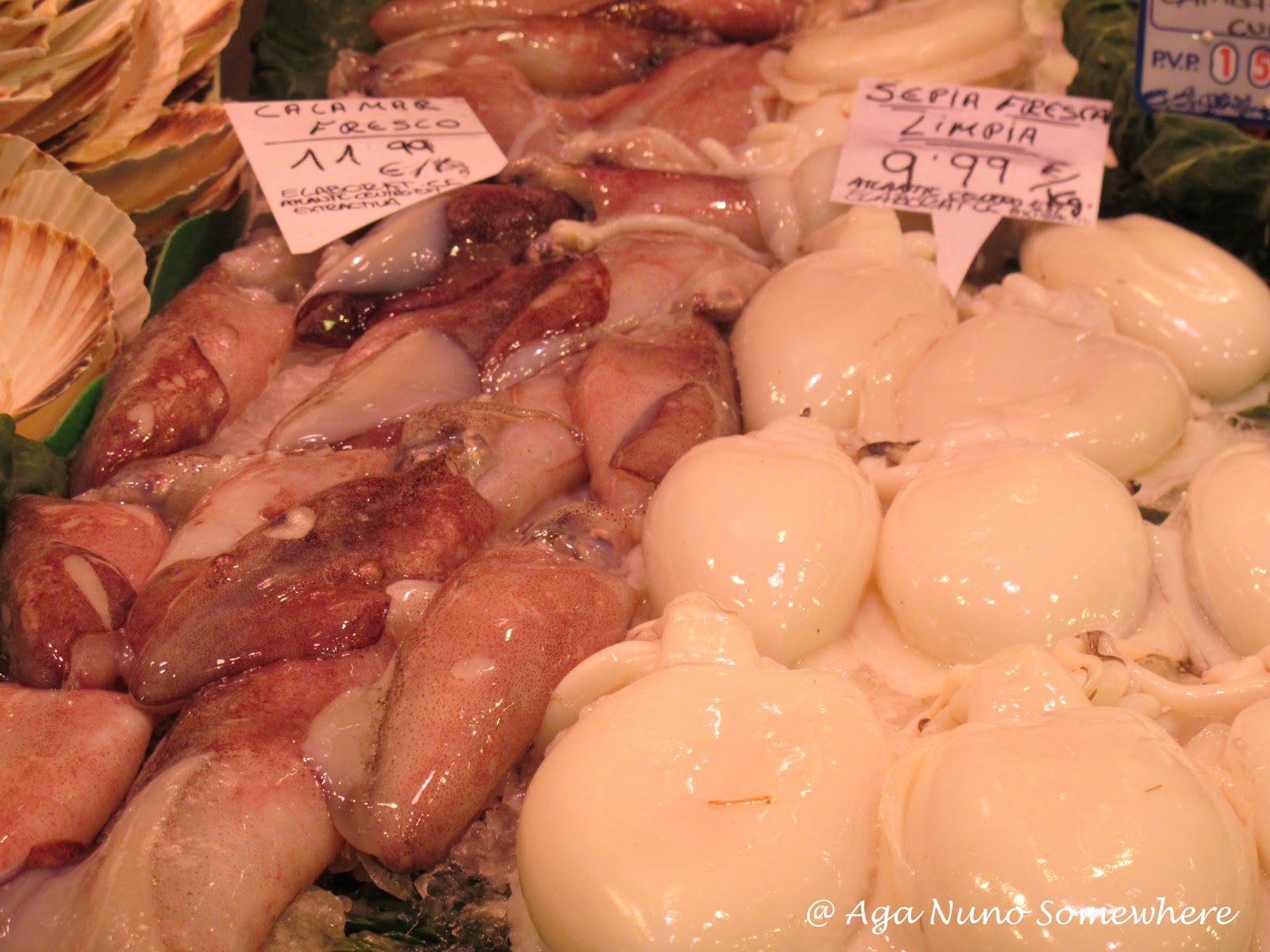
Krewetki, małże, dziwne muszle, ośmiorniczki… lubię je wszystkie, a że coś dawno nie było posta o jedzeniu, trzeba to nadrobić. Nie zapraszam Was jednak w żadne konkretne miejsce, ale będzie o jednym typie jedzenia. 

Uwielbiam owoce morza, mogłabym je jeść przez kilka dni z rzędu i się nie znudzić. Lubię dania, gdzie są one tylko dodatkami  albo gdzie dodatków nie ma żadnych i grają one główną rolę. Irlandia nie kojarzyła mi się jako kraj serwujący pyszne ostrygi, a tu niespodzianka: w Galway organizowany jest nawet co roku festiwal ostryg

Muszę się przyznać, że nie pamiętam, kiedy jadłam owoce morza po raz pierwszy. Czy było to podczas mojej pierwszej wyprawy do Hiszpanii po pierwszym roku studiów? Czy może były to smażone kalmary podczas Erasmusowej przygody?  Nie jestem pewna, ale wiem, że to w Hiszpanii zasmakowałam się w owocach morza. Niemały udział w tym dziale mojej kulinarnej edukacji miał też Nuno, który owoce morza może jeść w takiej ilości, że zaskakuje wszystkich. Jednym z naszych ulubionych miejsc w Barcelonie była Paradeta (tam zabrałam moją mamę na pierwszego w jej życiu kraba i małże), a po niedawnej wizycie w Oscar’s Bistro w Galway (gdzie jedliśmy najlepsze w życiu krewetki), doszłam do wniosku, że jedno z dań tam serwowanych mogłoby być moim ostatnim posiłkiem. Do dziś też pamiętam za to naszą pierwszą randkę, która za spotkania na kawę przedłużyła się w spontaniczną kolację, na którą Nuno zaserwował mi ryż z owocami morza. 


W Polsce owoce morza nie są może tak popularne jak w krajach śródziemnomorskich, cały czas stanowią raczej rarytas. A to z prostej przyczyny, że u nas nie występują, świeże dostać jest niezwykle trudno ( i nigdy nie wiadomo czy na pewno są świeże), a mrożone to jednak nie to samo. 

Dziś podzielę się z Wami listą naszych ulubionych owoców morza (kolejność przypadkowa)

Krewetki jadłam chyba najczęściej. Ale do wprawy Nuno w obieraniu krewetek jest mi jeszcze daleko. Lubię te grillowane, jak i gotowane, tygrysie, ale też te zupełnie małe, skropione jedynie sokiem z cytryny, albo maczane w jakimś sosie.

Obierania kraba jest wyzwaniem! Ale ile przy tym zabawy! I chyba o to bardziej chodzi, bo mięsa (pysznego) jest w krabie niewiele. W Lizbonie zabraliśmy moich rodziców oraz ich znajomych do restauracji serwującej wyłącznie ryby i owoce morza, mój tata jadł kilka potraw po raz pierwszy w życiu, ale to chyba zabawę z młoteczkiem i szczypcami zapamiętał najbardziej.


Hiszpańska Galicja słynie z vieiras, czyli po naszemu przegrzebków (po raz pierwszy nazwę tę w moim ojczystym języku usłyszałam z miesiąc temu). Ten owoc morza jest nawet symbolem pielgrzymki do grobu św. Jakuba w Santiago de Compostela. Do tej pory jadłam przegrzebka jeden jedyny raz w życiu, zapiekanego, ale 2 tygodnie temu w Galway właśnie miałam okazję spróbować grillowane i według mnie są to jedne z najsmaczniejszych owoców morza. 

Ostrygi to chyba owoc morza, który najmniej mi smakuje. Może nie umiem w pełni docenić tego morskiego smaku? Może powinnam sprostować, że nie przepadam za ostrygami na surowo, ale takie zapiekane i przyprawione to zupełnie inna bajka? W Irlandii dodatkowo odkryłam, że świetnie się komponują z Guinnessem. 

W Hiszpanii często jedliśmy małże, bo są one niezwykle proste w przygotowaniu, wystarczy je trochę oczyścić i wrzucić do wrzątku, a potem zaserwować polane sokiem z cytryny. Należy tylko pamiętać, by nie zjeść małż, które podczas gotowania się nie otworzyły. 
Grillowane ośmiorniczki (najlepsze pulpo jest też z Galicji), kalmary, mątwy… czasami żałuję, że je zamawiam, bo niestety od czasu do czasu trafiają się gumowate, twarde kawałki, które żuje się bez żadnej przyjemności. 


To oczywiście zaledwie jedynie kilka przykładów owoców morza, zostało mi jeszcze sporo do spróbowania (homara nigdy nie jadłam, za ślimakami nie przepadam), ale już czekam na jakąś specjalną okazję, by wybrać się do Oscar’s Bistro w Galway na kolejną porcję przysmaków z morza. 

Mieliście okazję spróbować owoców morza? Smakowały Wam? Zapraszam do galerii na facebooku po większą porcję zdjęć


Shrimps, clams, mussels, octopus ... I like them all and since I haven’t written about food for quite some time, I decided to dedicated this post to a type of food I discovered few years ago and can’t leave without. 

I love seafood and my diet could be based on it and I wouldn’t get bored for quite a long time. Before coming to Ireland, I didn’t picture this country as a place where they serve it often, so imagine my surprise when I discovered that they even had famous oyster festival in Galway.  

I have to tell you a secret. I don’t remember at all when and where I tried seafood for the first time. Was it during my first trip to Spain after finishing my first year at the University (is it a shame to eat it for the 1st time being 20 something)? Or my first seafood meal were fried calamari during my Erasmus exchange? I'm not sure, but  it was in Spain that I learnt to appreciate its taste. Well, Nuno has played a big part in my culinary education, coming from a country that is also famous for fish and different ways of serving seafood. I still remember our first real date, we meet for a coffee but then couldn’t stop talking, so he spontaneously invited me for dinner and cooked rice with seafood. 


One of our favorite places in Barcelona was Paradeta (it is where I took my mum when she visited and where she had crab and clams for the first time in her life), and you would be surprise how much seafood my boyfriend can eat (you can judge by the empty plates). Recently we went to Oscar's Bistro in Galway, the place that even surprised Nuno, who isn’t impressed so easily by food outside from Portugal, and he claims they served the best shrimps he had eaten so far. I think I would order seafood as my last meal, if I was given that choice. 

In Poland, seafood isn’t as popular as it is in the Mediterranean, for a simple reason: we do have fish from Baltic sea, but no seafood. It is quite expensive to buy seafood in Poland, and you never know how fresh it is, and frozen isn’t the same. Is seafood popular in your country?

I still haven’t decided which is my favorite sea food dish, so I’ve randomly chosen some that I like.  
Probably I’ve eaten shrimps more frequently than any other seafood but I’m still far from mastering Nuno’s technique to peel a shrimp. I like them grilled or cooked, both big ones and tiny ones, with sauce or served only with lemon. 


Do you know how challenging it is to peel a crab? But it is so much fun! Its meat is delicious, but you don’t get rewarded for your effort, as there isn’t much meat inside a big shell. In Lisbon, we took my parents and their friends to a restaurant that only served fish and seafood, my dad tasted few things for the first time in his life (he is rather a meat person, but enjoyed it), but I think it was playing with crab cracker and little hammer that he remembers from this dinner. 

Spanish Galicia is famous for vieiras (scallops). Its shell is even a symbol of the pilgrimage to the tomb of St. James in Santiago de Compostela. Before trying grilled scallops in a great restaurant in Galway, I only ate them once, roasted, 4 years ago in Santiago. I will hopefully eat them again in the near future, as they are so delicious!

If I were to choose seafood that I don’t like that much, it would be oysters. Maybe I just can’t fully appreciate the flavor of the sea? I don’t like raw oysters, served only with lime, but baked ones are really nice. And in Ireland I discovered they go well with a pint of Guinness.

In Spain, we often had mussels for lunch when we felt lazy to cook, as they are so simple and fast to prepare. You just clean them up a bit, toss into boiling water and after 10-15 minutes serve with lemon juice. Just remember not to eat mussels that haven’t opened during the cooking. 


Grilled octopus (Galician pulpo is believed to be the best), squid, cuttlefish ... they can be so tender and tasty, but unfortunately I’ve eaten few time some hard, rubbery pieces that you chew without any pleasure. 

I could go like that for few paragraphs more but I suddenly got hungry and feel like going to Oscar's Bistro in Galway to taste other delicious plates(I just need to find some special occasion to celebrate as it’s quite an expensive place).

Have you ever tried seafood? Do you like it? Check my facebook for more photos.  
Showing posts with label jedzenie/food. Show all posts

Wednesday, 15 October 2014

Sardynki w Essaouira/ Sardines in Essaouira

W Essouira spędziliśmy 2 leniwe dni. Czasu było wystarczająco, nie musieliśmy się nigdzie spieszyć. Był długi spacer po plaży i wypoczynek przy basenie. W Essouira kupiliśmy większość pamiątek- czyli kolorowe ceramiczne misy i miseczki, bo sprzedawcy nie są tak namolni, jak w Marakeszu. Doznaliśmy jednak rozczarowania, że nie byli aż tak skorzy do negocjacji. Po kilku minutach pertraktacji proponowane ceny nadal były bardzo zawyżone, więc w końcu kupiliśmy wszystko na stoiskach z ustalonymi z góry cenami (ciekawostka: wszystkie były prowadzone przez kobiety) i zapłaciliśmy mniej.


We spent two lazy days in Essaouira. We didn’t have to rush anywhere, we just relaxed and took it easy. We took a long walk on the beach and relaxed by the pool. It was in Essouira where we bought most of our souvenirs: smaller and bigger colorful ceramic bowls. It just seemed easier and less overwhelming as street sellers were not that pushy, they left more space than those in Marrakesh. We were disappointed that they seemed unwilling to negotiate as much as we expected them. After few minutes of bargaining they would not lower the price to some acceptable level. The final result was that we bought all the things in a stand with fixed prices (funny fact, all the stalls with fixed prices that we saw were run by women) and we ended up paying less than what we were offered after tough bargaining.

Ale nie o zakupach miał być ten post. Ja nawet zakupów zbytnio nie lubię. Essaouira jest miastem portowym. A w porcie, jak wiadomo, łowi się ryby. A my lubimy ryby i owoce morza. Tak więc wybór miejsca na kolację nie był trudny. 


I wasn’t supposed to blog about shopping. I even do not like to go for shopping. Essaouira is a port city. And in the port, as  we all know, fish are caught. We  like fish and seafood. So deciding what to eat for dinner was easy


Poszperałam w internecie i na jakimś blogu podróżujących smakoszów (jak po polsku powiedzieć foodie?) przeczytałam, że najbardziej autentycznym miejscem jest hala rybna znajdująca się w medynie. Pewnie innych wystraszyły komentarze, że miejsce jest niehigieniczne czy inne tego typu argumenty, bo pełno było lokalnych, a z obcokrajowców nie było poza nami nikogo. Wiadomo, że do wszystkiego trzeba podchodzić z rozsądkiem, lepiej nie jeść sałatek, bo nie wiadomo czy warzywa są dobrze umyte i jakiej jakości była woda. Kranówkę i otwartą wodę też trzeba omijać szerokim krokiem. Nam po zjedzeniu grillowanych sardynek, kalmarów i krewetek nic się nie stało (ja naiwnie wierzę, że cola zabija wszystkie bakterie i to dzięki temu nie mieliśmy żadnych przebojów żołądkowych, ale to moja teoria). Nie będę nikogo przekonywać, ale uważam, że to ciekawe doświadczenie: od wybierania ryb, po ustalenie ceny końcowej (po odrzuceniu połowy oferowanych nam ryb, bo nie wiem czemu pan sprzedawca myślał, że bylibyśmy w stanie zjeść 3 razy więcej niż zamówiliśmy i ignorował nas trochę, jak mówiliśmy, że starczy).


I found a foodie post mentioning fish hall located in the medina as being the real deal and a truly authentic place to eat fresh fish. Probably other tourists got scared with the comments stating that the place is dirty, unsanitary and should be avoided as it was full with locals but we the only foreigners there. Of course you have to be alert and pay attention to where and what you eat. It would be better to skip the salad (as you don’t know if veggies were washed properly and what was the quality of water), avoid tap water and opened water bottles. We ate grilled sardines, squid and shrimps and we were perfectly fine afterwards (I have my theory that it is all thanks to coke that kills all bacteria, but that's just my small silly theory). I will not try to convince anyone to go to a certain place to eat, but I think it's an interesting experience: you choose your own fish, you bargain for the final price, you see it being grilled next to you. We had to pay attention as the eager fishmonger wanted to put 3 times as much fish as we wanted pretending he didn’t hear or understand us when we were saying: 6 sardines, that’s enough, we don’t need more…


Następnego dnia poszliśmy z rana do twierdzy Kasbah de la Skala, z której rozciąga się widok na Atlantyk i plażę. Nie wiem czy też tak macie, ale na Nuno widok morza czy oceanu działa uspokajająco i może spędzić dłuższą chwilę wpatrując się w horyzont i wdychając morski zapach.


The next day we went in the morning to see the fortress of Kasbah de la Scala, which overlooks the Atlantic Ocean and the beach. I don’t know how about you, but Nuno is immediately soothed by the view of the sea/ocean/big water and could spend quite a long while just staring at the horizon and smell the sea and breathing fresh air.


Z biało-niebieską zabudową miasteczka idealnie komponują się łódki i rybackie kutry zacumowane w porcie. Z murów można poobserwować rybaków czyszczących sieci czy ryby i porobić pocztówkowe zdjęcia.

White-and-blue seaside village, colorful fishing boats in the harbor- in other words, you have a postcard picture to share on Facebook, instagram or pinterest :) City walls make a good observation point when you can spot fishermen cleaning the nets and preparing the fish.


Podobała Wam się Essaouira?Może kogoś przekonałam, że warto tam się wybrać.  My byśmy chętnie wrócili…


I hope you have enjoyed posts about Essaouira and that maybe you visit it one day. We wouldn’t mind to come back there again someday…


Wednesday, 8 October 2014

Smaki Maroka i lekcja gotowania/ Tastes of Morocco and cooking class

Jeśli miałabym wybrać sobie zawód marzeń i ktoś magicznie by mi taką robotę zaproponował, to wiem doskonale kim bym chciała być. Takim Anthony Bourdain w spódnicy. Co jest bowiem lepszego od jedzenia, picia i podróżowania? Niestety, na razie praca w korporacji jest rzeczywistością, choć mam nadzieję, że nie na całe życie. Ale podczas podróży jedzenie dominuje zdecydowanie nad muzeami i innymi takimi „atrakcjami”. Z czym jedzeniowo kojarzy się Maroko? Tadżiny i kuskusy w różnych odmianach, przesłodkie desery, świeżo wyciśnięty sok z pomarańczy, kilogramy daktyli, przyprawy o zapachu tak intensywnym, że aż kręci ci się w nosie. Było pysznie i jakoś magicznie tym razem waga została w miejscu (albo tak mi się zdaje). Może to zasługa przechodzonych godzin i ograniczonego do minimum jedzenia słodyczy (które po prostu były dla mnie za słodkie)?


If somebody asked me what my dream job was and could miraculously offer me it for life, I wouldn’t hesitate for a second. The answer would be simple: I would be kind of female version of Anthony Bourdain. There is nothing better than to combine eating, drinking with travelling, at least I can’t imagine there is. For now, I am stuck in my 9 to 5 work, corporate world is my reality. When we travel, eating is definitely more important for us than museums or similar "attractions". When you think Morocco, you immediately picture tagines, couscous, super sweet desserts, freshly squeezed orange juice, kilograms of dates, spices… Somehow during week we spent in Morocco, even when eating all I wanted, I magically didn’t put any weight. Was it all the walking? Or maybe the fact I almost didn’t touch any sweets as they were too… sweet for my taste (don’t get me wrong, I love desserts, but there need to be right balance, too sweet is just not my thing)?


Myślę, że długo w mojej pamięci zostaną idealne śniadania zjedzone na dachu naszego riadu w Marakeszu: sok pomarańczowy, domowej robot konfitury i marokańskie naleśniki zjedzone na świeżym powietrzu z widokiem na Medinę.

Albo zaskakująco pyszne połączenie mięsa i słodkich dodatków (miód, cynamon) w -marokańskiej pastilli, którą zamawialiśmy, gdy już nam się znudził tadżin? Wcześniej myślałam, że nie będę mieć dość kuchni marokańskiej, ale problemem było to, że w większości miejsc menu było takie same, a po zjedzeniu 3 (mimo że z różnym nadzieniem i dodatkami) tadżinów, mieliśmy ochotę na coś innego.


I will not forget the perfect breakfast eaten on the roof of our riad in Marrakesh: fresh orange juice, homemade jams and Moroccan pancakes eaten on the terrace overlooking the Medina.

Or a surprisingly delicious combination of meat and sweet honey and cinnamon –Moroccan pastilla, that we ordered once we got bored of tagine. I would never expect that you can actually end up fed up with those typical Moroccan dished. The problem  was that every single place had almost the same things on the menu. And after eating 3 tagines, delicious and with different ingredients, we just wanted something else.


W takich sytuacjach przesytu tymi daniami, zawsze jest kilka innych opcji: pyszna i sycąca zupa harira, grillowane mięso oraz dobry chleb. Do tego litry słodkiej miętowej herbaty, której picie jest osobnym rytuałem.

So when you are done eating them, try dlicious and filling harira soup, grilled meet and good bread. And drink liters and liters of sweet mint tea. It is a separate ritual.


Jedno jest pewne, każdy smakosz znajdzie coś dla siebie. Nam najbardziej smakowały dania, które sami przygotowaliśmy pod okiem i z wytycznymi Samiry. Na przystawkę sałatka z grillowanych pomidorów i papryki, briouate (czyli małe trójkątne ciasteczka z ciasta podobnego do filo, z nadzieniem serowym, przyprawami i kolendrą), na główne danie tadżin z jagnięciny z migdałami i śliwkami a na deser orzeźwiająca sałatka z pomarańczy z  wodą różaną. Pierwszy raz uczestniczyliśmy w lekcji gotowania, ale było to tak udane doświadczenie, że przy następnej podróży spróbujemy też znaleźć czas. Gotowanie poprzedzone było zakupami na lokalnym souku, dzięki czemu zaopatrzyłam się w przyprawy na kilka miesięcy i mogłam poobserwować życie Marokańczyków. Z Samirą, której uśmiech nie schodził z twarzy ani na chwilę, byliśmy pod ochroną i nikt nas nie zaczepiał. Mogliśmy więc bezkarnie gapić się na towary i zaglądać w głąb sklepików. Ciekawe doświadczenie, bo rzeźnik w Marakeszu wygląda zupełnie inaczej niż ten europejski, do którego jesteśmy przyzwyczajeni.


One thing is sure, every foodie will find something delicious. What we liked the most was a 4 course meal that we prepared under the supervision and guidance of lovely Samira. For an appetizer we had warm salad with grilled tomatoes and peppers, briouate (small triangular pastries made from phyllo-like dough, filled with cheese, spices and coriander), for the main course we made lamb tagine with almonds and plums and for dessert, a refreshing salad of oranges with rosewater. It was our first cooking class, and it was such a fun experience that we will definitely try to find some offers during the upcoming trips (not that we have anything planned already). Before the cooking class, we went shopping at the local souk, where I also bought spices. This time shopping was a nice experience, as we were accompanied by always smiling Samira and nobody harassedous. So we could observe the locals and have a look at the stalls and small shops. It was an interesting experience, as a butcher in Marrakesh looks completely different than the European one, you see livestock around and the aroma of spices is intense…


Zgłodniałam… Na szczęście mam jeszcze kilka daktyli, które zostały z kilograma zakupionego w Marakeszu. A w weekend chyba zrobimy tadżin, bo jedną z pamiątek (oprócz daktyli, przypraw i kilku kolorowych ceramicznych naczyń), jakie przywieźliśmy to właśnie gliniane naczynie do tadżin.

A wy wzięliście kiedyś udział w kursie gotowania? Albo po powrocie do domu odtworzyliście jakieś dania poznane podczas podróży? Czy jako pamiątki kupujecie może właśnie jakieś lokalne produkty?


I’m getting hungry ... Fortunately, I still have some dates left (we bought a kilo to bring back as an edible souvenir). I may even make a tagine on Saturday, as apart from dates, spices and few colorful ceramic dishes, we also bought a tagine clay pot.

Have you ever took a part in a cooking class? Or when you get home you try to recreate recipes of the dishes you ate during your trip? Or maybe you ring some local products as souvenirs?


Tuesday, 12 November 2013

Rozpusta jedzeniowa we Włoszech/ Italian food indulgence


Pierwotnie post miał nosić tytuł: Ile kilo można przytyć podczas tygodniowego pobytu we Włoszech, ale to  a) za długi tytuł i b)musiałabym się przyznać o ile ciężsi wsiadaliśmy do samolotu z Malpensie. 
Po powrocie do blogowania moja siostra dopomina się postów z odwiedzin w Como i Cinque Terre, moja mama wolałaby najpierw poczytać o wspólnych wakacjach w Portugalii, Nuno chyba o Maderze, jeszcze inni woleliby bieżące posty z Irlandii. Kilkumiesięczna przerwa w pisaniu ma swoje poważne konsekwencje, ale powoli, pomalutku, nadrabiam wszystko.  Możecie zasugerować na facebooku, o czym chcielibyście czytać, pomoże mi to w ustaleniu priorytetów. 

Nie jest tajemnicą, że lubimy sobie dobrze zjeść. Jedzenie jest dla nas na tyle ważne, że przed wyjazdem częściej szukam dobrych lokali niż np. muzeów czy innych atrakcji turystycznych. Dlatego też na pierwszy rzut pójdzie jedzeniowa fotorelacja (a raczej fotograficzne udokumentowanie naszego „małego” obżarstwa)  z pobytu w Como i okolicach oraz w regionie Cinque Terre. Trochę obwiniam moją siostrę i jej znajomych, że zabrali nas do fantastycznych knajpek na pyszne jedzenie i namawiali na kolejny kawałek pizzy czy jeszcze jeden kieliszeczek limoncello. Ale na wyjazdach nie uświadczysz w nas silnej woli i łatwo poddawaliśmy się pokusie spróbowania kolejnego wybornego likieru czy zrobienia przerwy na jeszcze jedno aperitivo. 


Aperitivo to sposób na pobudzenie apetytu, to kwintesencja włoskiego stylu życia, rytuał, który uwielbiam. To taki pretekst, by zwolnić na chwilę, przysiąść i obserwować.  Na północy najczęściej jako aperitivo pije się Spritz (koktajl z Prosecco, Aperolem lub Campari i gazowaną wodą- wodę można pominąć :) albo po prostu kieliszek prosseco. Do tego, w zależności od baru, podają małe przekąski- oliwki, chipsy, sery, kawałki pizzy, etc. Nie wiem, ile przerw na aperitivo zrobiliśmy podczas naszych włoskich mini wakacji, ale Mi ha piacutto molto, na tyle, że po powrocie zaopatrzyliśmy się w Aperol i Prosseco.  Szkoda tylko, że irlandzka pogoda choć trochę bardziej nie przypomina tej we Włoszech.

Każdy region Włoch słynie z innych dań, w  Ligurii i Cinque Terre nie można nie spróbować między innymi focacci, pesto, ravioli. W jednym z miasteczek trafiliśmy na sagra ravioli di marisco-czyli taki jarmark, święto poświęcone jedzeniu (w tym przypadku ravioli z nadzieniem z owocami morza), na które schodzi się cała wieś. Były i tańce, i strzelnica z fantami, ale najważniejsze było jedzenie (no i może fakt, że dzbanek dobrego domowego wina kosztował 3€). Jeśli macie okazję, zrezygnujcie z restauracji na rzecz takich lokalnych jarmarków czy targów, bo atmosfera jest niesamowita, a jedzenie tanie i dobre. 


Jednego dnia Magda zrobiła tiramisu, a jej koleżanka Sara, pizzocheri, danie typowe regionu valtellina i baaardzo pożywne (czytaj: po zjedzeniu nie mogliśmy się ruszać). Pizzocheri to rodzaj makaronu, serwowany jest z ziemniakami, serem, masłem i kapustą. Normalnie je się to danie zimą, na rozgrzanie,  ale zrobiono dla nas wyjątek.  W Como zjedliśmy też występujące (chyba tylko w tym)  w jeziorze ryby: lavarello i pesce persico.

Włochy zawsze kojarzą mi się z dobrym jedzeniem i tym razem się nie rozczarowaliśmy. Widokowo też było przepięknie (coś w tym jest, że Włochy zawsze pojawiają się wysoko w rankingu najpiękniejszych krajów świata), miasteczka Cinque Terre są tak kolorowe i urocze, że wszystkie zdjęcia wyglądają jak pocztówki, a będąc w Como zazdrościliśmy Magdzie, że ma takie widoki na co dzień. 


Czy wy też jesteście takimi foodie w podróży?  Jak ważne jest dla Was, co i gdzie zjecie na wyjeździe? Jeśli też lubicie sobie pojeść na wakacjach, zapraszam do facebookowej galerii po więcej zdjęć (nie zapomnijcie ‘polubić’ strony facepagu bloga, brakuje mi zaledwie kilku lubiących do 250).


The title for this post was supposed to be: How many kilos you can put on  during a week while on holidays in Italy, but a)it is simple way too long for a title and b) I'd have to admit how much we gained before taking the plane back to Ireland. 

As I am back to the world of travel blogging, my sister keeps asking for the post on our visit to Como and Cinque Terre, my mom would prefer to read first about our great holidays in Portugal, Nuno about Madeira, others prefer more up-to-date posts on our Irish life. After few months of neglecting this small blog, I am way behind with telling you about our bigger and smaller trips. Poco a poco, I will make up, if you have your preferences, just let me know on facebook, it may help me prioritize. 


It's no secret that we like to eat well.  Food is such an important part of our travels that I spend much more time looking for a nice places to eat than on research on museums or other typical touristic attractions. So before I share with you where we went during our trip to Italy, I will share with your some foodie photos (well, maybe I should write a proof of being guilty of eating and drinking too much). I blame it all on my sister and her friends who took us to some great places and made us eat deep-fried pizza as a starter for a normal pizza and to always drink one more limoncello. We weren’t that innocent, as we never say no to a delicious meal, especially when on holidays, we rarely can escape the temptation to try some new flavors and we stop for too many food-related breaks (in Italy they even have a name for it: the famous aperitivo time).

Aperitivo is the essence of Italian lifestile, a simple ritual that I love. It's the excuse to slow down for a moment, sit down and observe the world. In Northern Italy, Spritz (cocktail of Prosecco, Aperol or Campari and sparkling water-you can always skip water) or glass of prosseco is the most commonly served as aperitivo. Depending on a bar, you get some snacks together with a drink, be it olives, cheese, potato chips, peanuts, small slices of pizza, etc. I lost count how many times we stopped for aperitivo during our Italian mini-vacation, but Mi ha piacutto molto, we liked the ritual so much that after some time we bought a bottle of Aperol and prosseco. Shame that the Irish weather isn’t bit more like in Italy.


Every single region in Italy is famous for different dishes.  In Liguria and the Cinque Terre one must try  focaccia, pesto, ravioli, among other piatti. We were lucky to be in one of the  villages we visited during sagra ravioli di marisco. Sagra is a local festival dedicated to food (in this case ravioli stuffed with seafood), whole village gathers (I think we were the only foreigners there) to eat, dance,  win small prize in a raffle. Food is cheap and delicious, wine is cheap, and I mean 3€ per jar of house wine! Here for that price you won’t even get a pint. So if you ever have the chance to go to a sagra instead of eating in a restaurant, go for it. The atmosphere is great and food is even better. 

One day Magda made tiramisu, and her friend Sara, pizzocheri, a dish typical for Valtellina region that was soo delicious and and sooooo filling (read: after eating, we could not move). Pizzocheri  is a type of pasta, served with potatoes, cheese, butter and cabbage. It’s supposed to be a winter dish to warm you up, but an exception was done and we ate it in June. For the last dinner we were taken to a nice restaurant by the Como lake and were told to try fish from the lake: lavarello and pesce persico.


When I think of Italy, I picture something delicious, I imagine a glass of wine, sun, good mood. Italy never disappoints me, I don’t remember any disappointing dish, and this visit was no different. It was also beautiful as I had a change to visit a new region, the colorful and charming Cinque Terre and stunning region of Como lake (I’m just bit jealous that my sis lives in such a nice place). 

Are you a foodie and a traveler? How important is food for you when you are travelling? If you are a foodie, like us, you may like this facebook gallery (don’t forget to ‘like’ my fanpage, I am so close to reach 250 likes).

Monday, 11 March 2013

Guest post by Aggy: Five Indonesian Food to Die For


Lubię chodzić do restauracji, by próbować dań z różnych krajów. Takich, gdzie już byłam i przez smakowanie smaków, powiedzmy włoskich, na chwilę przenieść się do restauracji, gdzie nasz znajomy zabrał nas na najlepszą w naszym życiu pizzę. Albo do kuchni krajów, gdzie jeszcze nie byliśmy, ale mamy ogromną ochotę pojechać. 

Dzisiejszy post jest postem gościnnym napisanym przez Aggy z Dream Explore Wander (nie wiem czy pamiętacie, jakiś czas temu napisałam posta gościnnego o Bukareszcie właśnie na post Aggy), która przedstawia nam najlepsze i najbardziej typowe dania swojego kraju, Indonezji. Ostrzeżenie: posta najlepiej przeczytać po posiłku, czytanie „na głoda” może skończyć się napadem ataku głodu.

Every once in a while I like to go to a restaurants that specialise in a cuisine of some more or less exotic country. If it is a country I already visited, my eating, let’s say something Italian, I can imagine for a while I’m in Italy where our friend from Roma took us to a place where we had the best pizza in our life! Or we go to the places to have some meal from a country we dream of going.

Today's post is a guest post written by Aggy from Dream Explore Wander (you may remember her, as some time ago I wrote a guest post about Bucharest that is available on her blog). She shows us the best and most typical dishes from her country, Indonesia. Be warned: it’s better not to read the post before eating, as you may end up very hungry.  


 Five Indonesian Food to Die For


Indonesia. Many boast about the undoubtedly beautiful islands, the clear blue sky, the stunning beaches, the lush forests and its natures and of course the hot, tropical weather. However for me, there is nothing I love more than its food. Yes, I am a proud foodie, and I am also proud to say that my home country has the most delicious food in the whole world. 

I was born in the town of Yogyakarta, which is located in the Java island, the most populous island in Indonesia. Almost all my life I have been accustomed to Javanese cuisines and other cuisines coming from other islands which has become a favourite in our island. I don’t think one blog post is enough to describe my love for Indonesian food, but here are five favourite Indonesian food which I highly recommend you to try when you visit my home country!

Satai
The “proper” or I’d like to say the more “posh” way to say this cuisine is satai, but us locals like to call it sate - check out the “ai” replaced by “e”. It sounds more down-to-earth when you pronounce it like that. Sate is basically meat put in a skewer and grilled, the best sate are known to be grilled traditionally over hot charcoal. There many kinds of sate: chicken, beef, mushroom, fish, lamb, pork - you name it, we’ve got it! But my two favourite sate are the classic chicken and mushroom. The chicken or mushroom are usually marinated before the grilling process, take a bite from a sate and you will see that it’s bursting with flavours. Chicken sate is best served with peanut sauce with a drizzle of sweet, dark soy sauce. The mushroom sate is served the same. Both sate is best eaten with fresh cut chilli (if you’re a fan of chilli like me) and shallots. 


Gado-Gado and Lotek
You’d be amazed how easy it is to be a vegetarian in Indonesia. Exotic fruits and vegetable are easily found in local markets, we are huge fan of soya beans too. Gado-gado and lotek are one of those quick dishes, you can say it’s our McDonalds since they are so easy to make and considered to be a fast food. It’s definitely a healthy lunch/dinner option when you’re in a rush. Both almost has the same ingredients: spinach, green beans, bean sprouts, tofu, cabbage served with peanut sauce (yes, we are a fan of peanut sauce). The difference is in the sauce, although both have the same based ingredients, in gado-gado the sauce has extra coconut milk. The serving of the sauce is also different, in gado-gado the sauce is put on top of the vegetables whereas in lotek the sauce is mixed together. In gado-gado they also put boiled egg, potatoes, cucumber and tomatoes.

Soto
This is a famous dish in Indonesia which you can easily get in Java. Like sate, there are different kind of soto even for a classic chicken soto, there can be many version. Soto is hot, refreshing soup. The one I like most is chicken soto with clear chicken broth filled with pieces of shredded chicken, cabbage, bean sprouts and rice. The key ingredient is the broth, we say that if the broth is good then the whole soup is undoubtedly delicious. Soto is usually eaten with side dishes like fried tempe (soyabean), tofu and quail egg sate. It’s so simple and delicious.


Bakso
Bakso is also a type of soup, and is a popular street “snack”. Bakso is made from meatballs, usually made from beef, served with hot beef broth garnished with spring onion and fried shallots. You can have fried meatballs, pangsit (Indonesian crispy wonton) and tofu with it too if you prefer.  It is sometimes considered as snack because it’s light food. People tend to add rice or noodles when they want to have it as lunch. It’s one of those food that you eat when catching up with the girls or just having a good gossip.


Gudeg
I have to tell you about gudeg. The people of Yogyakarta are known for their sweet tooth, we even put a little bit of sweetness into our savoury meal and gudeg is one of them. When you go to a gudeg stall, you will find a lot of dishes and a portion of gudeg is a combination of it all. Usually you will find brown egg, brown tempe and brown tofu - all brown because they have all been cooked with dark, sweet soya sauce and other spices thus the brown colour. There is also krecek in gudeg which is beef skin cooked in red, spicy sauce. The main ingredient of gudeg is jack fruit. The young jack fruit is also brown-coloured as it has been steamed with palm sugar before leaving a soft, sweet taste. Gudeg can vary in different cities in Indonesia, but the sweet type is most popular in Yogyakarta. My town is known as a gudeg city and is known to have the best ones!

And there you have it the five Indonesian food to die for. Of course all food are best eaten with krupuk which is crackers, very popular in Indonesia. For me, without krupuk something is missing when I’m eating. The most famous krupuk is made from shrimp and has the most scrumptious taste. There are different krupuk for different meals, but that would be another post :)

Have I made you drool and pack your bags to Indonesia yet? I hope I have. 


Zachęcam do zaglądania na bloga Aggy, która niedawno zaczęła nową serię postów poświęconych jedzeniu- Dewlicious. Tu macie linki do jej bloga, twitter i facebooka. A jeśli macie ochotę napisać gościnnego posta dla mnie o jedzeniu, proszę o kontakt.

If you liked the guest post, here are all the link you need to follow Aggy’s blog: blog, twitter and facebook fan page. She’s recently started her own food-related post series- Dewlicious. And if you feel like writing a guest, food-related post for me, please feel free to contact me. 


Monday, 14 January 2013

Experiencing Food in Seville by Cat Gaa


Pora dziś na post z serii ‘Smaczny świat’, której to serii przedsmak mieliście już w grudniu. Nie ruszymy się z półwyspu iberyjskiego. Dziś, dzięki Cat, poznamy, co i jak jedzą i pija w Andaluzji (kuchnia Hiszpanii jest bowiem tak zróżnicowana, że nawet jeśli już wystarczająco was zanudziłam specjalnościami  Katalonii, to mam nadzieję, że kilka nowych rzeczy z tego postu gościnnego wyczytacie). Staram się pisać wszystkie posty w 2 językach, ale jest to dość czasochłonne, dlatego postanowiłam, że postów gościnnych z lenistwa nie będę tłumaczyć. Zawsze jest google translator i zgadywanie o czym jest post patrząc na zdjęcia.

Czytam wiele blogów expatów mieszkających i piszących z Hiszpanii i blog Cat jest jednym z moich ulubionych, zapraszam zatem do zajrzenia na jej bloga, facebooka oraz twittera. I mam nadzieje, że uda mi się Caat poznać osobiście, bo jest szansa, że zawita ona na Zieloną Wyspę, zamiast botellón na świeżym powietrzu będzie  jednak siedzenie w pubie :)


In December I posted a teaser for my new series of guest posts that I will be featuring on my blog starting from today. The first post from ‘Tasty world’ series was available only in Polish as I decided not to translate guest posts (hopefully photos gave you a vague idea of how tasty Portuguese dishes are, and maybe one day some other gust bloggers will write about this country or his favourite Portuguese food). Today, we still are in the Iberian Penisula, and thanks to Cat from Sunshine and Siestas we will find out what and how people in Andalucia eat and drink.

There are many blogs written by expats in Spain, and Cat’s is in my personal top 3, so if you still haven’t discovered it, check her website, facebook and twitter. I hope that I meet her soon, as she may be coming to Ireland soon, instead of botellón we may just stick to a nice old Irish pub.


Experiencing Food in Seville

Like many Mediterranean cultures, the sobremesa – what happens around the dinner table – is important. Dining experiences are often transformed into business meetings, family gatherings and informal get-togethers that bring people to eat, drink and be merry.

Seville’s dining scene is no exception, and it’s coming to call the streets lined with bars and restaurants a sevillano’s living room. Eating out in the capital of Andalusia is a memorable lesson in socializing in this bustling city, whose warm climate and sprinkling of plazas are inviting during the entire year.


De tapas como un Sevillano – Eating like a Sevillian

Meals
For most Spaniards, mealtime is an important gathering, and people eat up to five times a day! Breakfast is important in Seville, usually consisting of a toasted sandwich of olive oil, crushed tomato and sliced Iberian ham with coffee and orange juice, but the midday meal is the largest. Typically eaten between 1:30 and 3:30 in the afternoon, la comida is heavy, has several plates and often lasts for a few hours. Dinner tends to be lighter and served after 8pm. Sevillanos linger in restaurants, moving from beer to coffee to liqueurs or mixed drinks, all in the name of a leisurely lunch and the urgency of celebrating food and life.


Merienda
Even after a large meal, there’s always room for merienda, or a midafternoon snack. Between 5 and 6 p.m., many sevillanos meet friends for a coffee and pastry, often stretching into the long hours of afternoon. Common are chocolate pastries and petit fours, though ice cream can be substituted in during the hot summer months. While many coffee houses are present on Seville’s ancient streets, crammed between gastrobars and chain fashion stores, Confiteria La Campana is the most beloved. A long bar displaying treats for every taste is attended to by workers dressed in pinstripes and aprons, providing an Old World Charm for patrons. Its outdoor tables in Plaza de la Campana are inviting for a rest between shopping or sightseeing.


El Tapeo
Spain’s gastronomy has long been the subject of heralding and high critique, and its tapas scene, called el tapeo, is one of the most famous aspects of food culture in Seville. Small dishes of hot or cold food are a popular way to snack before a meal or even eat, and tend to cost between 1,80€ and 4,00€ in Seville. Oftentimes, eating three or four are enough for a meal, but do as the sevillanos and eat just one at each bar, washed down with a beer or sherry, and move on to the next place. The tapeo in Seville can be found in any neighborhood, but the crowded bars are packed for a reason! Be sure to try sevillano classics, like fried fish, a small sandwich of minced meat called a montaíto de pringá or gazpacho, a cold, tomato-based soup. The tapeo is the busiest on the weekends during meal times.


De copas como un Sevillano – Drinking like a Sevillian

De botellines
Seville’s local beer, Cruzcampo, is the best remedy for blazing days in the Hispalense, as locals call the city. Small glass bottles of beer, called a botellín, or small bottle, are kept chilled and are a sevillano’s choice of beverage with a meal. Botellines go hand in hand with the city’s most memorable dishes. Great places to witness la vidasevillana are Plaza del Salvador, home to a salmon-pink cathedral, and Plaza de los Botellines in the Macarena neighborhood.


De copitas
Cocktail bars, called bares de copas, are popular ways to pass weekend afternoons between mealtimes. Sevillanos love gin tonics and trendy bars, which are easy to find in the center and around the Maestranza bullring. Just don’t expect a Cosmo or Martini – copas in Spain are generally ordered with a brand of liquor and a refreshment, complemented with a slice of lemon. If you’re specifically looking for a cocktail, try The Second Bar on CallePlacentines, or else you’ve got the lion’s share of places to enjoy a bit of booze and the social scene.

De terraza
During the hot summer months, many discos move their bartenders to the rooftops of the cities or near the river, where the nighttime air invites sevillanos to the streets after closing them in their homes during the hot daytime hours. The establishments, called terrazas, often afford gorgeous views of the city at a premium, but they’re worth it! Roof, located inside the Casa Romana Hotel, has incredible vistas of the Cathedral and Salvador, whereas Puerto de Cuba pulsates late into the night right along the Guadalquivir River.


A trip to Seville is not complete without delving into the eating culture that makes the city’s culture accessible, familiar and fun. From the tart, brine-soaked olives to the flaky pastries, Seville’s food scene is one of its greatest traits – and certainly the most delicious!

Cat Gaa left the skyscrapers of Chicago for the olive groves of Andalusia five years ago. A fan of the tapeoand a cold Cruzcampo beer with the sun on her face, she publishes at Sunshine and Siestas, a lifestyle blog that combines all of the things she most loves: food, travel and the language mistakes that make her the effervescent guiri in her group of friends. Follow her on twitter and Instagram at @sunshinesiestas.


Wednesday, 12 December 2012

Smaczny świat/ Tasty world


Uwielbiam odkrywać nowe miejsca. Uwielbiam też odkrywać nowe smaki. Z połączenia tych dwóch składników- podróżowania i jedzenia powstał pomysł serii gościnnych postów „Smaczny świat”. Od jakiegoś już czasu chciałam stworzyć cykl postów zadedykowanych kuchniom czy potrawom różnych zakątków świata. W wielu krajach kuchnia i jedzenie to ważny element kultury i osobiście uwielbiam czytać blogi, które między posty podróżnicze wplatają wątki kulinarne. A jeśli do tego jeszcze SA one zobrazowane apetycznymi zdjęciami, to już przepadłam. 

Moja siostra przeglądając nasze zdjęcia z Brazylii, skomentowała, że połowa zdjęć przedstawia nas jedzących lub pijących, albo co gorsza, na zdjęciu jest wyłącznie jedzenie. Pewnie trochę przesadziła, ale faktem jest, że czasem potrafimy sobie odmówić  zwiedzenia  kolejnego zabytku, ale nigdy nie przepuścimy okazji, by posmakować jakiegoś lokalnego przysmaku. Nie wiem czy się ze mną zgodzicie, ale uważam, że niepełne jest poznanie miasta, regionu, czy kraju który odwiedzamy, jeśli nie zjemy w nim kilku posiłków (oczywiście w barach i restauracjach, gdzie stołują się lokalni mieszkańcy).

Zaprosiłam do współpracy kilku bloggerów, dla których jedzenie jest ważnym dodatkiem do zaliczania zabytków podczas podróży. Będziecie mogli poczytać ich gościnne posty od stycznia 2013, jeśli też jesteście smakoszami, którzy podróżują albo turystami, którzy lubią jeść i chcielibyście włączyć się do mojego projektu „Smaczny świat”, proszę o kontakt na maila lub kontakt przez facebooka.

A żeby narobić Wam smaku, już jutro będzie można przeczytać o kuchni, która najbliższa jest mojemu sercu. Zgadniecie o jaką chodzi?


I love to discover new places. But I also love to discover new flavors. I always say that I am a foodie who travels or someone who can’t travel without tasting new local dishes. Travel and eating are kind of inseparable for me, so I’ve came up with an idea of starting a series of guest posts called “Tasty world”. I’ve wanted to start this project for some time now as I believe that in many countries, food is an important part of culture, and personally I love to read blogs where you can find not only posts about travel  but also tasty culinary entries. And if they happen to include some appetizing photos, then I’m lost!

When my sister was looking at our pictures from Brazil, she commented ironically that half of them showed us eating or drinking, or worse, there was only food captured.  She may have exaggerated, but it’s true that sometimes we skip a visit to yet another famous monument, but we never miss  the opportunity to taste a local dish. Do you agree that you can’t say that you know a place (be it city, region or country) without having at least few meals there (I don’t need to add that they should be ordered in bars and restaurants where locals eat).

I invited a few bloggers to take part in my project, for all of them food is an important part of every trip. Just be patient, as it is only in January that you will read their delicious entries. If you are a foodie yourself and want to write a guest post, please contact me via email or facebook and I’ll get back to you with more details.

Tuesday, 4 December 2012

Kolorowa feeria smaków na Boqueria/ Colorful taste of Boqueria


Po wizycie na targowisku w Porto, dziś zapraszam was na najbarwniejszy mercado, jaki do tej pory widziałam. Pamiętam mój zachwyt, gdy po raz pierwszy weszłam na najstarszy barceloński targ mieszczący się przy najbardziej turystycznej ulicy miasta, Ramblas. To najbardziej kolorowe miejsce Barcelony,  nie licząc może Parku Guell ze słynną kolorową ławką z mozaiki Mam nadzieję, że dzięki kolorowym zdjęciom uda mi się przekonać Was, że zaglądanie na takie „codzienne” miejscówki jest tak samo emocjonujące, jak zwiedzanie znanych zabytków. Na pewno jest smaczniejsze!


Targ Boqueria jest niezwykle fotogenicznym miejscem, a to dzięki sprzedawcom, którzy dbają o prezentację swoich produktów. Nikt tam po prostu nie wrzuci pomidorów do skrzynki czy niezdarnie rozłoży bananów na blacie. Sprzedawcy do perfekcji opanowali misterne układanie piramidek z owoców czy warzyw i sprytnie zza lady wyjmują sztuki, które potem sprzedają (w ten sposób nie niszczą dekoracji). Stragany podzielone są na sektory, każdy specjalizuje się w innym asortymencie, mamy zatem dział rybny, gdzie wprawdzie wielkimi nożami patroszy się ryby. Jest dział mięsny, gdzie od chorizo i innych suszących się szynek, można kupić wszystkie partie świniaka. Są stoiska z jajkami, z przyprawami, z bakaliami…


Nie wiem przy których spędzam najwięcej czasu, czy są to owoce i warzywa, niektóre z nich kompletnie mi nieznane, czy przy owocach morza (i tutaj by się znalazły jakieś, których nie umiałabym pewnie nazwać). By nie poddać się czekoladowej pokusie, szybko przemykam obok stoisk ze słodyczami. Wolę słodycz świeżych owoców, zawsze kupuję jakiś pyszny sok (im dalej od wejścia tym są tańsze i często w promocji typu 3 za 2), czasami sałatkę owocową (ach, co za przedsiębiorczość sprzedawców, do sałatki dołączony jest nawet plastikowy widelec). 


Gdy zgłodniejemy od patrzenia na te wszystkie pyszności, możemy zamówić jakieś tapas w słynnym Pinotxo albo barze Quima z Boqueria (obydwa mają rekomendację Carmen, mojej koleżanki z byłej pracy, która zdradziła mi najlepsze miejscówki, gdzie stołują się lokalni). 

Drażni mnie jedynie, że Boquera nie jest tajnym i strzeżonym sekretem Barcelony, ale pojawia się w każdym przewodniku, a co za tym idzie korytarzami hali, między straganami, krąży tłum turystów, co czasami irytuje sprzedawców, którzy z pokolenia na pokolenie prowadzą stoiska. Trochę przez tych turystów targ zatraca prawdziwy lokalny koloryt. 


Na razie dam wam odpocząć od targów, ale niedługo znowu zabiorę was w podróż po targowisku, na swoją kolej czeka bowiem  Mercado Municipal de São Paulo. 

Po więcej zdjęć zapraszam tradycyjnie już na facebooku.

Czy dla was wizyta na targu to punkt obowiązkowy zwiedzania nieznanego miasta? 


It’s second post in a row dedicated to local markets, last time I took you to an authentic one, located in Porto, today I’m inviting you to the most colorful one I’ve ever been to. I remember my first reaction when I first entered the oldest market in Barcelona, which is found right on the most touristic streets- las Ramblas. I was intimidated by the noise and the colors and at the same time I suddenly realized that smell can have colors. All I wanted to do was to taste those fresh fruits, eat some chocolates, taste some chorizo and jamón… I believe it’s the most colorful place in Barcelona, well, maybe sharing the podium with the famous Park Guell with its bench made of multicolored bench. I hope that thanks to my photos I can convince you that visiting such an ordinary place as food market is as exciting as going to see some famous monuments. It certainly is more tasty!


Boqueria Market is a very photogenic place, thanks the colors, textures, the way products are displayed. Vendors really care about the presentation of their goods, nobody just throw tomatoes into a box or put bananas on top of the counter. They build perfect pyramids instead, and suddenly something as ordinary as onions or tomatoes look sophisticated. Don’t worry if you want to but something, you won’t destroy the display, as smart as they are, you will be given products from behind the counter. Stalls are divided into sectors, each specializing in different products, so we have fish department, where  you can admire skillful vendors guttering fish with huge knives. In another you can but chorizo or jamón or  basically any part of a pig you could think of (probably before seeing them at Boqueria you would think that those were inedible parts, at least I thought that). Let’s not forget about stands with eggs, nuts and raisins, spices,  candies and sweet… you name it.


I can’t decide which are my favorite sector, I usually spend a lot of time in fruits and veggies section (trying to imagine how some exotic fruits would taste) and in seafood one (there are probably some unknown fish or shells here as well). I try not to get tempted by the smell of chocolate, it’s quote easy as in this fruit paradise I prefer the sweetness of fresh fruits, I always buy some delicious juice (the farther away from the entrance, the cheaper they are, and you can often find some promotions, like buy 3 pay for 2) and sometimes  a fruit salad (oh, vendors are really smart, they even give you a plastic fork). It may seem intended only for tourists but I don’t care, the juices really are delicious!


When you get hungry from looking at all those tasty things (well, at least I always do), you can orders some tapas from the famous Pinotxo or Quim de la Boqueria (both are recommended by Carmen, my former work colleague, who shared with me some places where real  Barcelonians eat).

The only thing that irritates me about this mercado, is that it appears in every guide and the hall is filled with tourists with big cameras in their hands who are not even interested that much in food. I would prefer it to be a well kept secret of Barcelona as I think it loses its real localness and charm

The next few posts won’t be food related, as I believe you need some break from local markets and food in general, but soon I will take you for yet another journey through a market place, this time in Brazil, as Mercado Municipal de São Paulo is worth visiting as well.

You can check more photos on Facebook, don’t forget to like my page and comment on the photos you like. 

Do you agree that when discovering a new city you should visit its local market? 

Monday, 26 November 2012

Uzależnienie od owoców morza/ Seafood addiction


Krewetki, małże, dziwne muszle, ośmiorniczki… lubię je wszystkie, a że coś dawno nie było posta o jedzeniu, trzeba to nadrobić. Nie zapraszam Was jednak w żadne konkretne miejsce, ale będzie o jednym typie jedzenia. 

Uwielbiam owoce morza, mogłabym je jeść przez kilka dni z rzędu i się nie znudzić. Lubię dania, gdzie są one tylko dodatkami  albo gdzie dodatków nie ma żadnych i grają one główną rolę. Irlandia nie kojarzyła mi się jako kraj serwujący pyszne ostrygi, a tu niespodzianka: w Galway organizowany jest nawet co roku festiwal ostryg

Muszę się przyznać, że nie pamiętam, kiedy jadłam owoce morza po raz pierwszy. Czy było to podczas mojej pierwszej wyprawy do Hiszpanii po pierwszym roku studiów? Czy może były to smażone kalmary podczas Erasmusowej przygody?  Nie jestem pewna, ale wiem, że to w Hiszpanii zasmakowałam się w owocach morza. Niemały udział w tym dziale mojej kulinarnej edukacji miał też Nuno, który owoce morza może jeść w takiej ilości, że zaskakuje wszystkich. Jednym z naszych ulubionych miejsc w Barcelonie była Paradeta (tam zabrałam moją mamę na pierwszego w jej życiu kraba i małże), a po niedawnej wizycie w Oscar’s Bistro w Galway (gdzie jedliśmy najlepsze w życiu krewetki), doszłam do wniosku, że jedno z dań tam serwowanych mogłoby być moim ostatnim posiłkiem. Do dziś też pamiętam za to naszą pierwszą randkę, która za spotkania na kawę przedłużyła się w spontaniczną kolację, na którą Nuno zaserwował mi ryż z owocami morza. 


W Polsce owoce morza nie są może tak popularne jak w krajach śródziemnomorskich, cały czas stanowią raczej rarytas. A to z prostej przyczyny, że u nas nie występują, świeże dostać jest niezwykle trudno ( i nigdy nie wiadomo czy na pewno są świeże), a mrożone to jednak nie to samo. 

Dziś podzielę się z Wami listą naszych ulubionych owoców morza (kolejność przypadkowa)

Krewetki jadłam chyba najczęściej. Ale do wprawy Nuno w obieraniu krewetek jest mi jeszcze daleko. Lubię te grillowane, jak i gotowane, tygrysie, ale też te zupełnie małe, skropione jedynie sokiem z cytryny, albo maczane w jakimś sosie.

Obierania kraba jest wyzwaniem! Ale ile przy tym zabawy! I chyba o to bardziej chodzi, bo mięsa (pysznego) jest w krabie niewiele. W Lizbonie zabraliśmy moich rodziców oraz ich znajomych do restauracji serwującej wyłącznie ryby i owoce morza, mój tata jadł kilka potraw po raz pierwszy w życiu, ale to chyba zabawę z młoteczkiem i szczypcami zapamiętał najbardziej.


Hiszpańska Galicja słynie z vieiras, czyli po naszemu przegrzebków (po raz pierwszy nazwę tę w moim ojczystym języku usłyszałam z miesiąc temu). Ten owoc morza jest nawet symbolem pielgrzymki do grobu św. Jakuba w Santiago de Compostela. Do tej pory jadłam przegrzebka jeden jedyny raz w życiu, zapiekanego, ale 2 tygodnie temu w Galway właśnie miałam okazję spróbować grillowane i według mnie są to jedne z najsmaczniejszych owoców morza. 

Ostrygi to chyba owoc morza, który najmniej mi smakuje. Może nie umiem w pełni docenić tego morskiego smaku? Może powinnam sprostować, że nie przepadam za ostrygami na surowo, ale takie zapiekane i przyprawione to zupełnie inna bajka? W Irlandii dodatkowo odkryłam, że świetnie się komponują z Guinnessem. 

W Hiszpanii często jedliśmy małże, bo są one niezwykle proste w przygotowaniu, wystarczy je trochę oczyścić i wrzucić do wrzątku, a potem zaserwować polane sokiem z cytryny. Należy tylko pamiętać, by nie zjeść małż, które podczas gotowania się nie otworzyły. 
Grillowane ośmiorniczki (najlepsze pulpo jest też z Galicji), kalmary, mątwy… czasami żałuję, że je zamawiam, bo niestety od czasu do czasu trafiają się gumowate, twarde kawałki, które żuje się bez żadnej przyjemności. 


To oczywiście zaledwie jedynie kilka przykładów owoców morza, zostało mi jeszcze sporo do spróbowania (homara nigdy nie jadłam, za ślimakami nie przepadam), ale już czekam na jakąś specjalną okazję, by wybrać się do Oscar’s Bistro w Galway na kolejną porcję przysmaków z morza. 

Mieliście okazję spróbować owoców morza? Smakowały Wam? Zapraszam do galerii na facebooku po większą porcję zdjęć


Shrimps, clams, mussels, octopus ... I like them all and since I haven’t written about food for quite some time, I decided to dedicated this post to a type of food I discovered few years ago and can’t leave without. 

I love seafood and my diet could be based on it and I wouldn’t get bored for quite a long time. Before coming to Ireland, I didn’t picture this country as a place where they serve it often, so imagine my surprise when I discovered that they even had famous oyster festival in Galway.  

I have to tell you a secret. I don’t remember at all when and where I tried seafood for the first time. Was it during my first trip to Spain after finishing my first year at the University (is it a shame to eat it for the 1st time being 20 something)? Or my first seafood meal were fried calamari during my Erasmus exchange? I'm not sure, but  it was in Spain that I learnt to appreciate its taste. Well, Nuno has played a big part in my culinary education, coming from a country that is also famous for fish and different ways of serving seafood. I still remember our first real date, we meet for a coffee but then couldn’t stop talking, so he spontaneously invited me for dinner and cooked rice with seafood. 


One of our favorite places in Barcelona was Paradeta (it is where I took my mum when she visited and where she had crab and clams for the first time in her life), and you would be surprise how much seafood my boyfriend can eat (you can judge by the empty plates). Recently we went to Oscar's Bistro in Galway, the place that even surprised Nuno, who isn’t impressed so easily by food outside from Portugal, and he claims they served the best shrimps he had eaten so far. I think I would order seafood as my last meal, if I was given that choice. 

In Poland, seafood isn’t as popular as it is in the Mediterranean, for a simple reason: we do have fish from Baltic sea, but no seafood. It is quite expensive to buy seafood in Poland, and you never know how fresh it is, and frozen isn’t the same. Is seafood popular in your country?

I still haven’t decided which is my favorite sea food dish, so I’ve randomly chosen some that I like.  
Probably I’ve eaten shrimps more frequently than any other seafood but I’m still far from mastering Nuno’s technique to peel a shrimp. I like them grilled or cooked, both big ones and tiny ones, with sauce or served only with lemon. 


Do you know how challenging it is to peel a crab? But it is so much fun! Its meat is delicious, but you don’t get rewarded for your effort, as there isn’t much meat inside a big shell. In Lisbon, we took my parents and their friends to a restaurant that only served fish and seafood, my dad tasted few things for the first time in his life (he is rather a meat person, but enjoyed it), but I think it was playing with crab cracker and little hammer that he remembers from this dinner. 

Spanish Galicia is famous for vieiras (scallops). Its shell is even a symbol of the pilgrimage to the tomb of St. James in Santiago de Compostela. Before trying grilled scallops in a great restaurant in Galway, I only ate them once, roasted, 4 years ago in Santiago. I will hopefully eat them again in the near future, as they are so delicious!

If I were to choose seafood that I don’t like that much, it would be oysters. Maybe I just can’t fully appreciate the flavor of the sea? I don’t like raw oysters, served only with lime, but baked ones are really nice. And in Ireland I discovered they go well with a pint of Guinness.

In Spain, we often had mussels for lunch when we felt lazy to cook, as they are so simple and fast to prepare. You just clean them up a bit, toss into boiling water and after 10-15 minutes serve with lemon juice. Just remember not to eat mussels that haven’t opened during the cooking. 


Grilled octopus (Galician pulpo is believed to be the best), squid, cuttlefish ... they can be so tender and tasty, but unfortunately I’ve eaten few time some hard, rubbery pieces that you chew without any pleasure. 

I could go like that for few paragraphs more but I suddenly got hungry and feel like going to Oscar's Bistro in Galway to taste other delicious plates(I just need to find some special occasion to celebrate as it’s quite an expensive place).

Have you ever tried seafood? Do you like it? Check my facebook for more photos.