Showing posts with label wycieczki/trips. Show all posts

Wednesday, 18 July 2012

Miasto niekończących się spacerów/ City of endless walks

Po Amsterdamie można spacerować bez końca. Tyle jest bowiem urokliwych uliczek kryjących w sobie czarujące kawiarenki, urocze sklepiki i zaułki. Tyle jest bowiem kanałów, nad którymi spacer przestaje być zwykłym spacerem, a staje się przygodą. Po Amsterdamie można jeździć rowerem. Też godzinami. I to nie dlatego, że miasto jest wielkie, ale można się w nim łatwo zgubić. Ale zamiast się denerwować, lepiej nasze zgubienie ustalonej wcześniej trasy przyjąć jako miły psikus losu. Lepiej pozbyć się mapy, bo możemy się sfrustrować, nazwy ulic są tak podobne i obco brzmiące, że zanim na mapie znajdziemy tę, na której jesteśmy i tę, na którą chcemy się dostać, stracić możemy dobry humor. Lepiej zdać się na przypadek, a na pewno nie pożałujemy, bo poznamy lepiej klimat tego miasta. Do Amsterdamu miałam ochotę pojechać chyba od zawsze. W końcu udało się zrealizować to małe marzenie podróżnicze. A jaki jest lepszy termin niż okolice moich urodzin? (Maj zresztą to idealny miesiąc na podróże, bo wiosną wszystko wygląda po prostu ładniej niż zimą, a przy tym nie męczą nas upały).


Amsterdam pozytywnie nas zaskoczył (może nie do końca pogodą, bo trochę popadało, ale to chyba był jedyny mankament wyjazdu). Na tyle, że znalazł się na całkiem przyzwoitej lokacie miast, w których moglibyśmy zamieszkać. Miasto nie ma zbyt dużo atrakcji turystycznych (poza 2 sławnymi muzeami i domem Anny Frank, no i może piwną przygodą w Heineken), ale może właśnie dzięki temu tak nam się podobało? Są bowiem miasta takie jak Paryż czy Rzym, gdzie w ciągu tygodnia nie da się zobaczyć wszystkich zabytków, gdzie wiekowe budowle stoją w odległości kilkunastu metrów od siebie, miasta, gdzie historię ogląda się na każdym rogu. I są miasta, jak Amsterdam czy Edynburg, gdzie sławne zabytki można policzyć na palcach jednej (no może dwóch) ręki. I czasami to właśnie takie miasta nas w sobie rozkochują. Mają inny klimat. Nie czujemy bowiem przymusu odwiedzenia kolejnego muzeum, kościoła, Koloseum czy … (tu można wpisać jeden z niezliczonych obowiązkowych na turystycznej liście zabytków). To w tych miastach możemy sobie odpuścić planowanie dokładnej trasy, bo bez mapy mamy większą szansę na odkrycie lokalnych sekretów. My kilka tajemnic poznaliśmy… (Jak się można domyślić, ciąg dalszy nastąpi… naszła mnie bowiem ochota na posty częstsze, a krótsze).


Amsterdam is a perfect city to just walk around, to wander without purpose, just for the sake of having a walk. There are so many charming streets hidden, whichever direction you choose to turn, you can find a cozy small café or shop. Having a walk by one of many channels is a yet different experience. In Amsterdam you can ride a bike for hours and hours. And not because it is such a big city, it is just quite easy to get lost. You have to go with the flow, and instead of getting angry for losing your scheduled itinerary, enjoy what you can discover by accident. In other words, just get rid of the map and you won’t get frustrated, as the street names are so similar to one another and sound so foreign, that before you can find on the map the street you are on and the one you want to reach, you probably will lose the patience. Besides, to enjoy this city it is advisable to get lost.
I wanted to go to Amsterdam like forever. But there was always some other city that had better connection, had some friends living in or any other reason to postpone a trip to Amsterdam. Finally I did book a trip as my birthday present this year (I also find May the best month to travel, as during spring all the city with flowers blooming and green grass look more attractive than in winter, and you still are not overwhelmed by the summer heat. Not that the heat is an issue in Amsterdam, note: always bring your umbrella, unless you enjoy singing in the rain.


We were positively surprised by the city’s charm and atmosphere (the only drawback was the weather, as when we chose to have a boat trip to see a city from the river level, it was raining quite a lot). We liked it so much, that Amsterdam is high on our private list of the cities we could live in. What we actually liked was the fact that there aren’t so many touristic attractions (not counting 2 famous museums and the Anne Frank House, and maybe a beer adventure in Heineken, there are really not that much to visit). I divide cities into 2 kinds. Those, such as Paris or Rome, where during one week you can’t possibly see all the attractions, where ancient buildings stand one next to another, where ancient history awaits at every corner. And there are cities like Amsterdam and Edinburgh, where famous monuments can be counted on the fingers of one hand (well, maybe two). Sometimes it is easier to fall in love with those cities, as they have different atmosphere (I found them less overwhelming, less intimidating). As we don’t feel forced to visit yet another museum, church, Colosseum or ... (here you can name one of the countless mandatory touristic spots not to be missed when in X city), we can just enjoy what the city has to offer, we can skip planning a detailed route and by accident discover the local secrets. We found quite a lot of them when in Amsterdam ... (As you might guess, to be continued ... short post was easier to write)

Monday, 7 May 2012

Trzy zamki, rzeka i flamingi/ 3 castles, river and flamingos

Nie wiem, jak Nuno znalazł Miravet. Nie wiem, ale jestem szczęśliwa, że znalazł to malownicze miasteczko. Praktycznie z braku dni wolnych na Wielkanoc, nie opłacało nam się kupować drogich biletów, by święta spędzić w domu. Jednak nie chcieliśmy zostać w Barcelonie. Tym razem to Nuno zaplanował (kto nas zna, wie, że od planowania raczej jestem ja), żebyśmy świąteczny weekend spędzili w okolicach Tarragony. Jednym mankamentem było brak miejsc noclegowych w miejscach ciekawszych niż Móra d'Ebre, gdzie absolutnie nie ma nic do zobaczenia (poza trudnymi do znalezienia ruinami zamku oraz zaskakująco dobrym tapas barze).


Po Tarragonie, naszym przystankiem było właśnie Miravet. Zdjęcia chyba mówią same za siebie. Rzeka. Nad rzeką miasteczko. Nad miasteczkiem góruje zamek. Z zamku rozciąga się wspaniały widok nad rzekę. Zataczamy koło. Moglibyśmy wypożyczyć kajak. Miasteczko ma swój urok, któremu ulegamy z łatwością.


Nocleg mieliśmy w Móra d'Ebre w naprawdę fajnym hotelu (Hostal La Creu), gdzie wieczorem bez wyrzutów sumienia oglądaliśmy na laptopie nowy serial. Wcześniej bowiem stwierdziliśmy na spacerze, kiedy dopiero przy 3 próbie odnalezienia ruin zamku, udało nam się tenże znaleźć, że w zasadzie nie ma co za bardzo w tym zagubionym katalońskim miasteczku robić. Na kolację też, zamiast iść za radą właścicielki hostalu i poszukać poleconej przez niej restauracji (pewnie też byśmy się zgubili po drodze), przeszliśmy tylko przez ulicę do tapas baru Piscolabis.


Na ostatni dzień wybraliśmy się do Delty, po drodze, nie wiem czemu, zatrzymując się w Tortosie. Zobaczyliśmy katedrę, mieliśmy zobaczyć zamek, ale nie mogliśmy znaleźć drogi do niego prowadzącej (czyli trzeci zamek w ciągu 2 dni sobie lekką ręką odpuściliśmy). Czekała na nas bowiem Delta de l’Ebre, drugi co do wielkości park w Hiszpanii (320 km²), rezerwat przyrody, gdzie spotkać można flamingi i 300 (jeśli wierzyć Internetowi) innych gatunków ptaków.


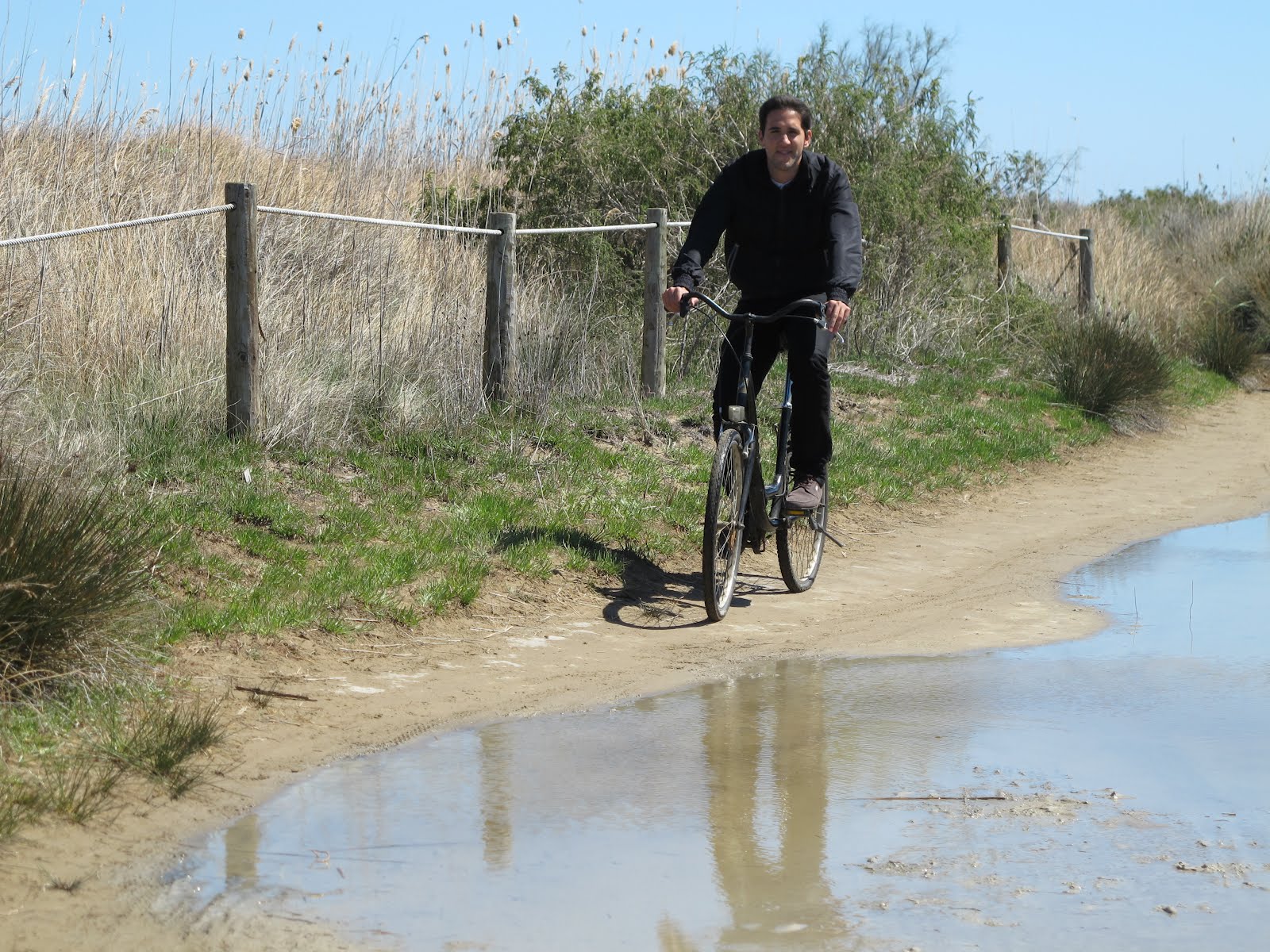
Najlepszym sposobem na poznanie delty jest rower (lub własne nogi, jeśli ktoś ma więcej czasu). Z braku własnego dwuśladu, wypożyczyliśmy 2 podstarzałe w jednej z licznych wypożyczalni. Malownicze krajobrazy, dziesiątki kitesurferów, stanowiska do obserwacji ptaków- park pełen jest atrakcji. Niestety nie byliśmy wyposażeni a lornetki, a mój aparat aż takiego zooma nie ma, więc różowe flamingi były ledwo widoczne.


Nie lada wyzwaniem była przeprawa przez niektóre bardzo podmokłe odcinki trasy rowerowej, ale umiarkowana dawka sportu na świeżym powietrzu, nawet jeśli zakończona błotem na spodniach, to było idealne zakończenie miłego weekendu.


I don't know how and on which website Nuno discovered Miravet. But I am so glad he found this charming tiny village. As this year on Easter we practically didn’t have any days off, we decided that instead of buying overprized plane tickets to go home, we would stay in Spain, but not in Barcelona. This time Nuno was responsible for all the planning (those who know us, are well aware that I am the planner) and he chose Tarragona area for our Easter destination. The only negative point was that we started the planning bit too late, and all the best sleeping spots were already full, and we ended up in a rather unattractive Mora d'Ebre, virtually in the middle of nothing. Well it did had some ruins of a castle and a nice tapas bar, so it wasn’t that bad after all.


After visiting Tarragona and seeing the Semana Santa procession, our next stop was Miravet. There is nothing I can write much about this charming pueblo. As they say a picture is worth a thousand words. River. A tiny town by the river. The town is dominated by a castle. From the castle you can admire beautiful view on the river. Come full circle. We could have rented a kayak. Instead we just relaxed, stare at the river for a long moment. The town has a big charm, and we easily fell under its spell.


As I mentioned, we booked a higly recommended hotel in Mora d'Ebre (Hostal La Creu), but in the evening we just chilled in our room, watching a new series. Well, we did go for a walk, we tried to find the castle, and were able to do on our 3rd attempt, we admired the views on the Ebre. And that was about all you could do in this lost Catalan town. Then, instead of following recommendation and going to some restaurant (we would probably have gotten lost anyway), we just crossed the street and went to a surprisingly good tapas bar Piscolabis (if you are ever lost in Mora d’Ebre, you must go there).


We spent a last day in Delta de l’Ebre, stopping for some unknown reason in Tortosa. After seeing the cathedral, we failed to find a way to a castle. As it was to be the 3rd castle we saw in just 2 days, we decided to skip it. What you can't skip is Delta, the second largest natural park in Spain (320 km ²), a nature reserve where you can meet flamingos and 300 (if you believe the information I found on the Internet) of other bird species.


The best way to explote the delta is on a bike or if you have more a) time- on foot, b) money- on a boat. As we don’t own our own bicycle, we rented two “vintage” ones (there are many points where you can cheaply rent bicycles). Picturesque landscapes, dozens of kite surfers, bird-watching position-you get it all in just one park.


Unfortunately, as we didn’t take with us a pair of binoculars (it is not that we have one anyway) so we couldn’t really enjoy bird-watching and my zoom isn’t really that good, so pink flamingos seems like some barely visible dots. Crossing some flooded parts of the bicycle track was quite challenging, but outdoor activity, even if we ended up with your shoes and trousers covered with mud, was a perfect way to finish our Easter weekend.

Tuesday, 10 April 2012

Tour po malowniczych pueblos/ Tour through charming pueblos

Majorka jest niedużą wyspą, 100 km szerokości i 75 km długości, tak więc przemieszczenie się ¡z jednego końca wyspy na drugi nie zajmuje dużo czasu. Ze względu na wygodę postanowiliśmy wynająć samochód, by jak najwięcej zwiedzić podczas naszego krótkiego pobytu. Ceny wynajmu przed sezonem są sporo niższe (Ewa widziała auta za 10€ za dzień, ale to było w styczniu) i do tego byliśmy w 4, więc nie trzeba było namawiać nikogo na to rozwiązanie transportowe.

Tym razem wiedziałam, że stroną organizacyjną naszego pobytu i planowaniem miejsc wartych zobaczenia zajmie się Ajka oraz że możemy liczyć na rady Ewy, więc przed urlopem jedynie pobieżnie przejrzałam przewodnik. Czasami dobrze jest móc podążać za kimś i nie być głównym głosem decydującym gdzie/co/kiedy.

Pierwszym przystankiem byla Valldemossa, miasteczko w którym Fryderyk Chopin i George Sand spędzili zimę. Podobno Valldemossa niezbyt im się spodobała, nam jednak wydała się urokliwa, z tego też powodu do muzeum poświęconemu Chopinowi nie weszliśmy, woleliśmy powłóczyć się po malowniczych uliczkach. Zwróciłam uwagę, że zdobniczym motywem przewodnim wielu domów byly zawieszone na ścianach donice z kwiatami oraz kafelki ze scenami z życia świętej Cataliny (potem wygooglowalam, że Catalina Thomas jest jedyną świętą pochodzącą z Majorki, stąd pewnie nie było kafli z innymi świętymi).


W Hiszpanii każdy region, podregion, czy miasto ma jakiś lokalny przysmak z jakiego jest znany. Jadąc na Majorkę wiedziałam zatem, że musimy spróbować ensaimady, a w Valldemossa na każdej cukierni/kawiarni ogłaszano, że są dostępne cocas de patata. Nie było wyjścia, musiałam spróbować, kolejny jednak raz hiszpańskie słodycze nas nie zachwyciły, cocas smakują jak zwykle słodkie bułki. Ensaimada to w sumie ciasto francuskie posypane cukrem pudrem, czasami z kremem budyniowym w środku, smakuje, ale szału nie robi .


Po słodkiej przerwie ruszyliśmy dalej w drogę, do Deia, ponoć, jeśli wierzyć słowom kilku przewodników, najpiękniejszemu miasteczku na Majorce. Może pozostaliśmy oporni na uroki Deia, ale po kilkuminutowej wspinaczce stromymi uliczkami i okrążeniu kościoła wraz z cmentarzem, jedynym komentarzem z naszej strony było :to już to? jest coś więcej do zobaczenia? Wsiedliśmy więc do niebieskiej wynajętej pandy.


W Puerto del Soller, zadziwiająco ładnym miasteczku portowym, gdzie patrząc na zacumowane łodzie rozmarzyliśmy się, by jakoś w przyszłości wybrać się na rejsik (najchętniej po greckich wyspach lub Chorwacji), zjedliśmy lunch złożony z tapas.
Na Majorce dużo jest miejscowości, które mają swój odpowiednik portowy, jak Soller ma Port de Soller, Alcudia, Port d’Alcudia. Ewa powiedziała, że to dlatego, żeby bronić się przed piratami i "prawdziwe" miasta znajdowały się wgłąb interioru.


Soller to typowe hiszpańskie miasteczko, gdzie życie toczy się przy głównym, placu, gdzie stoi katedra i ratusz i niezliczone bary i kafejki. Przez środek Placu Konstytucji biegną tory zabytkowego tramwaju (dla mnie wygląda jak tramwaj, ale tak na prawdę jest to kolejka wąskotorowa) o sugestywnej nazwie "Czerwona Strzała". Kolejka łączy Palmę z Sóller, a na trasie można podziwiać piękne widoki, wdychać aromat cytrusów, bowiem uprawia się tu pomarańcze, cytryny i mandarynki i powietrze nasiąka ich intensywnym zapachem.


Ostatnim przystankiem było Fornalutx, urocze, małe miasteczko słynne z pysznych pomarańczy , więc zakończyliśmy podróż na tarasie, każdy ze szklanką świeżo wyciśniętego soczku :)


A wieczorem miała miejsce wyżerka u Ewy :) Kupiliśmy kilka rodzajów oliwek, fuet, chorizo, ser, bagietkę (Nuno zrobił pan amb tomaquet), tortillę, a na deser sałatka owocowa :)


Mallorca is a relatively small island, 100 km wide and 75 km long, so getting from one point of the island to the other doesn't take much time or effort. We wanted some comfort and having to depend on the bus schedule was something we wanted to avoid, so we opted for renting a car, which also made it so much easier to get to all the small cities we wanted to visit. Before the high season car rental prices were quite attractive. Ewa assured us than in January you could rent a car for 10€/day), we weren´t that lucky, cause by the end of March this price doubled.

This time, as I knew that all the organizing and planning is taken care of by Ajka, and we could always depend on Ewa´s help, I only skimmed through the guide before coming to Mallorca. Sometimes I enjoy following someone and not being in charge of deciding where/what/when. Even an organizing freak that I am needs a break from time to time.

The first stop on Friday was Valldemossa, a small town where Frederic Chopin and George Sand spent one winter. Apparently they didn´t like it that much, but we found it quite charming, for this reason, we decided to skip entering a museum devoted to Chopin, as wandering through picturesque streets seemed way more exciting. I noticed that many houses have a decorative theme in common- pots of flowers hanging on the walls and tiles with scenes from the life of Saint Catalina (I googled later that Catalina Thomas was Majorca's only saint which explained why there weren´t any other saints pained on the tiles).


In Spain every single region, if not every city or even the smallest town, is famous for some local food, some typical plate that you must try when visiting it. Going to Mallorca I already knew that I would try ensaimada, and when I saw that in Valldemossa on every single bakery/café there was a poster with "Hay coca de patata", I just had to eat it. Well, honestly, I am not a big fan of typical Spanish confectionery (as much as I love good cakes, ice cream, or almost anything that is labeled as a dessert), and once again it was confirmed, first my the ensaimada, that tasted good but I would say it tasted as any other puff pastry with powdered sugar on the top and cocas de patata tasted like sweet rolls.


After a sweet break, we continued our road trip to Deia, which was called the most charming little town in Mallorca by our guidebooks. Maybe we remained resistant to its charm, as after a short climb on a steep hill to see a church, cemetery and view on the town, the only comment we were able to make was: is it all? Should we see something more? Instead of thinking too much, we just hopped in our blue rented panda and drive off.


In Puerto del Soller, surprisingly cute harbor town where looking at grounded boats, we dreamt about going on a cruise (preferably Greek Islands or Croatia). It is very common in Mallorca, that some villages have their "port" equivalent, as it is the case with Soller - Port de Soller, Alcudia-Port d’Alcudia Ewa explained that it is because of defending the villages against pirates and that the "real" towns were constructed deeper into the interior of the island.


Soller is a typical small Spanish town, where life happens at the main square, where the main monuments, that is cathedral and town hall, are located next to countless bars and cafes. What makes it more special, are the tram tracks that divides the square in two. Taking a tram, suggestively called the Red Arrow, is one of the major attractions of the island. You start this unforgettable journey in Palma, then all along the way you can enjoy beautiful views, breathe the aroma of citrus, as the air is saturated with their heavy smell of orange, lemon and tangerine trees growing right next to the tracks.


The last stop was Fornalutx, a charming, tiny town famous for its delicious and juicy oranges, so we couldn´t finished our day in another way than drinking a freshly squeezes juice on a lovely terrace.


And in the evening, we ended up in Eva´s flat, having a real Spanish feast. We A gorge in the evening took place at Eva :) We bought several types of olives, fuet, chorizo, cheese, baguette (Nuno prepared pan amd tomàquet), tortillas, and fruit salad for dessert :)

Showing posts with label wycieczki/trips. Show all posts

Wednesday, 18 July 2012

Miasto niekończących się spacerów/ City of endless walks

Po Amsterdamie można spacerować bez końca. Tyle jest bowiem urokliwych uliczek kryjących w sobie czarujące kawiarenki, urocze sklepiki i zaułki. Tyle jest bowiem kanałów, nad którymi spacer przestaje być zwykłym spacerem, a staje się przygodą. Po Amsterdamie można jeździć rowerem. Też godzinami. I to nie dlatego, że miasto jest wielkie, ale można się w nim łatwo zgubić. Ale zamiast się denerwować, lepiej nasze zgubienie ustalonej wcześniej trasy przyjąć jako miły psikus losu. Lepiej pozbyć się mapy, bo możemy się sfrustrować, nazwy ulic są tak podobne i obco brzmiące, że zanim na mapie znajdziemy tę, na której jesteśmy i tę, na którą chcemy się dostać, stracić możemy dobry humor. Lepiej zdać się na przypadek, a na pewno nie pożałujemy, bo poznamy lepiej klimat tego miasta. Do Amsterdamu miałam ochotę pojechać chyba od zawsze. W końcu udało się zrealizować to małe marzenie podróżnicze. A jaki jest lepszy termin niż okolice moich urodzin? (Maj zresztą to idealny miesiąc na podróże, bo wiosną wszystko wygląda po prostu ładniej niż zimą, a przy tym nie męczą nas upały).


Amsterdam pozytywnie nas zaskoczył (może nie do końca pogodą, bo trochę popadało, ale to chyba był jedyny mankament wyjazdu). Na tyle, że znalazł się na całkiem przyzwoitej lokacie miast, w których moglibyśmy zamieszkać. Miasto nie ma zbyt dużo atrakcji turystycznych (poza 2 sławnymi muzeami i domem Anny Frank, no i może piwną przygodą w Heineken), ale może właśnie dzięki temu tak nam się podobało? Są bowiem miasta takie jak Paryż czy Rzym, gdzie w ciągu tygodnia nie da się zobaczyć wszystkich zabytków, gdzie wiekowe budowle stoją w odległości kilkunastu metrów od siebie, miasta, gdzie historię ogląda się na każdym rogu. I są miasta, jak Amsterdam czy Edynburg, gdzie sławne zabytki można policzyć na palcach jednej (no może dwóch) ręki. I czasami to właśnie takie miasta nas w sobie rozkochują. Mają inny klimat. Nie czujemy bowiem przymusu odwiedzenia kolejnego muzeum, kościoła, Koloseum czy … (tu można wpisać jeden z niezliczonych obowiązkowych na turystycznej liście zabytków). To w tych miastach możemy sobie odpuścić planowanie dokładnej trasy, bo bez mapy mamy większą szansę na odkrycie lokalnych sekretów. My kilka tajemnic poznaliśmy… (Jak się można domyślić, ciąg dalszy nastąpi… naszła mnie bowiem ochota na posty częstsze, a krótsze).


Amsterdam is a perfect city to just walk around, to wander without purpose, just for the sake of having a walk. There are so many charming streets hidden, whichever direction you choose to turn, you can find a cozy small café or shop. Having a walk by one of many channels is a yet different experience. In Amsterdam you can ride a bike for hours and hours. And not because it is such a big city, it is just quite easy to get lost. You have to go with the flow, and instead of getting angry for losing your scheduled itinerary, enjoy what you can discover by accident. In other words, just get rid of the map and you won’t get frustrated, as the street names are so similar to one another and sound so foreign, that before you can find on the map the street you are on and the one you want to reach, you probably will lose the patience. Besides, to enjoy this city it is advisable to get lost.
I wanted to go to Amsterdam like forever. But there was always some other city that had better connection, had some friends living in or any other reason to postpone a trip to Amsterdam. Finally I did book a trip as my birthday present this year (I also find May the best month to travel, as during spring all the city with flowers blooming and green grass look more attractive than in winter, and you still are not overwhelmed by the summer heat. Not that the heat is an issue in Amsterdam, note: always bring your umbrella, unless you enjoy singing in the rain.


We were positively surprised by the city’s charm and atmosphere (the only drawback was the weather, as when we chose to have a boat trip to see a city from the river level, it was raining quite a lot). We liked it so much, that Amsterdam is high on our private list of the cities we could live in. What we actually liked was the fact that there aren’t so many touristic attractions (not counting 2 famous museums and the Anne Frank House, and maybe a beer adventure in Heineken, there are really not that much to visit). I divide cities into 2 kinds. Those, such as Paris or Rome, where during one week you can’t possibly see all the attractions, where ancient buildings stand one next to another, where ancient history awaits at every corner. And there are cities like Amsterdam and Edinburgh, where famous monuments can be counted on the fingers of one hand (well, maybe two). Sometimes it is easier to fall in love with those cities, as they have different atmosphere (I found them less overwhelming, less intimidating). As we don’t feel forced to visit yet another museum, church, Colosseum or ... (here you can name one of the countless mandatory touristic spots not to be missed when in X city), we can just enjoy what the city has to offer, we can skip planning a detailed route and by accident discover the local secrets. We found quite a lot of them when in Amsterdam ... (As you might guess, to be continued ... short post was easier to write)

Monday, 7 May 2012

Trzy zamki, rzeka i flamingi/ 3 castles, river and flamingos

Nie wiem, jak Nuno znalazł Miravet. Nie wiem, ale jestem szczęśliwa, że znalazł to malownicze miasteczko. Praktycznie z braku dni wolnych na Wielkanoc, nie opłacało nam się kupować drogich biletów, by święta spędzić w domu. Jednak nie chcieliśmy zostać w Barcelonie. Tym razem to Nuno zaplanował (kto nas zna, wie, że od planowania raczej jestem ja), żebyśmy świąteczny weekend spędzili w okolicach Tarragony. Jednym mankamentem było brak miejsc noclegowych w miejscach ciekawszych niż Móra d'Ebre, gdzie absolutnie nie ma nic do zobaczenia (poza trudnymi do znalezienia ruinami zamku oraz zaskakująco dobrym tapas barze).


Po Tarragonie, naszym przystankiem było właśnie Miravet. Zdjęcia chyba mówią same za siebie. Rzeka. Nad rzeką miasteczko. Nad miasteczkiem góruje zamek. Z zamku rozciąga się wspaniały widok nad rzekę. Zataczamy koło. Moglibyśmy wypożyczyć kajak. Miasteczko ma swój urok, któremu ulegamy z łatwością.


Nocleg mieliśmy w Móra d'Ebre w naprawdę fajnym hotelu (Hostal La Creu), gdzie wieczorem bez wyrzutów sumienia oglądaliśmy na laptopie nowy serial. Wcześniej bowiem stwierdziliśmy na spacerze, kiedy dopiero przy 3 próbie odnalezienia ruin zamku, udało nam się tenże znaleźć, że w zasadzie nie ma co za bardzo w tym zagubionym katalońskim miasteczku robić. Na kolację też, zamiast iść za radą właścicielki hostalu i poszukać poleconej przez niej restauracji (pewnie też byśmy się zgubili po drodze), przeszliśmy tylko przez ulicę do tapas baru Piscolabis.


Na ostatni dzień wybraliśmy się do Delty, po drodze, nie wiem czemu, zatrzymując się w Tortosie. Zobaczyliśmy katedrę, mieliśmy zobaczyć zamek, ale nie mogliśmy znaleźć drogi do niego prowadzącej (czyli trzeci zamek w ciągu 2 dni sobie lekką ręką odpuściliśmy). Czekała na nas bowiem Delta de l’Ebre, drugi co do wielkości park w Hiszpanii (320 km²), rezerwat przyrody, gdzie spotkać można flamingi i 300 (jeśli wierzyć Internetowi) innych gatunków ptaków.


Najlepszym sposobem na poznanie delty jest rower (lub własne nogi, jeśli ktoś ma więcej czasu). Z braku własnego dwuśladu, wypożyczyliśmy 2 podstarzałe w jednej z licznych wypożyczalni. Malownicze krajobrazy, dziesiątki kitesurferów, stanowiska do obserwacji ptaków- park pełen jest atrakcji. Niestety nie byliśmy wyposażeni a lornetki, a mój aparat aż takiego zooma nie ma, więc różowe flamingi były ledwo widoczne.


Nie lada wyzwaniem była przeprawa przez niektóre bardzo podmokłe odcinki trasy rowerowej, ale umiarkowana dawka sportu na świeżym powietrzu, nawet jeśli zakończona błotem na spodniach, to było idealne zakończenie miłego weekendu.


I don't know how and on which website Nuno discovered Miravet. But I am so glad he found this charming tiny village. As this year on Easter we practically didn’t have any days off, we decided that instead of buying overprized plane tickets to go home, we would stay in Spain, but not in Barcelona. This time Nuno was responsible for all the planning (those who know us, are well aware that I am the planner) and he chose Tarragona area for our Easter destination. The only negative point was that we started the planning bit too late, and all the best sleeping spots were already full, and we ended up in a rather unattractive Mora d'Ebre, virtually in the middle of nothing. Well it did had some ruins of a castle and a nice tapas bar, so it wasn’t that bad after all.


After visiting Tarragona and seeing the Semana Santa procession, our next stop was Miravet. There is nothing I can write much about this charming pueblo. As they say a picture is worth a thousand words. River. A tiny town by the river. The town is dominated by a castle. From the castle you can admire beautiful view on the river. Come full circle. We could have rented a kayak. Instead we just relaxed, stare at the river for a long moment. The town has a big charm, and we easily fell under its spell.


As I mentioned, we booked a higly recommended hotel in Mora d'Ebre (Hostal La Creu), but in the evening we just chilled in our room, watching a new series. Well, we did go for a walk, we tried to find the castle, and were able to do on our 3rd attempt, we admired the views on the Ebre. And that was about all you could do in this lost Catalan town. Then, instead of following recommendation and going to some restaurant (we would probably have gotten lost anyway), we just crossed the street and went to a surprisingly good tapas bar Piscolabis (if you are ever lost in Mora d’Ebre, you must go there).


We spent a last day in Delta de l’Ebre, stopping for some unknown reason in Tortosa. After seeing the cathedral, we failed to find a way to a castle. As it was to be the 3rd castle we saw in just 2 days, we decided to skip it. What you can't skip is Delta, the second largest natural park in Spain (320 km ²), a nature reserve where you can meet flamingos and 300 (if you believe the information I found on the Internet) of other bird species.


The best way to explote the delta is on a bike or if you have more a) time- on foot, b) money- on a boat. As we don’t own our own bicycle, we rented two “vintage” ones (there are many points where you can cheaply rent bicycles). Picturesque landscapes, dozens of kite surfers, bird-watching position-you get it all in just one park.


Unfortunately, as we didn’t take with us a pair of binoculars (it is not that we have one anyway) so we couldn’t really enjoy bird-watching and my zoom isn’t really that good, so pink flamingos seems like some barely visible dots. Crossing some flooded parts of the bicycle track was quite challenging, but outdoor activity, even if we ended up with your shoes and trousers covered with mud, was a perfect way to finish our Easter weekend.

Tuesday, 10 April 2012

Tour po malowniczych pueblos/ Tour through charming pueblos

Majorka jest niedużą wyspą, 100 km szerokości i 75 km długości, tak więc przemieszczenie się ¡z jednego końca wyspy na drugi nie zajmuje dużo czasu. Ze względu na wygodę postanowiliśmy wynająć samochód, by jak najwięcej zwiedzić podczas naszego krótkiego pobytu. Ceny wynajmu przed sezonem są sporo niższe (Ewa widziała auta za 10€ za dzień, ale to było w styczniu) i do tego byliśmy w 4, więc nie trzeba było namawiać nikogo na to rozwiązanie transportowe.

Tym razem wiedziałam, że stroną organizacyjną naszego pobytu i planowaniem miejsc wartych zobaczenia zajmie się Ajka oraz że możemy liczyć na rady Ewy, więc przed urlopem jedynie pobieżnie przejrzałam przewodnik. Czasami dobrze jest móc podążać za kimś i nie być głównym głosem decydującym gdzie/co/kiedy.

Pierwszym przystankiem byla Valldemossa, miasteczko w którym Fryderyk Chopin i George Sand spędzili zimę. Podobno Valldemossa niezbyt im się spodobała, nam jednak wydała się urokliwa, z tego też powodu do muzeum poświęconemu Chopinowi nie weszliśmy, woleliśmy powłóczyć się po malowniczych uliczkach. Zwróciłam uwagę, że zdobniczym motywem przewodnim wielu domów byly zawieszone na ścianach donice z kwiatami oraz kafelki ze scenami z życia świętej Cataliny (potem wygooglowalam, że Catalina Thomas jest jedyną świętą pochodzącą z Majorki, stąd pewnie nie było kafli z innymi świętymi).


W Hiszpanii każdy region, podregion, czy miasto ma jakiś lokalny przysmak z jakiego jest znany. Jadąc na Majorkę wiedziałam zatem, że musimy spróbować ensaimady, a w Valldemossa na każdej cukierni/kawiarni ogłaszano, że są dostępne cocas de patata. Nie było wyjścia, musiałam spróbować, kolejny jednak raz hiszpańskie słodycze nas nie zachwyciły, cocas smakują jak zwykle słodkie bułki. Ensaimada to w sumie ciasto francuskie posypane cukrem pudrem, czasami z kremem budyniowym w środku, smakuje, ale szału nie robi .


Po słodkiej przerwie ruszyliśmy dalej w drogę, do Deia, ponoć, jeśli wierzyć słowom kilku przewodników, najpiękniejszemu miasteczku na Majorce. Może pozostaliśmy oporni na uroki Deia, ale po kilkuminutowej wspinaczce stromymi uliczkami i okrążeniu kościoła wraz z cmentarzem, jedynym komentarzem z naszej strony było :to już to? jest coś więcej do zobaczenia? Wsiedliśmy więc do niebieskiej wynajętej pandy.


W Puerto del Soller, zadziwiająco ładnym miasteczku portowym, gdzie patrząc na zacumowane łodzie rozmarzyliśmy się, by jakoś w przyszłości wybrać się na rejsik (najchętniej po greckich wyspach lub Chorwacji), zjedliśmy lunch złożony z tapas.
Na Majorce dużo jest miejscowości, które mają swój odpowiednik portowy, jak Soller ma Port de Soller, Alcudia, Port d’Alcudia. Ewa powiedziała, że to dlatego, żeby bronić się przed piratami i "prawdziwe" miasta znajdowały się wgłąb interioru.


Soller to typowe hiszpańskie miasteczko, gdzie życie toczy się przy głównym, placu, gdzie stoi katedra i ratusz i niezliczone bary i kafejki. Przez środek Placu Konstytucji biegną tory zabytkowego tramwaju (dla mnie wygląda jak tramwaj, ale tak na prawdę jest to kolejka wąskotorowa) o sugestywnej nazwie "Czerwona Strzała". Kolejka łączy Palmę z Sóller, a na trasie można podziwiać piękne widoki, wdychać aromat cytrusów, bowiem uprawia się tu pomarańcze, cytryny i mandarynki i powietrze nasiąka ich intensywnym zapachem.


Ostatnim przystankiem było Fornalutx, urocze, małe miasteczko słynne z pysznych pomarańczy , więc zakończyliśmy podróż na tarasie, każdy ze szklanką świeżo wyciśniętego soczku :)


A wieczorem miała miejsce wyżerka u Ewy :) Kupiliśmy kilka rodzajów oliwek, fuet, chorizo, ser, bagietkę (Nuno zrobił pan amb tomaquet), tortillę, a na deser sałatka owocowa :)


Mallorca is a relatively small island, 100 km wide and 75 km long, so getting from one point of the island to the other doesn't take much time or effort. We wanted some comfort and having to depend on the bus schedule was something we wanted to avoid, so we opted for renting a car, which also made it so much easier to get to all the small cities we wanted to visit. Before the high season car rental prices were quite attractive. Ewa assured us than in January you could rent a car for 10€/day), we weren´t that lucky, cause by the end of March this price doubled.

This time, as I knew that all the organizing and planning is taken care of by Ajka, and we could always depend on Ewa´s help, I only skimmed through the guide before coming to Mallorca. Sometimes I enjoy following someone and not being in charge of deciding where/what/when. Even an organizing freak that I am needs a break from time to time.

The first stop on Friday was Valldemossa, a small town where Frederic Chopin and George Sand spent one winter. Apparently they didn´t like it that much, but we found it quite charming, for this reason, we decided to skip entering a museum devoted to Chopin, as wandering through picturesque streets seemed way more exciting. I noticed that many houses have a decorative theme in common- pots of flowers hanging on the walls and tiles with scenes from the life of Saint Catalina (I googled later that Catalina Thomas was Majorca's only saint which explained why there weren´t any other saints pained on the tiles).


In Spain every single region, if not every city or even the smallest town, is famous for some local food, some typical plate that you must try when visiting it. Going to Mallorca I already knew that I would try ensaimada, and when I saw that in Valldemossa on every single bakery/café there was a poster with "Hay coca de patata", I just had to eat it. Well, honestly, I am not a big fan of typical Spanish confectionery (as much as I love good cakes, ice cream, or almost anything that is labeled as a dessert), and once again it was confirmed, first my the ensaimada, that tasted good but I would say it tasted as any other puff pastry with powdered sugar on the top and cocas de patata tasted like sweet rolls.


After a sweet break, we continued our road trip to Deia, which was called the most charming little town in Mallorca by our guidebooks. Maybe we remained resistant to its charm, as after a short climb on a steep hill to see a church, cemetery and view on the town, the only comment we were able to make was: is it all? Should we see something more? Instead of thinking too much, we just hopped in our blue rented panda and drive off.


In Puerto del Soller, surprisingly cute harbor town where looking at grounded boats, we dreamt about going on a cruise (preferably Greek Islands or Croatia). It is very common in Mallorca, that some villages have their "port" equivalent, as it is the case with Soller - Port de Soller, Alcudia-Port d’Alcudia Ewa explained that it is because of defending the villages against pirates and that the "real" towns were constructed deeper into the interior of the island.


Soller is a typical small Spanish town, where life happens at the main square, where the main monuments, that is cathedral and town hall, are located next to countless bars and cafes. What makes it more special, are the tram tracks that divides the square in two. Taking a tram, suggestively called the Red Arrow, is one of the major attractions of the island. You start this unforgettable journey in Palma, then all along the way you can enjoy beautiful views, breathe the aroma of citrus, as the air is saturated with their heavy smell of orange, lemon and tangerine trees growing right next to the tracks.


The last stop was Fornalutx, a charming, tiny town famous for its delicious and juicy oranges, so we couldn´t finished our day in another way than drinking a freshly squeezes juice on a lovely terrace.


And in the evening, we ended up in Eva´s flat, having a real Spanish feast. We A gorge in the evening took place at Eva :) We bought several types of olives, fuet, chorizo, cheese, baguette (Nuno prepared pan amd tomàquet), tortillas, and fruit salad for dessert :)