Showing posts with label atrakcje/attractions. Show all posts

Thursday, 28 June 2012

Tego lata zakochaj się w Barcelonie/ This summer fall in love with Barcelona

Un estiu per enamorar-te de Barcelona (czyli dosłownie wakacje do zakochania się w Barcelonie) to slogan z plakatu urzędu miasta, na który zwróciłam uwagę kilka dni temu idąc do metra. Tak jak podoba mi się hasło (niewiele się różniące, jeśli ominiemy porę roku) promujące stolicę Polski, czyli Zakochaj się w Warszawie, tak samo myślę, że letnie miesiące są idealne, aby poddać się urokowi Barcelony. Co wcale oczywiście nie znaczy, że podczas miesięcy zimowych czy jesiennych można się tu nudzić czy się nią nie zachwycić. Ale to podczas wiosny i lata, gdy slońce i temperatura sprawiają, że całe życie barcelończyków przenosi się na ulice i plaże naprawdę trudno oprzeć się urokowi tego miasta.

Dzięki letniej akcji promującej Barcelonę, nikt się nie bedzie nudzil w miesiącach letnich, do wyboru mamy bowiem niezliczone koncerty (np. w parkach), pokazy filmów na świeżym powietrzu, fiestas mayores wielu dzielnic, niezliczone ogródki restauracyjne oraz plaże miejskie (nie tylko Barceloneta, na odważniejszych czeka plaża nudystów). Szczegóły do zobaczenia na stronie Ayuntamiento, atrakcje podzielone są tematycznie : co się dzieje, plaże, baseny, muzyka, noce letnie, lato i dzieci, lokalne święta, parki i ogrody, Municipal measures albo ze względu na ich lokalizację. Z wielu propozycji na pewno skorzystamy. W zeszłym roku byliśmy na bardzo fajnym festiwalu filmów krótkometrażowych Mecal Air, gdzie za grosze można spędzić miły piątkowy wieczór w Poble Espanyol. Jutro idziemy na inaugurację kina pod chmurką (film poprzedzony koncertem oraz filmem krotkometrazowym) przy zamku na Montjuicku, wyposażeni w kocyk i koszyk piknikowy. Inną propozycją jest zaczynający się 1 lipca Grec Festival, czyli coś dla milośników teatru i spekatakli muzycznych i tanecznych.


Ciekawy też może być pokaz balonów :) odbywa się on od 4 do 10 lipca, w miasteczku Igualada, bardzo blisko i dobrze skomunikowanym z Barceloną. Wyobraźcie sobie niebo pełne kolorowych balonów, kontrastujących z błękitem nieba i bielą chmur. Niestety, w tym czasie jesteśmy na urlopie, więc mogę to sobie tylko wyobrazić...

Jeśli wy wybieracie Barcelonę na wasz urlop, nie zapomnijcie, że oprócz zwiedzania zabytków (ciekawostka: Pedrera ma ciekawą letnią propozycję nocnego zwiedzania), możecie skorzystać z licznych propozycji kulturalnych (za darmo lub za niewielką opłatę) i wybrać się na jakiś fajny koncert w parku lub uczestniczyć w świętowaniu dzielnicy (najbardziej bajkowe są przystrojone ulice Gracii w sierpniu, ale Raval czy Poble Sec mają swoje fiestas w lipcu, więc warto się zapoznać z atrakcjami przygotowanymi z tej okazji). A jak zmęczą was upały, Barcelona zaprasza na plażę :) Przygotujcie się jednak, że są one zatłoczone i po wyjściu z wody ciężko znaleźć własny ręcznik, o czym niedawno przekonał się Nuno :) Można jednak podjechać pociągiem do plaż poza Barceloną czy wynająć samochód i odkryć sekrety Costa Brava.


Un estiu per enamorar-te de Barcelona (which means a summer to fall in love with Barcelona) was a catchphrase I saw few days ago on a poster by city hall on my way to metro. Instantly I liked it, it is fun and makes you smile. But it also made my think about all the things I love in Barcelona and why I think that summer is a perfect time to be charmed by this city. Of course, there is nothing wrong with being in Barcelona during autumn and winter, it is just that with sun and good weather Barcelona gains the whole new dimension. It is when the life of all the Barcelonians moves to streets and beaches and you find yourself under the spell of this magic city.

And with the rich offer promoting Barcelona on many levels, nobody can possibly be bored this summer. One can choose between countless concerts (in different venues, some take place in parks), fresh air cinema, fiestas mayores of many districts, hundreds of terraces to enjoy a nice drink, or enjoy a day on one of urban beaches (don´t limit yourself to Barceloneta, there is a beach for nudist, so try it if you are brave enough!). Check more details on Ayuntamiento´s website, you can either consult it by subject: what is happening, beaches, swimming pools, music, summer nights, summer and children, local festivals, parks and gardens , municipal measures or by the districts. We will definitely participate in many of the activities listed there. Last year I enjoyed a great short movie festival Mecal Air, so definitely it is a must this summer as well; it is a cheap way to have fun on a Friday evening in Poble Espanyol. Tomorrow we are going for the first movie show outdoor (before a movie there is a concert and a short movie projection as well) at the castle of Montjuick, and we are going well equipped with a blanket and picnic basket (and wine of course). Another nice idea for those who enjoys theater and music/dance spectacles is Grec Festival, which starts on the 1st of July.


There is another festival that I discovered and it is quite a funny and alternative one. A balloons show takes place from 4th to 10th July, in Igualada, a town that is very close to Barcelona and well connected. Just picture a sky covered with colorful balloons, contrasting with the blue sky and white clouds. Unfortunately, since we are on holidays, we can´t participate in what seems like a fun event.

If you choose Barcelona as your holiday destination, don´t limit your stay to sightseeing only (although there are also some interesting proposals, as Pedrera´s summer night tour). to participate in many outdoor cultural activities (many are free or very cheap) will make your stay unforgettable. Just go for a nice concert in a park or have fun during Barcelona districts´parties (the most popular are decorated streets of Gracia that look like taken from fairytales but Raval and Poble Sec have their fiestas in July, so you might want to google interesting activities for fiesta mayor). And if you get tired of walking in the sun, you can have a rest on a beach. Be prepared, however, that all Barcelona´s beaches are crowded and after swimming it may be hard to find your own towel (Nuno knows something about it). Good alternative is to take a train and go to some nice beaches outside Barcelona or rent a car and discover the secrets of Costa Brava.

Sunday, 10 June 2012

Festiwalowa wiosna w Barcelonie, cześć pierwsza/ Spring Festival in Barcelona, Part One

Tydzień temu mieliśmy okazję uczestniczyć w dwunastej edycji Primavera Sound, jednego z najważniejszych i największych festiwali muzyki w Europie. A na przyszłą sobotę mamy kupione bilety na kolejny festiwal, Sonar, tak więc możecie się spodziewać części drugiej relacji festiwalowej. Posty powinny być napisane przez Nuno, bo ja raczej nie zaliczam się do fanów czy to koncertów czy to festiwali. Może to źle powiedziane, jak jest koncert artysty, którego uwielbiam, albo którego koncerty zamieniają się w prawdziwe show, to nie mam nic przeciwko kupieniu biletów na koncert (choć zawsze z niemałym bólem, bo jednak moje oszczędności wolę wydawać na podróże). Ale festiwal muzyki raczej alternatywnej, prawie nic niemówiące mi nazwy zespołów, wejściówka na jeden dzień za 80€, innymi słowy: Nuno musiał mnie trochę namawiać. Nie za bardzo mogłam odmówić, bo przecież ciągnę Nuno na jakieś dziwne hiszpańskie fiesty, uczestniczy ze mną w najdziwniejszych paradach i pochodach prawie bez słowa sprzeciwu.


Festiwal trwał od czwartku 31 maja do soboty 2 czerwca, w środę i niedzielę pod Łukiem Triumfalnym odbyły się także darmowe koncerty na otwarcie i zamknięcie Primavera Sound (w tym roku po raz pierwszy festiwal odbywał się nie tylko w Barcelonie, ale również w portugalskim Porto).

Nuno jest takim małym muzycznym freakiem. Przy każdym road tripie, czy przy planowanej dłuższej jeździe samochodem, przez kilka wieczorów poprzedzających tenże wyjazd kompiluje składankę muzyczna. I potem jednego CD słuchamy przez całą podroż. Jego gusta muzyczne też odbiegają troszkę od moich, z grup, które miały wystąpić na festiwalu (pełna lista tutaj) znał wszystkich! Ja ignorantka, tylko z pięć chyba. Na szczęście jego wygląd zewnętrzny niekoniecznie idzie w parze z jego alternatywnym gustem muzycznym. Na festiwalu bowiem była największa koncentracja na metr kwadratowy alternatywnych młodych brodaczy, tudzież posiadaczy modnych w ostatnich sezonach wąsów (mody tej nigdy nie zrozumiem i nie zaakceptuje). Wyglądało jakby wszystkie dziwolągi wybrały się na festiwal, wcześniej zapożyczając z szafy rodziców czy tez dziadków najdziwniejsze stroje tam znalezione. Ale nie będę oceniać, ani złośliwie komentować, bo jeszcze ktoś przeczyta, się obrazi i wrzuci mojego bloga na jakąś czarną listę :)


Największym problemem festiwalowicza, oprócz dylematu czy kupić wejściówkę na cały festiwal czy na wybrany dzień (cena wywiera dość znaczący wpływ na tę decyzję), jest dokonanie najlepszego wyboru zespołów, jakie będzie oglądać po kolei (wiele koncertów pokrywa się). Ja zdałam się na Nuno. I się nie zawiodłam, choć 8 godzin na festiwalu prawie przekroczyły moje możliwości, szczególnie, że na festiwal wybraliśmy się bezpośrednio po pracy. Gwiazdą naszego piątkowego dnia festiwalu było The Cure, koncert zaczynał sie przed 23, więc od 19 musieliśmy jakoś wypełnić czas innymi zespołami. Rozpoczęliśmy bardzo fajnym koncertem The Chameleons. Przyjemnie było ich posłuchać i potańczyć wśród innych festiwalowiczów, wśród których dużą grupę stanowili rówieśnicy naszych rodziców, ale bawiący się lepiej niż niejeden małolat. Koncert trwał jedyne pół godziny, szkoda, że nie grali więcej, bo roztańczony tłum prosił o więcej i więcej… bez rezultau.
Koncert The Cure był rekordowo długi, trwał prawie 3 godziny, inne zespoły miały chyba narzucone jakieś limity, bo na jednej scenie wystąpić musiało kilku wykonawców podczas jednego wieczoru. Ja twórczość zespołu The Cure znam raczej pobieżnie, ale Nuno narzekał, że za dużo było utworów komercyjnych, pod masową publikę. Ale przy ponad 30 zagranych piosenkach, każdy znalazł coś dla siebie.


Festiwal Primavera Sound przyciąga tłumy z całej Europy, ma juz swoją markę, codziennie przewija się przez Parc del Forum, gdzie festiwal ma miejsce, tysiące fanów. Festiwal jest dobrze zorganizowany, a lokalizacja chyba nie mogłaby być lepsza- metro znajduje się jakieś 200 metrów od wejścia do parku, było całkiem czysto (no względnie, bo po koncercie The Cure plastikowe kubki po piwie przykrywały każdy skrawek), można było sobie usiąść na schodach czy ławkach, by posłuchać muzyki i trochę dać odetchnąć zmęczonym nogom i plecom. Pogoda też dopisała i nie powiem, jak na pierwsze festiwalowe doświadczenie, byłam miło zaskoczona, że bawiłam się tak dobrze. CDN, bo Sonar już w przyszłą sobotę...


A week ago I went to my first music festival, as we decided to take the opportunity (well, better say to pay for the opportunity) to participate in the twelfth edition of the Primavera Sound, one of the most important music festivals in Europe. And the next Saturday there is another famous festival, Sonar, and we already have tickets for that one as well, so you can expect the second part of covering on Barcelona’s festival. To be honest, the posts should be written by Nuno, as he was the one who planned/organized/crazy about going to these festivals. Me, I am rather not that into live music and going to the festivals person. I mean I like music, but I am not obsessed with it, can’t talk about music for hours. Maybe, if it was one of my favorite artist’s concert, or a concert of a star that can really turn it into a crazy and amazing show, I wouldn’t mind going and spending a small fortune on tickets (to be frank, I would always consider it deeply as I normally tend to “waste” my savings on travels). So an alternative music festival, the bands I have never heard of, a day ticket for 80 €, in other words, Nuno had to spend some time persuading me info going with him . It is not that I could have refused either, as I drag Nuno to all those strange Spanish fiestas, he goes with me to all the strangest parades without complaining that much.


The festival lasted from Thursday, 31th of May, to Saturday, 2nd of June, on Wednesday and Sunday, for opening and closing of the festival, there were few free concerts in front of
Arc de Triomphe (this year for the first time the festival took place not only in Barcelona but also in Portuguese Porto) .

Nuno is kind of a small freak when it comes to music. When we go on a road trip or plan a car drive, just little longer than usual, he creates a song mix, compiling it for few evenings in a row. And then we listen to this CD during all the trip. Just picture that, and picture my pain, as his musical tastes differ from mine. He knew all the groups performing on PS festival (the full list can be found here), while for me only 5 bands were familiar. Fortunately for me, Nuno’s appearance and dress code don’t match. And he is rather an exception, as during the festival I got the strong impression that there was the biggest concentration per square meter of guys with beard versus one with strange moustache that seem awfully trendy among hipster youth (personally I will never get to understand this trend). It looked as if all the freaks before coming to the festival borrowed the strangest clothes they could find in their parents’/ grandparent’s closets. I leave it without further comments, as I don’t want my blog to end on somebody’s black list.

The biggest problem for a festival fan, in addition to the eternal dilemma of whether to buy a whole pass or a single-day entrance (as you may guess the price plays a fairly significant role in this decision), is to plan the best schedule, as many concerts overlap and you are forced to make some drastic choices. I trusted Nuno, and followed him blindly from one stage to another… during almost 8 hours, which was about the limit my body and soul could accept (before you judge me, we went there directly after work). The star of Friday was The Cure, the concert began before 11 pm, so we had plenty of time to see other bands before. We started with a very good concert of The Chameleons. It was great to listen to those rather old guys, still full of energy, and to dance among the crowd. There was a big group of fans that were our parents’ peers but had more power and fun than most of the teenagers. It was a pity they only played for half an hour as the atmosphere was just great and people wanted more and more songs…
The concert of The Cure was a record-long, it lasted almost 3 hours, other bands were probably given some time limits, as on one stage several groups had to perform. I am not a big fun of The Cure music, I really don’t know it that much, so I will just quote Nuno who was bit disappointed and complained that they played too many commercial songs for mass audience. But since they played more than 30 songs, everyone found something they loved and sang along with Robert Smith.


Primavera Sound Festival attracts crowds from all over Europe, is already a known brand, thousands of fans are daily in Parc del Forum, where the festival takes place. The festival is really well organized, and its location couldn’t be better-metro is about 200 meters from the entrance to the park, it was quite clear (well, relatively, as after the concert of The Cure, plastic beer cups covered literally every inch of the surface), one could sit on the stairs or benches and listen to live music while getting some rest. The weather was also nice. I really can’t complaint on anything, as I was pleasantly surprised that my first festival experience was so good .To be continued, as next Saturday we have Sonar festival...

Monday, 19 March 2012

Huk, ogień i buñuelos/ Noise, fire and buñuelos

Jeśli istnieje klub dla uzależnionych of regionalnych fiest, to z pewnością powinnam do niego należeć. Jeśli tylko termin, środki i inne nieciekawe elementy wypadkowe mi na to pozwalają, staram się uczestniczyć we wszystkich lokalnych imprezach uczestniczyć. W marcu padło na Walencję i słynne Fallas. Prowizorycznie hotel zablokowaliśmy już w listopadzie i mimo, że nie mogliśmy uczestniczyć w głównej atrakcji Fallas, jaką jest poniedziałkowa Crema, czyli palenie figur, to 2 dni pod znakiem petard, sztucznych ogni, tłumów i oczywiście imponujących rzeźb wystarczyły, żeby poczuć atmosferę tego jedynego w swoim rodzaju święta.


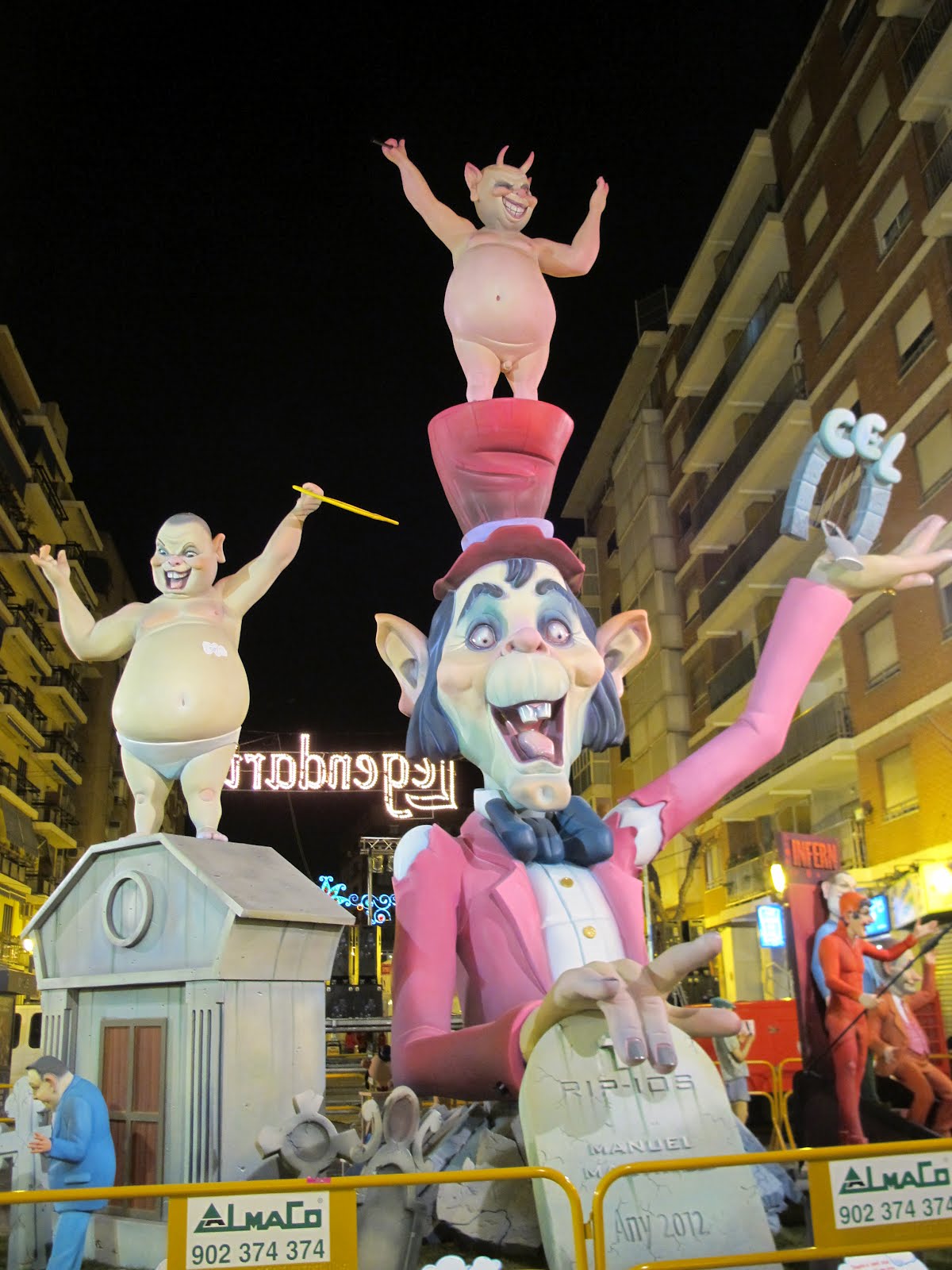
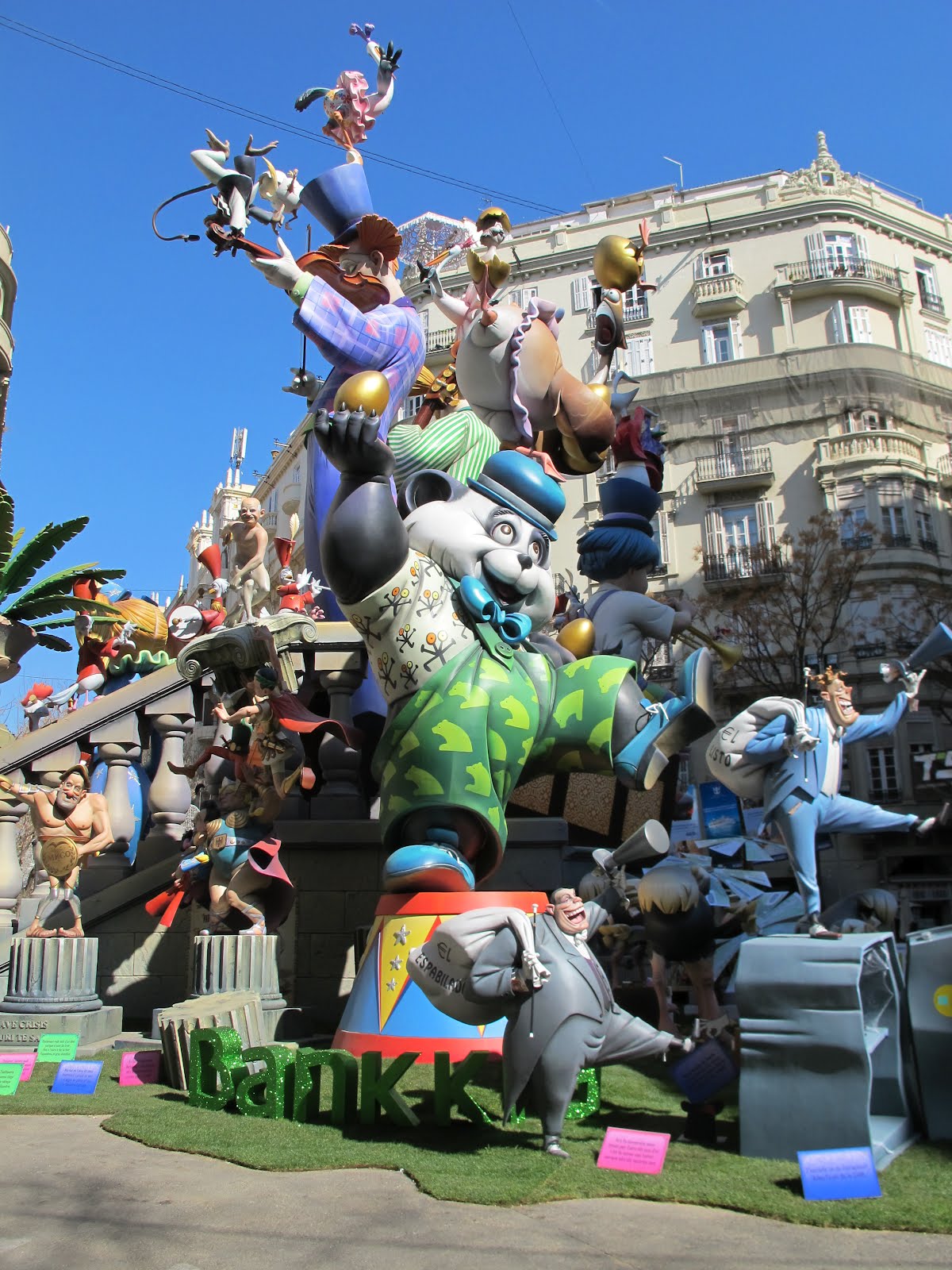
Nie wiem od czego zacząć… Od wystrzałów petard? Od pokazów fajerwerków, po których powietrze zasnute jest gęstym dymem? Od wielkich figur rodem z bajek, które jednak nawiązują bardziej do rzeczywistości niż do baśniowej fantazji? Od dominującego zapachu churros i buñuelos? Od słowniczka? A może od zarysu historycznego? Czyli skąd się wziął pomysł palenie misternie zaplanowanych i wykonanych konstrukcji? Po co przez całe miesiące buduje się niesamowite Fallas, kosztujące wcale niemało (te większe podobno ok. 100 000 euro- nie, nie dodałam żadnego 0), by potem podłożyć pod nie ogień? Tutaj na pomoc przyszła niezawodna wikipedia, według której: Początki święta w Walencji sięgają XVI wieku, kiedy to tutejsi cieśle postanowili uczcić swego patrona św. Józefa, paląc konstrukcje tworzone z drewnianych odpadów. Z czasem niektóre z nich zaczęły przybierać kształty ludzkie, by ostatecznie przekształcić się w formy znane współcześnie oraz karykatury znanych osób.


W tym roku dominowali Merkel i Sarkozy oraz chciwi bankierzy. Niektóre fallas w niezwykle obrazowy sposób przedstawiają grzechy i przywary współczesnego świata. Jednak to kryzys i marnotrawienie pieniędzy przez władze były tematem przewodnim wielu fallas. Mniejsze rzeźby, te już typowo bajkowe, bez politycznych podtekstów, wystawiają także dzieci. Bez dwóch zdań, niektóre fallas to dzieła sztuki. Aż szkoda, że pójdą z dymem.


A na ulicach prawdziwa rewia mody- piękne falleras prezentują swoje wdzięki ubrane w tradycyjne suknie, bogato obwieszone biżuterią, z włosami upiętymi w kok, podtrzymany ozdobnym i połyskliwym grzebieniem-wachlarzem.


Przy fallas ustawiane są także namioty centrum lokalnego stowarzyszenia, do którego należą fallas. Tam impreza trwa bez przerwy, gromadzą się falleras, rodziny i znajomi, by razem ugotować paellę, czy sobie podrinkować. A na ulicy bawi się całe miasto. Na każdym skwerze i parku starsi i młodsi uczestniczą w botellonie, czyli typowo hiszpański zwyczaj picia alkoholu w miejscach publicznych.


Nie zobaczyliśmy wszystkich fallas, ale przeszliśmy turystyczne dzielnice Walencji wzdłuż i wszerz. Nie uczestniczyliśmy też w imprezach towarzyszących (wyjątkiem był pokaz sztucznych ogni o 1 w nocy), ale to nie z braku chęci, ale z nadmiary chętnych. La Mascleta, czyli kilka minut odpalania petard i sztucznych ogni na plaza del Ayuntamiento zgromadziło takie tłumy, że utknęliśmy w jednej z ulic prowadzących na plac. Na ofrenda, czyli składaniu kwiatów Matce Boskiej przez falleras też nie dotarliśmy z powodu tłumów.


Ale kulinarnie tradycyjnie jedliśmy buñuelos con chocolate (pyszne pączki, w Walencji zrobione z dyni) i piliśmy horchatę. I zjedliśmy paellę na plaży.


Więcej zdjęć na stronie fcb.


I should be a star member of group for people addicted to regional fiestas. If there only existed one, which I seriously doubt (wait, should I create one?). Well, if only I can (read: it falls on weekend/ I can take days off/ I have money/ other thousand of trivial thinks I have to think of before going to one), I participate in any local fiesta. In March, it was Valencia’s time, and its big event- Las Fallas. We already booked our hotel in November and on last Friday we were ready to go and even though we missed the main event, which was Crema on Monday, I was still impressed how Spanish people love their fiestas. Impressive sculptures, firecrackers and fireworks, crowds, paella, fire, it all describes this one-of-a-kind festival.


I do not know with what to begin this post... How loud were the firecrackers? How thick and grey was the air after the firework show? About the impressive imagination of the artist that created the fallas? The figures looking as if they were taken out of fairytale, but at a second glance, reflected more e reality than a fantasy? How dominating was the smell of buñuelos and churros? Perhaps I should gove you some historical background so that the idea of burning the beautiful monuments that were planned and constructed for months? Why to make such an effort and spend so much money (some bigger fallas costed more than 100 000€, and no, I didn’t put any extra 0) and then set them on fire? Once again, thanks to Wikipedia I know that the origin of this festival In Valencia dates back to sixteenth century, when the local carpenters decided to celebrate their patron Saint Joseph by burning constructions they created with accumulated waste, especially wood, at the end of winter. With time, the constructions started taking human shape, and finally turn into a form known today , many times of caricatures of famous people.


This year, Merkel and Sarkozy, greedy bankers, crisis were the most recreated figures and themes. For a change, some other fallas represented the sins and vices of the modern world in a very graphic way. Next to big fallas, there are smaller sculptures, children’s fallas, those usually have only characters taken from fairy tales and cartoons, without political accents. Do you agree with me that some fallas are real piece of art? Shame they all go up in smoke.


It isn’t only fallas that you can admire, as there is a real beauty show on the streets. Falleras, dressed in a traditional dresses and ornate gowns, with a lot of jewels, with their hair in a bun hold with a decorative comb.


Next to the sculptures, usually there is a big tent that belongs to the local association that made the falla. There, the party never stops. Falleras, their family and friends gather to cook paella and have some drinks. And in the meantime, the whole city party on the streets. On every square and in every park older and younger participate in botellón, the typical Spanish custom of drinking alcohol in public places.


We didn’t see all the fallas, but we wanted to visit Valencia as well. We didn’t participate in all the events, but it wasn’t because we didn’t want to, it was because too many people wanted. We wanted to see a Mascleta, a few minutes long firecracker and fireworks display on Plaza del Ayuntamiento, but we got stuck on one of the streets leading to the square. We also missed ofrenda, offering of flowers to the Virgin Mary by falleras, as we were too scared by the crowds.


What we didn’t miss was the traditional food, that is buñuelos con chocolate (delicious donuts, in Valencia they wade them with pumpkin pulp) and we drank horchata. And for Sunday lunch, a paella on the beach (well, that one was a mistake)


If you want to see more photos, check the fcb page.

Sunday, 19 February 2012

Plaça Sant Jaume

Lubię gubić się w plątaninie małych uliczek w Barrio Gótico, ale o tym chyba wspominałam już kilkakrotnie. Dzisiaj nie będzie o uliczkach ani o klimatycznych sklepikach, ale o dawnym centrum Barcelony, placu Sant Jaume. Za dawnych czasów, bo za Imperium Rzymskiego, znajdowało się tu forum i targ. Teraz mieści się centrum administracyjne: Ayuntament (po katalońsku ratusz) i Palau de la Generalitat (siedziba rządu katalońskiego). Podczas obchodów fiesty La Laia (patronka katedry i dawna patronka miasta, zdetronizowana przez Merce) mieliśmy okazję zwiedzić ratusz. Dopiero przy pisaniu tego posta i dokładniejszym researchu znalazłam informację, że oba budynki otwarte są dla zwiedzających w niedziele: Generalitat tylko z przewodnikiem w drugą i czwartą niedzielę miesiąca, w godzinach 10-14, a ratusz w każdą niedzielę w godzinach 10-13.


Ayuntamiento, cytuję za niezawodnym przewodnikiem Pascala: „część budynku pochodzi z 1373 r, ale neoklasycystyczną fasadę dodano w XIXw.” Stara fasada znajduje się przy calle de la Ciudad i tam właśnie znajdowało się główne wejście do czasu wybudowania nowej fasady. Salon stu sędziów, kaplica, sala wyborów, sala czterech pór roku, schody honorowe, salon kronik, fasada gotycka: te i inne pomieszczenia oraz niezliczone elementy dekoracyjne możemy podziwiać w każdą niedzielę. Jeśli jednak jesteście w Barcelonie na krótko, zwiedzenie ratusza nie jest według mnie obowiązkowe.


Niejednokrotnie pisałam i powtórzę to raz jeszcze: jeśli możesz wybrać termin wycieczki do Barcelony, niech to będzie podczas Merce czy innego święta. Bo wtedy oprócz zwiedzania, jest okazja do poznania wielu typowych tylko dla tego regionu tradycji. A miasto przygotowuje też świetne niespodzianki, jak na przykład spektakl świetlny na fasadzie ratusza (jeśli komuś nie wystarczą zdjęcia, zapraszam tutaj na 15 minutowe wideo).


Fantastyczny pomysł! Nuno nie był zachwycony, jak mu zaproponowałam stanie przez kilkanaście minut na zimnie (w końcu przyszedł syberyjski front), ale jak przyszło co do czego do gapił się z szeroko otwartymi oczami na zmieniające się obrazki na fasadzie ratusza. Jednogłośnie stwierdziliśmy, że najlepsza była część z kultowymi grami lat 90-tych. Zresztą sami zobaczcie.


I already mentioned that getting lost in a maze of streets in Barrio Gótico is one of my favourite activities in Barcelona. Well, today I will focus on the old center of Barcelona, that is Plaça Sant Jaume. Long, long time ago, to be precise during the Roman Empire, there was a forum and a market here. Nowadays the square is the administrative center: Ayuntament (Catalan for town hall) and Palau de la Generalitat (Catalan government headquarters). During the celebration of fiestas de La Laia (she is the patron of the cathedral and the former patron of the city, dethroned by Merce) we had the opportunity to visit the town hall. Only after doing some research to prepare this post, I came across the information that both buildings are opened to visitors: Palau de la Generalitat can only be visited on a guided tour on second and fourth Sunday of the month between 10-14, and Ayuntamiento can be visited every Sunday between 10-13. The entrance is free (something unusual here in Catalunya).


For start, few architectonical facts, quoting my reliable Pascal guide: “some parts of Ayuntamiento dates back to 1373 , but the neoclassical facade was only added in the XIX century" . The old facade is located on Calle de la Ciudad, and it was where the main entrance was, till the construction of the new facade. Room of hundred judges, chapel, room of choices, four seasons room, staircase of honor, room of chronicles, Gothic façade: these and many other rooms together with countless decorative items you can admire on Sunday. However, if you are in Barcelona only for a short visit, I probably wouldn’t recommend to waste your precious time in the town hall.


I don’t want to be boring, but I will repeat again: if you can choose when to come and visit Barcelona, the best time would be when there is La Merce or any other local festival happening. Not only you could do sightseeing, but you have a great opportunity to get to know many typical traditions. And the city usually prepares numerous surprises. Last Saturday it was a light show on the facade of City Hall (if pictures aren’t enough, you can check this link and see a 15 minutes video of this amazing spectacle).


It was truly a great idea! Nuno wasn’r really eager to spend half an hour outdoors in the cold (as you know the Siberian front reached Barcelona) but then he was totally mesmerized by the show. He stared with his eyed wide open and admired changing images on the facade. We unanimously think that the best part was the one with cult games from the 90's. Tell us if you agree!


Showing posts with label atrakcje/attractions. Show all posts

Thursday, 28 June 2012

Tego lata zakochaj się w Barcelonie/ This summer fall in love with Barcelona

Un estiu per enamorar-te de Barcelona (czyli dosłownie wakacje do zakochania się w Barcelonie) to slogan z plakatu urzędu miasta, na który zwróciłam uwagę kilka dni temu idąc do metra. Tak jak podoba mi się hasło (niewiele się różniące, jeśli ominiemy porę roku) promujące stolicę Polski, czyli Zakochaj się w Warszawie, tak samo myślę, że letnie miesiące są idealne, aby poddać się urokowi Barcelony. Co wcale oczywiście nie znaczy, że podczas miesięcy zimowych czy jesiennych można się tu nudzić czy się nią nie zachwycić. Ale to podczas wiosny i lata, gdy slońce i temperatura sprawiają, że całe życie barcelończyków przenosi się na ulice i plaże naprawdę trudno oprzeć się urokowi tego miasta.

Dzięki letniej akcji promującej Barcelonę, nikt się nie bedzie nudzil w miesiącach letnich, do wyboru mamy bowiem niezliczone koncerty (np. w parkach), pokazy filmów na świeżym powietrzu, fiestas mayores wielu dzielnic, niezliczone ogródki restauracyjne oraz plaże miejskie (nie tylko Barceloneta, na odważniejszych czeka plaża nudystów). Szczegóły do zobaczenia na stronie Ayuntamiento, atrakcje podzielone są tematycznie : co się dzieje, plaże, baseny, muzyka, noce letnie, lato i dzieci, lokalne święta, parki i ogrody, Municipal measures albo ze względu na ich lokalizację. Z wielu propozycji na pewno skorzystamy. W zeszłym roku byliśmy na bardzo fajnym festiwalu filmów krótkometrażowych Mecal Air, gdzie za grosze można spędzić miły piątkowy wieczór w Poble Espanyol. Jutro idziemy na inaugurację kina pod chmurką (film poprzedzony koncertem oraz filmem krotkometrazowym) przy zamku na Montjuicku, wyposażeni w kocyk i koszyk piknikowy. Inną propozycją jest zaczynający się 1 lipca Grec Festival, czyli coś dla milośników teatru i spekatakli muzycznych i tanecznych.


Ciekawy też może być pokaz balonów :) odbywa się on od 4 do 10 lipca, w miasteczku Igualada, bardzo blisko i dobrze skomunikowanym z Barceloną. Wyobraźcie sobie niebo pełne kolorowych balonów, kontrastujących z błękitem nieba i bielą chmur. Niestety, w tym czasie jesteśmy na urlopie, więc mogę to sobie tylko wyobrazić...

Jeśli wy wybieracie Barcelonę na wasz urlop, nie zapomnijcie, że oprócz zwiedzania zabytków (ciekawostka: Pedrera ma ciekawą letnią propozycję nocnego zwiedzania), możecie skorzystać z licznych propozycji kulturalnych (za darmo lub za niewielką opłatę) i wybrać się na jakiś fajny koncert w parku lub uczestniczyć w świętowaniu dzielnicy (najbardziej bajkowe są przystrojone ulice Gracii w sierpniu, ale Raval czy Poble Sec mają swoje fiestas w lipcu, więc warto się zapoznać z atrakcjami przygotowanymi z tej okazji). A jak zmęczą was upały, Barcelona zaprasza na plażę :) Przygotujcie się jednak, że są one zatłoczone i po wyjściu z wody ciężko znaleźć własny ręcznik, o czym niedawno przekonał się Nuno :) Można jednak podjechać pociągiem do plaż poza Barceloną czy wynająć samochód i odkryć sekrety Costa Brava.


Un estiu per enamorar-te de Barcelona (which means a summer to fall in love with Barcelona) was a catchphrase I saw few days ago on a poster by city hall on my way to metro. Instantly I liked it, it is fun and makes you smile. But it also made my think about all the things I love in Barcelona and why I think that summer is a perfect time to be charmed by this city. Of course, there is nothing wrong with being in Barcelona during autumn and winter, it is just that with sun and good weather Barcelona gains the whole new dimension. It is when the life of all the Barcelonians moves to streets and beaches and you find yourself under the spell of this magic city.

And with the rich offer promoting Barcelona on many levels, nobody can possibly be bored this summer. One can choose between countless concerts (in different venues, some take place in parks), fresh air cinema, fiestas mayores of many districts, hundreds of terraces to enjoy a nice drink, or enjoy a day on one of urban beaches (don´t limit yourself to Barceloneta, there is a beach for nudist, so try it if you are brave enough!). Check more details on Ayuntamiento´s website, you can either consult it by subject: what is happening, beaches, swimming pools, music, summer nights, summer and children, local festivals, parks and gardens , municipal measures or by the districts. We will definitely participate in many of the activities listed there. Last year I enjoyed a great short movie festival Mecal Air, so definitely it is a must this summer as well; it is a cheap way to have fun on a Friday evening in Poble Espanyol. Tomorrow we are going for the first movie show outdoor (before a movie there is a concert and a short movie projection as well) at the castle of Montjuick, and we are going well equipped with a blanket and picnic basket (and wine of course). Another nice idea for those who enjoys theater and music/dance spectacles is Grec Festival, which starts on the 1st of July.


There is another festival that I discovered and it is quite a funny and alternative one. A balloons show takes place from 4th to 10th July, in Igualada, a town that is very close to Barcelona and well connected. Just picture a sky covered with colorful balloons, contrasting with the blue sky and white clouds. Unfortunately, since we are on holidays, we can´t participate in what seems like a fun event.

If you choose Barcelona as your holiday destination, don´t limit your stay to sightseeing only (although there are also some interesting proposals, as Pedrera´s summer night tour). to participate in many outdoor cultural activities (many are free or very cheap) will make your stay unforgettable. Just go for a nice concert in a park or have fun during Barcelona districts´parties (the most popular are decorated streets of Gracia that look like taken from fairytales but Raval and Poble Sec have their fiestas in July, so you might want to google interesting activities for fiesta mayor). And if you get tired of walking in the sun, you can have a rest on a beach. Be prepared, however, that all Barcelona´s beaches are crowded and after swimming it may be hard to find your own towel (Nuno knows something about it). Good alternative is to take a train and go to some nice beaches outside Barcelona or rent a car and discover the secrets of Costa Brava.

Sunday, 10 June 2012

Festiwalowa wiosna w Barcelonie, cześć pierwsza/ Spring Festival in Barcelona, Part One

Tydzień temu mieliśmy okazję uczestniczyć w dwunastej edycji Primavera Sound, jednego z najważniejszych i największych festiwali muzyki w Europie. A na przyszłą sobotę mamy kupione bilety na kolejny festiwal, Sonar, tak więc możecie się spodziewać części drugiej relacji festiwalowej. Posty powinny być napisane przez Nuno, bo ja raczej nie zaliczam się do fanów czy to koncertów czy to festiwali. Może to źle powiedziane, jak jest koncert artysty, którego uwielbiam, albo którego koncerty zamieniają się w prawdziwe show, to nie mam nic przeciwko kupieniu biletów na koncert (choć zawsze z niemałym bólem, bo jednak moje oszczędności wolę wydawać na podróże). Ale festiwal muzyki raczej alternatywnej, prawie nic niemówiące mi nazwy zespołów, wejściówka na jeden dzień za 80€, innymi słowy: Nuno musiał mnie trochę namawiać. Nie za bardzo mogłam odmówić, bo przecież ciągnę Nuno na jakieś dziwne hiszpańskie fiesty, uczestniczy ze mną w najdziwniejszych paradach i pochodach prawie bez słowa sprzeciwu.


Festiwal trwał od czwartku 31 maja do soboty 2 czerwca, w środę i niedzielę pod Łukiem Triumfalnym odbyły się także darmowe koncerty na otwarcie i zamknięcie Primavera Sound (w tym roku po raz pierwszy festiwal odbywał się nie tylko w Barcelonie, ale również w portugalskim Porto).

Nuno jest takim małym muzycznym freakiem. Przy każdym road tripie, czy przy planowanej dłuższej jeździe samochodem, przez kilka wieczorów poprzedzających tenże wyjazd kompiluje składankę muzyczna. I potem jednego CD słuchamy przez całą podroż. Jego gusta muzyczne też odbiegają troszkę od moich, z grup, które miały wystąpić na festiwalu (pełna lista tutaj) znał wszystkich! Ja ignorantka, tylko z pięć chyba. Na szczęście jego wygląd zewnętrzny niekoniecznie idzie w parze z jego alternatywnym gustem muzycznym. Na festiwalu bowiem była największa koncentracja na metr kwadratowy alternatywnych młodych brodaczy, tudzież posiadaczy modnych w ostatnich sezonach wąsów (mody tej nigdy nie zrozumiem i nie zaakceptuje). Wyglądało jakby wszystkie dziwolągi wybrały się na festiwal, wcześniej zapożyczając z szafy rodziców czy tez dziadków najdziwniejsze stroje tam znalezione. Ale nie będę oceniać, ani złośliwie komentować, bo jeszcze ktoś przeczyta, się obrazi i wrzuci mojego bloga na jakąś czarną listę :)


Największym problemem festiwalowicza, oprócz dylematu czy kupić wejściówkę na cały festiwal czy na wybrany dzień (cena wywiera dość znaczący wpływ na tę decyzję), jest dokonanie najlepszego wyboru zespołów, jakie będzie oglądać po kolei (wiele koncertów pokrywa się). Ja zdałam się na Nuno. I się nie zawiodłam, choć 8 godzin na festiwalu prawie przekroczyły moje możliwości, szczególnie, że na festiwal wybraliśmy się bezpośrednio po pracy. Gwiazdą naszego piątkowego dnia festiwalu było The Cure, koncert zaczynał sie przed 23, więc od 19 musieliśmy jakoś wypełnić czas innymi zespołami. Rozpoczęliśmy bardzo fajnym koncertem The Chameleons. Przyjemnie było ich posłuchać i potańczyć wśród innych festiwalowiczów, wśród których dużą grupę stanowili rówieśnicy naszych rodziców, ale bawiący się lepiej niż niejeden małolat. Koncert trwał jedyne pół godziny, szkoda, że nie grali więcej, bo roztańczony tłum prosił o więcej i więcej… bez rezultau.
Koncert The Cure był rekordowo długi, trwał prawie 3 godziny, inne zespoły miały chyba narzucone jakieś limity, bo na jednej scenie wystąpić musiało kilku wykonawców podczas jednego wieczoru. Ja twórczość zespołu The Cure znam raczej pobieżnie, ale Nuno narzekał, że za dużo było utworów komercyjnych, pod masową publikę. Ale przy ponad 30 zagranych piosenkach, każdy znalazł coś dla siebie.


Festiwal Primavera Sound przyciąga tłumy z całej Europy, ma juz swoją markę, codziennie przewija się przez Parc del Forum, gdzie festiwal ma miejsce, tysiące fanów. Festiwal jest dobrze zorganizowany, a lokalizacja chyba nie mogłaby być lepsza- metro znajduje się jakieś 200 metrów od wejścia do parku, było całkiem czysto (no względnie, bo po koncercie The Cure plastikowe kubki po piwie przykrywały każdy skrawek), można było sobie usiąść na schodach czy ławkach, by posłuchać muzyki i trochę dać odetchnąć zmęczonym nogom i plecom. Pogoda też dopisała i nie powiem, jak na pierwsze festiwalowe doświadczenie, byłam miło zaskoczona, że bawiłam się tak dobrze. CDN, bo Sonar już w przyszłą sobotę...


A week ago I went to my first music festival, as we decided to take the opportunity (well, better say to pay for the opportunity) to participate in the twelfth edition of the Primavera Sound, one of the most important music festivals in Europe. And the next Saturday there is another famous festival, Sonar, and we already have tickets for that one as well, so you can expect the second part of covering on Barcelona’s festival. To be honest, the posts should be written by Nuno, as he was the one who planned/organized/crazy about going to these festivals. Me, I am rather not that into live music and going to the festivals person. I mean I like music, but I am not obsessed with it, can’t talk about music for hours. Maybe, if it was one of my favorite artist’s concert, or a concert of a star that can really turn it into a crazy and amazing show, I wouldn’t mind going and spending a small fortune on tickets (to be frank, I would always consider it deeply as I normally tend to “waste” my savings on travels). So an alternative music festival, the bands I have never heard of, a day ticket for 80 €, in other words, Nuno had to spend some time persuading me info going with him . It is not that I could have refused either, as I drag Nuno to all those strange Spanish fiestas, he goes with me to all the strangest parades without complaining that much.


The festival lasted from Thursday, 31th of May, to Saturday, 2nd of June, on Wednesday and Sunday, for opening and closing of the festival, there were few free concerts in front of
Arc de Triomphe (this year for the first time the festival took place not only in Barcelona but also in Portuguese Porto) .

Nuno is kind of a small freak when it comes to music. When we go on a road trip or plan a car drive, just little longer than usual, he creates a song mix, compiling it for few evenings in a row. And then we listen to this CD during all the trip. Just picture that, and picture my pain, as his musical tastes differ from mine. He knew all the groups performing on PS festival (the full list can be found here), while for me only 5 bands were familiar. Fortunately for me, Nuno’s appearance and dress code don’t match. And he is rather an exception, as during the festival I got the strong impression that there was the biggest concentration per square meter of guys with beard versus one with strange moustache that seem awfully trendy among hipster youth (personally I will never get to understand this trend). It looked as if all the freaks before coming to the festival borrowed the strangest clothes they could find in their parents’/ grandparent’s closets. I leave it without further comments, as I don’t want my blog to end on somebody’s black list.

The biggest problem for a festival fan, in addition to the eternal dilemma of whether to buy a whole pass or a single-day entrance (as you may guess the price plays a fairly significant role in this decision), is to plan the best schedule, as many concerts overlap and you are forced to make some drastic choices. I trusted Nuno, and followed him blindly from one stage to another… during almost 8 hours, which was about the limit my body and soul could accept (before you judge me, we went there directly after work). The star of Friday was The Cure, the concert began before 11 pm, so we had plenty of time to see other bands before. We started with a very good concert of The Chameleons. It was great to listen to those rather old guys, still full of energy, and to dance among the crowd. There was a big group of fans that were our parents’ peers but had more power and fun than most of the teenagers. It was a pity they only played for half an hour as the atmosphere was just great and people wanted more and more songs…
The concert of The Cure was a record-long, it lasted almost 3 hours, other bands were probably given some time limits, as on one stage several groups had to perform. I am not a big fun of The Cure music, I really don’t know it that much, so I will just quote Nuno who was bit disappointed and complained that they played too many commercial songs for mass audience. But since they played more than 30 songs, everyone found something they loved and sang along with Robert Smith.


Primavera Sound Festival attracts crowds from all over Europe, is already a known brand, thousands of fans are daily in Parc del Forum, where the festival takes place. The festival is really well organized, and its location couldn’t be better-metro is about 200 meters from the entrance to the park, it was quite clear (well, relatively, as after the concert of The Cure, plastic beer cups covered literally every inch of the surface), one could sit on the stairs or benches and listen to live music while getting some rest. The weather was also nice. I really can’t complaint on anything, as I was pleasantly surprised that my first festival experience was so good .To be continued, as next Saturday we have Sonar festival...

Monday, 19 March 2012

Huk, ogień i buñuelos/ Noise, fire and buñuelos

Jeśli istnieje klub dla uzależnionych of regionalnych fiest, to z pewnością powinnam do niego należeć. Jeśli tylko termin, środki i inne nieciekawe elementy wypadkowe mi na to pozwalają, staram się uczestniczyć we wszystkich lokalnych imprezach uczestniczyć. W marcu padło na Walencję i słynne Fallas. Prowizorycznie hotel zablokowaliśmy już w listopadzie i mimo, że nie mogliśmy uczestniczyć w głównej atrakcji Fallas, jaką jest poniedziałkowa Crema, czyli palenie figur, to 2 dni pod znakiem petard, sztucznych ogni, tłumów i oczywiście imponujących rzeźb wystarczyły, żeby poczuć atmosferę tego jedynego w swoim rodzaju święta.


Nie wiem od czego zacząć… Od wystrzałów petard? Od pokazów fajerwerków, po których powietrze zasnute jest gęstym dymem? Od wielkich figur rodem z bajek, które jednak nawiązują bardziej do rzeczywistości niż do baśniowej fantazji? Od dominującego zapachu churros i buñuelos? Od słowniczka? A może od zarysu historycznego? Czyli skąd się wziął pomysł palenie misternie zaplanowanych i wykonanych konstrukcji? Po co przez całe miesiące buduje się niesamowite Fallas, kosztujące wcale niemało (te większe podobno ok. 100 000 euro- nie, nie dodałam żadnego 0), by potem podłożyć pod nie ogień? Tutaj na pomoc przyszła niezawodna wikipedia, według której: Początki święta w Walencji sięgają XVI wieku, kiedy to tutejsi cieśle postanowili uczcić swego patrona św. Józefa, paląc konstrukcje tworzone z drewnianych odpadów. Z czasem niektóre z nich zaczęły przybierać kształty ludzkie, by ostatecznie przekształcić się w formy znane współcześnie oraz karykatury znanych osób.


W tym roku dominowali Merkel i Sarkozy oraz chciwi bankierzy. Niektóre fallas w niezwykle obrazowy sposób przedstawiają grzechy i przywary współczesnego świata. Jednak to kryzys i marnotrawienie pieniędzy przez władze były tematem przewodnim wielu fallas. Mniejsze rzeźby, te już typowo bajkowe, bez politycznych podtekstów, wystawiają także dzieci. Bez dwóch zdań, niektóre fallas to dzieła sztuki. Aż szkoda, że pójdą z dymem.


A na ulicach prawdziwa rewia mody- piękne falleras prezentują swoje wdzięki ubrane w tradycyjne suknie, bogato obwieszone biżuterią, z włosami upiętymi w kok, podtrzymany ozdobnym i połyskliwym grzebieniem-wachlarzem.


Przy fallas ustawiane są także namioty centrum lokalnego stowarzyszenia, do którego należą fallas. Tam impreza trwa bez przerwy, gromadzą się falleras, rodziny i znajomi, by razem ugotować paellę, czy sobie podrinkować. A na ulicy bawi się całe miasto. Na każdym skwerze i parku starsi i młodsi uczestniczą w botellonie, czyli typowo hiszpański zwyczaj picia alkoholu w miejscach publicznych.


Nie zobaczyliśmy wszystkich fallas, ale przeszliśmy turystyczne dzielnice Walencji wzdłuż i wszerz. Nie uczestniczyliśmy też w imprezach towarzyszących (wyjątkiem był pokaz sztucznych ogni o 1 w nocy), ale to nie z braku chęci, ale z nadmiary chętnych. La Mascleta, czyli kilka minut odpalania petard i sztucznych ogni na plaza del Ayuntamiento zgromadziło takie tłumy, że utknęliśmy w jednej z ulic prowadzących na plac. Na ofrenda, czyli składaniu kwiatów Matce Boskiej przez falleras też nie dotarliśmy z powodu tłumów.


Ale kulinarnie tradycyjnie jedliśmy buñuelos con chocolate (pyszne pączki, w Walencji zrobione z dyni) i piliśmy horchatę. I zjedliśmy paellę na plaży.


Więcej zdjęć na stronie fcb.


I should be a star member of group for people addicted to regional fiestas. If there only existed one, which I seriously doubt (wait, should I create one?). Well, if only I can (read: it falls on weekend/ I can take days off/ I have money/ other thousand of trivial thinks I have to think of before going to one), I participate in any local fiesta. In March, it was Valencia’s time, and its big event- Las Fallas. We already booked our hotel in November and on last Friday we were ready to go and even though we missed the main event, which was Crema on Monday, I was still impressed how Spanish people love their fiestas. Impressive sculptures, firecrackers and fireworks, crowds, paella, fire, it all describes this one-of-a-kind festival.


I do not know with what to begin this post... How loud were the firecrackers? How thick and grey was the air after the firework show? About the impressive imagination of the artist that created the fallas? The figures looking as if they were taken out of fairytale, but at a second glance, reflected more e reality than a fantasy? How dominating was the smell of buñuelos and churros? Perhaps I should gove you some historical background so that the idea of burning the beautiful monuments that were planned and constructed for months? Why to make such an effort and spend so much money (some bigger fallas costed more than 100 000€, and no, I didn’t put any extra 0) and then set them on fire? Once again, thanks to Wikipedia I know that the origin of this festival In Valencia dates back to sixteenth century, when the local carpenters decided to celebrate their patron Saint Joseph by burning constructions they created with accumulated waste, especially wood, at the end of winter. With time, the constructions started taking human shape, and finally turn into a form known today , many times of caricatures of famous people.


This year, Merkel and Sarkozy, greedy bankers, crisis were the most recreated figures and themes. For a change, some other fallas represented the sins and vices of the modern world in a very graphic way. Next to big fallas, there are smaller sculptures, children’s fallas, those usually have only characters taken from fairy tales and cartoons, without political accents. Do you agree with me that some fallas are real piece of art? Shame they all go up in smoke.


It isn’t only fallas that you can admire, as there is a real beauty show on the streets. Falleras, dressed in a traditional dresses and ornate gowns, with a lot of jewels, with their hair in a bun hold with a decorative comb.


Next to the sculptures, usually there is a big tent that belongs to the local association that made the falla. There, the party never stops. Falleras, their family and friends gather to cook paella and have some drinks. And in the meantime, the whole city party on the streets. On every square and in every park older and younger participate in botellón, the typical Spanish custom of drinking alcohol in public places.


We didn’t see all the fallas, but we wanted to visit Valencia as well. We didn’t participate in all the events, but it wasn’t because we didn’t want to, it was because too many people wanted. We wanted to see a Mascleta, a few minutes long firecracker and fireworks display on Plaza del Ayuntamiento, but we got stuck on one of the streets leading to the square. We also missed ofrenda, offering of flowers to the Virgin Mary by falleras, as we were too scared by the crowds.


What we didn’t miss was the traditional food, that is buñuelos con chocolate (delicious donuts, in Valencia they wade them with pumpkin pulp) and we drank horchata. And for Sunday lunch, a paella on the beach (well, that one was a mistake)


If you want to see more photos, check the fcb page.

Sunday, 19 February 2012

Plaça Sant Jaume

Lubię gubić się w plątaninie małych uliczek w Barrio Gótico, ale o tym chyba wspominałam już kilkakrotnie. Dzisiaj nie będzie o uliczkach ani o klimatycznych sklepikach, ale o dawnym centrum Barcelony, placu Sant Jaume. Za dawnych czasów, bo za Imperium Rzymskiego, znajdowało się tu forum i targ. Teraz mieści się centrum administracyjne: Ayuntament (po katalońsku ratusz) i Palau de la Generalitat (siedziba rządu katalońskiego). Podczas obchodów fiesty La Laia (patronka katedry i dawna patronka miasta, zdetronizowana przez Merce) mieliśmy okazję zwiedzić ratusz. Dopiero przy pisaniu tego posta i dokładniejszym researchu znalazłam informację, że oba budynki otwarte są dla zwiedzających w niedziele: Generalitat tylko z przewodnikiem w drugą i czwartą niedzielę miesiąca, w godzinach 10-14, a ratusz w każdą niedzielę w godzinach 10-13.


Ayuntamiento, cytuję za niezawodnym przewodnikiem Pascala: „część budynku pochodzi z 1373 r, ale neoklasycystyczną fasadę dodano w XIXw.” Stara fasada znajduje się przy calle de la Ciudad i tam właśnie znajdowało się główne wejście do czasu wybudowania nowej fasady. Salon stu sędziów, kaplica, sala wyborów, sala czterech pór roku, schody honorowe, salon kronik, fasada gotycka: te i inne pomieszczenia oraz niezliczone elementy dekoracyjne możemy podziwiać w każdą niedzielę. Jeśli jednak jesteście w Barcelonie na krótko, zwiedzenie ratusza nie jest według mnie obowiązkowe.


Niejednokrotnie pisałam i powtórzę to raz jeszcze: jeśli możesz wybrać termin wycieczki do Barcelony, niech to będzie podczas Merce czy innego święta. Bo wtedy oprócz zwiedzania, jest okazja do poznania wielu typowych tylko dla tego regionu tradycji. A miasto przygotowuje też świetne niespodzianki, jak na przykład spektakl świetlny na fasadzie ratusza (jeśli komuś nie wystarczą zdjęcia, zapraszam tutaj na 15 minutowe wideo).


Fantastyczny pomysł! Nuno nie był zachwycony, jak mu zaproponowałam stanie przez kilkanaście minut na zimnie (w końcu przyszedł syberyjski front), ale jak przyszło co do czego do gapił się z szeroko otwartymi oczami na zmieniające się obrazki na fasadzie ratusza. Jednogłośnie stwierdziliśmy, że najlepsza była część z kultowymi grami lat 90-tych. Zresztą sami zobaczcie.


I already mentioned that getting lost in a maze of streets in Barrio Gótico is one of my favourite activities in Barcelona. Well, today I will focus on the old center of Barcelona, that is Plaça Sant Jaume. Long, long time ago, to be precise during the Roman Empire, there was a forum and a market here. Nowadays the square is the administrative center: Ayuntament (Catalan for town hall) and Palau de la Generalitat (Catalan government headquarters). During the celebration of fiestas de La Laia (she is the patron of the cathedral and the former patron of the city, dethroned by Merce) we had the opportunity to visit the town hall. Only after doing some research to prepare this post, I came across the information that both buildings are opened to visitors: Palau de la Generalitat can only be visited on a guided tour on second and fourth Sunday of the month between 10-14, and Ayuntamiento can be visited every Sunday between 10-13. The entrance is free (something unusual here in Catalunya).


For start, few architectonical facts, quoting my reliable Pascal guide: “some parts of Ayuntamiento dates back to 1373 , but the neoclassical facade was only added in the XIX century" . The old facade is located on Calle de la Ciudad, and it was where the main entrance was, till the construction of the new facade. Room of hundred judges, chapel, room of choices, four seasons room, staircase of honor, room of chronicles, Gothic façade: these and many other rooms together with countless decorative items you can admire on Sunday. However, if you are in Barcelona only for a short visit, I probably wouldn’t recommend to waste your precious time in the town hall.


I don’t want to be boring, but I will repeat again: if you can choose when to come and visit Barcelona, the best time would be when there is La Merce or any other local festival happening. Not only you could do sightseeing, but you have a great opportunity to get to know many typical traditions. And the city usually prepares numerous surprises. Last Saturday it was a light show on the facade of City Hall (if pictures aren’t enough, you can check this link and see a 15 minutes video of this amazing spectacle).


It was truly a great idea! Nuno wasn’r really eager to spend half an hour outdoors in the cold (as you know the Siberian front reached Barcelona) but then he was totally mesmerized by the show. He stared with his eyed wide open and admired changing images on the facade. We unanimously think that the best part was the one with cult games from the 90's. Tell us if you agree!