Showing posts with label muzeum/museum. Show all posts

Sunday, 11 March 2012

Plan B na niedzielę/ Plan B for a Sunday afternoon

Czasami trzeba się trochę ukulturowić, posmakować trochę sztuki, odwiedzić jakieś muzeum, obejrzeć ciekawą wystawę. Taki plan B na niedzielne popołudnie, zamiast kolejnego odcinku amerykańskiego serialu czy głupawej komedii romantycznej.
W 2009 urząd miasta w Barcelonie zaproponował muzeom przyłączenie się do fajnej inicjatywy mającej promować sztukę wśród mieszkańców, tzn. wstęp w niedzielne popołudnia za darmo.

W wielu europejskich miastach w 1 niedzielę miesiąca wejście do muzeów jest gratis, w Barcelonie do tego dodać można kilka godzin w każdą niedzielę.
Niestety, nie wszystkie muzea wykazały chęć krzewienia kultury i nie pobierania opłaty, ale jest kilka obiektów wartych odwiedzenia, jak Muzeum Picasso (trzeba jednak uzbroić się w cierpliwość lub wstać z rana, bo kolejka potrafi odstraszyć) czy CCCB (Centrum Sztuki Współczesnej).
Listę muzeów można znaleźć pod tym linkiem i tutaj.

(plakaty ze stron urzędu miasta)


From time to time you should submerge yourself in art, go to a concert, visit a museum, see an interesting art exhibition. Instead of watching another episode of some American series or another chick flick, you may try a plan B.
In 2009 the city council invited museums from Barcelona to take part in a really nice initiative to promote art by making free admission on Sunday afternoon.

In many European cities, the first Sunday means museums for free, but it is nice that in Barcelona you can visit them without paying every Sunday you want (well, during limited hours, but still).
Unfortunately, not all the museums were willing to promote culture and not charge a fee, but there are several really worth visiting, as the Picasso Museum (but you A) must be patient or B) get up early in the morning, because the large queue can scare you away) or the CCCB(Centre of Contemporary Art).
A list of museums that take part in Sunday plan B can be found here or here.
(posters downloaded from the city hall website)

Thursday, 16 June 2011

Miasto bogów w Caixaforum/ City of gods in Caixaforum

CaixaForum to centrum kulturalne i społeczne, będące projektem banku la Caixa. W Barcelonie centrum kultury znajduje się w dawnej fabryce, budynek ten to ciekawy przykład modernistycznej architektury, zaprojektowany przez słynnego katalońskiego architekta Puig i Cadafalch. Wstęp na wystawy stałe i czasowe jest darmowy (płaci się czasami za różne wydarzenia organizowane z okazji wystaw, jak koncerty czy inne imprezy kulturalne). Już sam budynek robi niesamowite wrażenie, ale to dzięki wystawom CaixaForum stała się jednym z najciekawszych punktów na mapie wydarzeń kulturalnych w Barcelonie. Bank Caixa Catalunya od lat 80-tych , kiedy to kupił La Pedrerę Gaudiego, stara się szerzyć kulturę i sztukę w przystępnej cenie (wstęp do Pedrery jest tańszy niż do Casa Batlló). O innym projekcie Fundació Caixa Catalunya pisałąm już na blogu, CosmoCaixa uczy bawiąc.

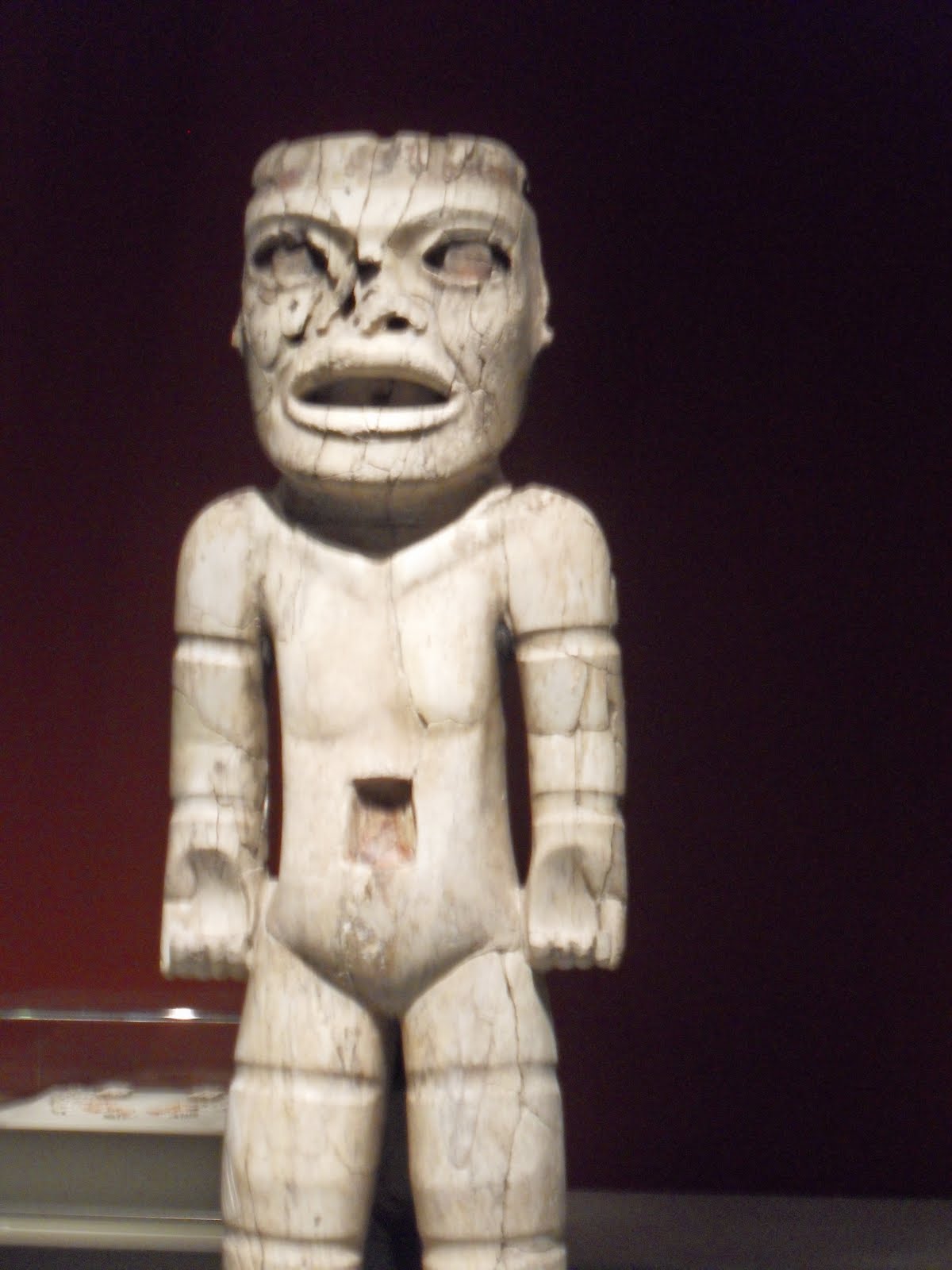
W ten weekend wybraliśmy się na wystawę czasową Teotihuacan. Miasto bogów. Jakiś czas temu zobaczyłam plakaty reklamujące tę wystawę i wiedziałam , że muszę znaleźć dla niej czas w naszym grafiku.


Na pierwszym roku iberystyki jednym z ciekawszych przedmiotów była Historia Ameryki Prekolumbijskiej. Do dziś pamiętam, jaką trudność sprawiało nam zapamiętanie dziwnych nazw bóstw azteckich czy inkaskich (po jakimś czasie Quetzalcoatl czy Huitzilopochtli zaczynają brzmieć bardziej swojsko). Wystawa była więc niejako odświeżeniem pamięci, a z drugiej strony także rozbudzeniem uśpionych marzeń o podróży do Meksyku.

Większość eksponatów, które na zajęciach historii oglądaliśmy zafascynowani na slajdach, była wystawiana w Europie po raz pierwszy (w Hiszpanii wystawę oglądać można było w Madrycie i Barcelonie). Nie będę wchodzić w szczegóły dotyczące wystawy, można przeczytać o niej w folderze Caixa.

Oprócz tej wystawy zobaczyliśmy też wystawę fotografii z Haiti, oraz instalacje i projekcje filmowe. CaixaForum otwarta jest codzienne, wystawy czasowe najlepiej skonsultować na stronie.


CaixaForum is a cultural and social center, a part of social project of the bank la Caixa. In Barcelona, it is located in a former factory, the building itself is an interesting example of modernist architecture, designed by a famous Catalan architect Puig and Cadafalch. Admission to the permanent and temporary exhibitions is free of charge (sometimes you may pay for different events organized, such as concerts and other cultural events.). The building is stunning, but it is thanks to exhibitions that CaixaForum became one of the most interesting points on the map of cultural events in Barcelona. Bank Caixa Catalunya started its project of promoting the culture in the 80's, when they bought Gaudí´s La Pedrera, now you pay less than enter to casa Batlló that is privately owned by a corporation. The other successful project of the Fundació Caixa Catalunya is CosmoCaixa, which we already visited and recommended to those who want to learn about the world we live in by fun.

This weekend we went to see a temporary exhibition Teotihuacan. City of Gods. Some time ago I saw posters of the exhibition and I knew it is a good reason to go to CaixaForum again.
During the first year of my Iberian studies, we had a subject called History of Pre-Columbian America and it was fascinating to learn about Mayas, Aztecas, Incas, their religion, life and mysterious decline of those empires. I still remember how difficult it was at the beginning to remember strange names of their deities or heroes, after some time Huitzilopochtli or Quetzalcoatl started to sound more familiar. The exhibition refreshed my memories and reminded about my dream of going to Mexico one day and see the Pyramid of the Sun with my own eyes.


Most of the exhibits were showed in Europe for the first time (in Spain you could see the exihibition in Madrid and Barcelona). I recall studying them with fascination on the slides during the history classes. I won´t bore you with details about the exhibition, if you are interested , you can check the brochure.


We also saw a photography exhibition on Haiti (34 secunds later) and some installations and movies on the artistic movies. CaixaForum is open daily; you can consult the temporary exhibitions schedule here.

Tuesday, 5 April 2011

Kosmiczny świat/ Magical world

Już od kilku tygodni Nuno chciał się wybrać do Cosmocaixa, niezwykłego muzeum, które w 2006 zdobyło nagrodę Europejskiego Muzeum Roku. Najpierw niepogoda, potem dla odmiany pogoda, którą wykorzystaliśmy na wycieczkę do Figueras, potem wizyta rodziny S. zmusiła do opóźnienia tej wizyty. W końcu jednak mieliśmy sobotnie popołudnie wolniejsze, a wietrzna pogoda nie zachęcała na plażowania, więc wybór padł na to połączenie centrum nauki i muzeum (coś jak nasze muzeum Kopernika otwarte niedawno, Cosmocaixa działa od 2005).

Za kilka euro (wejście tylko za 3 euro, my płaciliśmy połowę, ponieważ płaciliśmy kartą Caixa, banku który patronuje muzeum w ramach swojej akcji socjalnej) mamy dostęp do tysięcy rożnych eksponatów wyjaśniających zasady fizyki, pokazujących , jak zmieniał się nasz wszechświat, mamy wstęp na wystawy czasowe, w naszym przypadku o recyklingu i dinozaurach. Stanowiska doświadczalne, prezentacje, które zachęcają do dotykania, naciskania, uczestniczenia aktywnego, a nie tylko podziwiania z bezpiecznej odległości muzealnych eksponatów. Już od wejścia zagłębiamy się w inny świat, schodzimy klatką, która wije się wokół zasuszonego drzewa.


W tym muzeum każdy może poczuć się jak dziecko. Ja przypominałam sobie nieliczne doświadczenia na lekcji chemii, działania pryzmatu, Nuno bawił się eksponatami, wspólnie przenieśliśmy się do innej strefy klimatycznej spacerując w zatopionym lesie tropikalnym.
Innowacyjne podejście do nauki, poprzez zabawę, nowoczesny sprzęt i różnorodność tematyki, to wszystko znajdziemy na 5 piętrach jednego z najbardziej interesujących muzeów nauki. Wystawa obejmuje między innymi Amazoński Las, Ścianę Geologiczną, Planetarium i wiele innych.


Muzeum to jest szczególnie ciekawym miejscem dla dzieci, prowadzi akcje “dotknij”, wiele warsztatów oraz prezentacji wyjaśniających tajemnice naszego świata i kosmosu. Z tego powodu większość odwiedzających stanowiły rodziny z dziećmi, my zaś zawyżaliśmy średnią wiekową :) Nauka poprzez zabawę to motto przewodnie tego najfajniejszego chyba muzeum w Barcelonie.


For several weeks we were planning to go to CosmoCaixa where Nuno really wanted to go as this is the type of museums he really enjoys. It was opened in 2005, and in 2006 was awarded the European Museum of the Year. We were postponing this visit, first due to good weather and choosing to go to Figueres instead, then due to S. family visit, but this Saturday finally we chose to discover this science center/ museum.

The Caixa bank is co-financing the museum as part of its social program of cultural events, so the entrance is fee is really low, 3 euros and 50% discount if you pay with Caixa card- which Nuno happens to have. After paying few euros you enter a totally different world of science, right after the entrance, you walk down the staircase, in the middle of which there is dried Amazonian tree sustained by some wires- walking down the stairs you submerge into a magical place. You have access to thousands of different exhibits explaining principles of physics, showing how our universe has changed. There are temporary exhibitions, in our case : one about recycling and other about dinosaurs.


The main principle of this place is to get yourself lost in experimenting, you basically go from one stand to another, push buttons and observe. You don´t observe from a safe distance like in a “normal” museum, all the contrary, you touch, you pull, you jump, you participate. In this museum, everybody can feel like a child, a small child that is interested in everything, just curious about the world, wanting to know how and why things work the way they work. I remembered with nostalgia a few experiments that our chemistry teacher showed us to explain certain mechanisms.


Nuno was playing with exhibits, with a wide smile on his face and showing me things he found interesting. We also moved to a different climate zones when we were walking through a flooded tropical forest that recreates Amazonian microclimate.
Innovative approach to learning through fun, modern equipment and the diversity of the subjects, 5 floors full of exhibits, it all convert CosmoCaixa into one of the most interesting science museums. The regular visit includes the Amazon Forest, Geological wall, the Planetarium and many others temporary exhibitions and conferences.


CosmoCaixa is an interesting place, especially for children, there are many workshops and presentations to revel fascinating mysteries of our world and cosmos. For this reason, most of the visitors are families with children, we were above the average age. Learning through fun is the motto of what I thing is the coolest museum in Barcelona.


Showing posts with label muzeum/museum. Show all posts

Sunday, 11 March 2012

Plan B na niedzielę/ Plan B for a Sunday afternoon

Czasami trzeba się trochę ukulturowić, posmakować trochę sztuki, odwiedzić jakieś muzeum, obejrzeć ciekawą wystawę. Taki plan B na niedzielne popołudnie, zamiast kolejnego odcinku amerykańskiego serialu czy głupawej komedii romantycznej.
W 2009 urząd miasta w Barcelonie zaproponował muzeom przyłączenie się do fajnej inicjatywy mającej promować sztukę wśród mieszkańców, tzn. wstęp w niedzielne popołudnia za darmo.

W wielu europejskich miastach w 1 niedzielę miesiąca wejście do muzeów jest gratis, w Barcelonie do tego dodać można kilka godzin w każdą niedzielę.
Niestety, nie wszystkie muzea wykazały chęć krzewienia kultury i nie pobierania opłaty, ale jest kilka obiektów wartych odwiedzenia, jak Muzeum Picasso (trzeba jednak uzbroić się w cierpliwość lub wstać z rana, bo kolejka potrafi odstraszyć) czy CCCB (Centrum Sztuki Współczesnej).
Listę muzeów można znaleźć pod tym linkiem i tutaj.

(plakaty ze stron urzędu miasta)


From time to time you should submerge yourself in art, go to a concert, visit a museum, see an interesting art exhibition. Instead of watching another episode of some American series or another chick flick, you may try a plan B.
In 2009 the city council invited museums from Barcelona to take part in a really nice initiative to promote art by making free admission on Sunday afternoon.

In many European cities, the first Sunday means museums for free, but it is nice that in Barcelona you can visit them without paying every Sunday you want (well, during limited hours, but still).
Unfortunately, not all the museums were willing to promote culture and not charge a fee, but there are several really worth visiting, as the Picasso Museum (but you A) must be patient or B) get up early in the morning, because the large queue can scare you away) or the CCCB(Centre of Contemporary Art).
A list of museums that take part in Sunday plan B can be found here or here.
(posters downloaded from the city hall website)

Thursday, 16 June 2011

Miasto bogów w Caixaforum/ City of gods in Caixaforum

CaixaForum to centrum kulturalne i społeczne, będące projektem banku la Caixa. W Barcelonie centrum kultury znajduje się w dawnej fabryce, budynek ten to ciekawy przykład modernistycznej architektury, zaprojektowany przez słynnego katalońskiego architekta Puig i Cadafalch. Wstęp na wystawy stałe i czasowe jest darmowy (płaci się czasami za różne wydarzenia organizowane z okazji wystaw, jak koncerty czy inne imprezy kulturalne). Już sam budynek robi niesamowite wrażenie, ale to dzięki wystawom CaixaForum stała się jednym z najciekawszych punktów na mapie wydarzeń kulturalnych w Barcelonie. Bank Caixa Catalunya od lat 80-tych , kiedy to kupił La Pedrerę Gaudiego, stara się szerzyć kulturę i sztukę w przystępnej cenie (wstęp do Pedrery jest tańszy niż do Casa Batlló). O innym projekcie Fundació Caixa Catalunya pisałąm już na blogu, CosmoCaixa uczy bawiąc.

W ten weekend wybraliśmy się na wystawę czasową Teotihuacan. Miasto bogów. Jakiś czas temu zobaczyłam plakaty reklamujące tę wystawę i wiedziałam , że muszę znaleźć dla niej czas w naszym grafiku.


Na pierwszym roku iberystyki jednym z ciekawszych przedmiotów była Historia Ameryki Prekolumbijskiej. Do dziś pamiętam, jaką trudność sprawiało nam zapamiętanie dziwnych nazw bóstw azteckich czy inkaskich (po jakimś czasie Quetzalcoatl czy Huitzilopochtli zaczynają brzmieć bardziej swojsko). Wystawa była więc niejako odświeżeniem pamięci, a z drugiej strony także rozbudzeniem uśpionych marzeń o podróży do Meksyku.

Większość eksponatów, które na zajęciach historii oglądaliśmy zafascynowani na slajdach, była wystawiana w Europie po raz pierwszy (w Hiszpanii wystawę oglądać można było w Madrycie i Barcelonie). Nie będę wchodzić w szczegóły dotyczące wystawy, można przeczytać o niej w folderze Caixa.

Oprócz tej wystawy zobaczyliśmy też wystawę fotografii z Haiti, oraz instalacje i projekcje filmowe. CaixaForum otwarta jest codzienne, wystawy czasowe najlepiej skonsultować na stronie.


CaixaForum is a cultural and social center, a part of social project of the bank la Caixa. In Barcelona, it is located in a former factory, the building itself is an interesting example of modernist architecture, designed by a famous Catalan architect Puig and Cadafalch. Admission to the permanent and temporary exhibitions is free of charge (sometimes you may pay for different events organized, such as concerts and other cultural events.). The building is stunning, but it is thanks to exhibitions that CaixaForum became one of the most interesting points on the map of cultural events in Barcelona. Bank Caixa Catalunya started its project of promoting the culture in the 80's, when they bought Gaudí´s La Pedrera, now you pay less than enter to casa Batlló that is privately owned by a corporation. The other successful project of the Fundació Caixa Catalunya is CosmoCaixa, which we already visited and recommended to those who want to learn about the world we live in by fun.

This weekend we went to see a temporary exhibition Teotihuacan. City of Gods. Some time ago I saw posters of the exhibition and I knew it is a good reason to go to CaixaForum again.
During the first year of my Iberian studies, we had a subject called History of Pre-Columbian America and it was fascinating to learn about Mayas, Aztecas, Incas, their religion, life and mysterious decline of those empires. I still remember how difficult it was at the beginning to remember strange names of their deities or heroes, after some time Huitzilopochtli or Quetzalcoatl started to sound more familiar. The exhibition refreshed my memories and reminded about my dream of going to Mexico one day and see the Pyramid of the Sun with my own eyes.


Most of the exhibits were showed in Europe for the first time (in Spain you could see the exihibition in Madrid and Barcelona). I recall studying them with fascination on the slides during the history classes. I won´t bore you with details about the exhibition, if you are interested , you can check the brochure.


We also saw a photography exhibition on Haiti (34 secunds later) and some installations and movies on the artistic movies. CaixaForum is open daily; you can consult the temporary exhibitions schedule here.

Tuesday, 5 April 2011

Kosmiczny świat/ Magical world

Już od kilku tygodni Nuno chciał się wybrać do Cosmocaixa, niezwykłego muzeum, które w 2006 zdobyło nagrodę Europejskiego Muzeum Roku. Najpierw niepogoda, potem dla odmiany pogoda, którą wykorzystaliśmy na wycieczkę do Figueras, potem wizyta rodziny S. zmusiła do opóźnienia tej wizyty. W końcu jednak mieliśmy sobotnie popołudnie wolniejsze, a wietrzna pogoda nie zachęcała na plażowania, więc wybór padł na to połączenie centrum nauki i muzeum (coś jak nasze muzeum Kopernika otwarte niedawno, Cosmocaixa działa od 2005).

Za kilka euro (wejście tylko za 3 euro, my płaciliśmy połowę, ponieważ płaciliśmy kartą Caixa, banku który patronuje muzeum w ramach swojej akcji socjalnej) mamy dostęp do tysięcy rożnych eksponatów wyjaśniających zasady fizyki, pokazujących , jak zmieniał się nasz wszechświat, mamy wstęp na wystawy czasowe, w naszym przypadku o recyklingu i dinozaurach. Stanowiska doświadczalne, prezentacje, które zachęcają do dotykania, naciskania, uczestniczenia aktywnego, a nie tylko podziwiania z bezpiecznej odległości muzealnych eksponatów. Już od wejścia zagłębiamy się w inny świat, schodzimy klatką, która wije się wokół zasuszonego drzewa.


W tym muzeum każdy może poczuć się jak dziecko. Ja przypominałam sobie nieliczne doświadczenia na lekcji chemii, działania pryzmatu, Nuno bawił się eksponatami, wspólnie przenieśliśmy się do innej strefy klimatycznej spacerując w zatopionym lesie tropikalnym.
Innowacyjne podejście do nauki, poprzez zabawę, nowoczesny sprzęt i różnorodność tematyki, to wszystko znajdziemy na 5 piętrach jednego z najbardziej interesujących muzeów nauki. Wystawa obejmuje między innymi Amazoński Las, Ścianę Geologiczną, Planetarium i wiele innych.


Muzeum to jest szczególnie ciekawym miejscem dla dzieci, prowadzi akcje “dotknij”, wiele warsztatów oraz prezentacji wyjaśniających tajemnice naszego świata i kosmosu. Z tego powodu większość odwiedzających stanowiły rodziny z dziećmi, my zaś zawyżaliśmy średnią wiekową :) Nauka poprzez zabawę to motto przewodnie tego najfajniejszego chyba muzeum w Barcelonie.


For several weeks we were planning to go to CosmoCaixa where Nuno really wanted to go as this is the type of museums he really enjoys. It was opened in 2005, and in 2006 was awarded the European Museum of the Year. We were postponing this visit, first due to good weather and choosing to go to Figueres instead, then due to S. family visit, but this Saturday finally we chose to discover this science center/ museum.

The Caixa bank is co-financing the museum as part of its social program of cultural events, so the entrance is fee is really low, 3 euros and 50% discount if you pay with Caixa card- which Nuno happens to have. After paying few euros you enter a totally different world of science, right after the entrance, you walk down the staircase, in the middle of which there is dried Amazonian tree sustained by some wires- walking down the stairs you submerge into a magical place. You have access to thousands of different exhibits explaining principles of physics, showing how our universe has changed. There are temporary exhibitions, in our case : one about recycling and other about dinosaurs.


The main principle of this place is to get yourself lost in experimenting, you basically go from one stand to another, push buttons and observe. You don´t observe from a safe distance like in a “normal” museum, all the contrary, you touch, you pull, you jump, you participate. In this museum, everybody can feel like a child, a small child that is interested in everything, just curious about the world, wanting to know how and why things work the way they work. I remembered with nostalgia a few experiments that our chemistry teacher showed us to explain certain mechanisms.


Nuno was playing with exhibits, with a wide smile on his face and showing me things he found interesting. We also moved to a different climate zones when we were walking through a flooded tropical forest that recreates Amazonian microclimate.
Innovative approach to learning through fun, modern equipment and the diversity of the subjects, 5 floors full of exhibits, it all convert CosmoCaixa into one of the most interesting science museums. The regular visit includes the Amazon Forest, Geological wall, the Planetarium and many others temporary exhibitions and conferences.


CosmoCaixa is an interesting place, especially for children, there are many workshops and presentations to revel fascinating mysteries of our world and cosmos. For this reason, most of the visitors are families with children, we were above the average age. Learning through fun is the motto of what I thing is the coolest museum in Barcelona.