Tuesday, 10 April 2012

Tour po malowniczych pueblos/ Tour through charming pueblos

Majorka jest niedużą wyspą, 100 km szerokości i 75 km długości, tak więc przemieszczenie się ¡z jednego końca wyspy na drugi nie zajmuje dużo czasu. Ze względu na wygodę postanowiliśmy wynająć samochód, by jak najwięcej zwiedzić podczas naszego krótkiego pobytu. Ceny wynajmu przed sezonem są sporo niższe (Ewa widziała auta za 10€ za dzień, ale to było w styczniu) i do tego byliśmy w 4, więc nie trzeba było namawiać nikogo na to rozwiązanie transportowe.

Tym razem wiedziałam, że stroną organizacyjną naszego pobytu i planowaniem miejsc wartych zobaczenia zajmie się Ajka oraz że możemy liczyć na rady Ewy, więc przed urlopem jedynie pobieżnie przejrzałam przewodnik. Czasami dobrze jest móc podążać za kimś i nie być głównym głosem decydującym gdzie/co/kiedy.

Pierwszym przystankiem byla Valldemossa, miasteczko w którym Fryderyk Chopin i George Sand spędzili zimę. Podobno Valldemossa niezbyt im się spodobała, nam jednak wydała się urokliwa, z tego też powodu do muzeum poświęconemu Chopinowi nie weszliśmy, woleliśmy powłóczyć się po malowniczych uliczkach. Zwróciłam uwagę, że zdobniczym motywem przewodnim wielu domów byly zawieszone na ścianach donice z kwiatami oraz kafelki ze scenami z życia świętej Cataliny (potem wygooglowalam, że Catalina Thomas jest jedyną świętą pochodzącą z Majorki, stąd pewnie nie było kafli z innymi świętymi).


W Hiszpanii każdy region, podregion, czy miasto ma jakiś lokalny przysmak z jakiego jest znany. Jadąc na Majorkę wiedziałam zatem, że musimy spróbować ensaimady, a w Valldemossa na każdej cukierni/kawiarni ogłaszano, że są dostępne cocas de patata. Nie było wyjścia, musiałam spróbować, kolejny jednak raz hiszpańskie słodycze nas nie zachwyciły, cocas smakują jak zwykle słodkie bułki. Ensaimada to w sumie ciasto francuskie posypane cukrem pudrem, czasami z kremem budyniowym w środku, smakuje, ale szału nie robi .


Po słodkiej przerwie ruszyliśmy dalej w drogę, do Deia, ponoć, jeśli wierzyć słowom kilku przewodników, najpiękniejszemu miasteczku na Majorce. Może pozostaliśmy oporni na uroki Deia, ale po kilkuminutowej wspinaczce stromymi uliczkami i okrążeniu kościoła wraz z cmentarzem, jedynym komentarzem z naszej strony było :to już to? jest coś więcej do zobaczenia? Wsiedliśmy więc do niebieskiej wynajętej pandy.


W Puerto del Soller, zadziwiająco ładnym miasteczku portowym, gdzie patrząc na zacumowane łodzie rozmarzyliśmy się, by jakoś w przyszłości wybrać się na rejsik (najchętniej po greckich wyspach lub Chorwacji), zjedliśmy lunch złożony z tapas.
Na Majorce dużo jest miejscowości, które mają swój odpowiednik portowy, jak Soller ma Port de Soller, Alcudia, Port d’Alcudia. Ewa powiedziała, że to dlatego, żeby bronić się przed piratami i "prawdziwe" miasta znajdowały się wgłąb interioru.


Soller to typowe hiszpańskie miasteczko, gdzie życie toczy się przy głównym, placu, gdzie stoi katedra i ratusz i niezliczone bary i kafejki. Przez środek Placu Konstytucji biegną tory zabytkowego tramwaju (dla mnie wygląda jak tramwaj, ale tak na prawdę jest to kolejka wąskotorowa) o sugestywnej nazwie "Czerwona Strzała". Kolejka łączy Palmę z Sóller, a na trasie można podziwiać piękne widoki, wdychać aromat cytrusów, bowiem uprawia się tu pomarańcze, cytryny i mandarynki i powietrze nasiąka ich intensywnym zapachem.


Ostatnim przystankiem było Fornalutx, urocze, małe miasteczko słynne z pysznych pomarańczy , więc zakończyliśmy podróż na tarasie, każdy ze szklanką świeżo wyciśniętego soczku :)


A wieczorem miała miejsce wyżerka u Ewy :) Kupiliśmy kilka rodzajów oliwek, fuet, chorizo, ser, bagietkę (Nuno zrobił pan amb tomaquet), tortillę, a na deser sałatka owocowa :)


Mallorca is a relatively small island, 100 km wide and 75 km long, so getting from one point of the island to the other doesn't take much time or effort. We wanted some comfort and having to depend on the bus schedule was something we wanted to avoid, so we opted for renting a car, which also made it so much easier to get to all the small cities we wanted to visit. Before the high season car rental prices were quite attractive. Ewa assured us than in January you could rent a car for 10€/day), we weren´t that lucky, cause by the end of March this price doubled.

This time, as I knew that all the organizing and planning is taken care of by Ajka, and we could always depend on Ewa´s help, I only skimmed through the guide before coming to Mallorca. Sometimes I enjoy following someone and not being in charge of deciding where/what/when. Even an organizing freak that I am needs a break from time to time.

The first stop on Friday was Valldemossa, a small town where Frederic Chopin and George Sand spent one winter. Apparently they didn´t like it that much, but we found it quite charming, for this reason, we decided to skip entering a museum devoted to Chopin, as wandering through picturesque streets seemed way more exciting. I noticed that many houses have a decorative theme in common- pots of flowers hanging on the walls and tiles with scenes from the life of Saint Catalina (I googled later that Catalina Thomas was Majorca's only saint which explained why there weren´t any other saints pained on the tiles).


In Spain every single region, if not every city or even the smallest town, is famous for some local food, some typical plate that you must try when visiting it. Going to Mallorca I already knew that I would try ensaimada, and when I saw that in Valldemossa on every single bakery/café there was a poster with "Hay coca de patata", I just had to eat it. Well, honestly, I am not a big fan of typical Spanish confectionery (as much as I love good cakes, ice cream, or almost anything that is labeled as a dessert), and once again it was confirmed, first my the ensaimada, that tasted good but I would say it tasted as any other puff pastry with powdered sugar on the top and cocas de patata tasted like sweet rolls.


After a sweet break, we continued our road trip to Deia, which was called the most charming little town in Mallorca by our guidebooks. Maybe we remained resistant to its charm, as after a short climb on a steep hill to see a church, cemetery and view on the town, the only comment we were able to make was: is it all? Should we see something more? Instead of thinking too much, we just hopped in our blue rented panda and drive off.


In Puerto del Soller, surprisingly cute harbor town where looking at grounded boats, we dreamt about going on a cruise (preferably Greek Islands or Croatia). It is very common in Mallorca, that some villages have their "port" equivalent, as it is the case with Soller - Port de Soller, Alcudia-Port d’Alcudia Ewa explained that it is because of defending the villages against pirates and that the "real" towns were constructed deeper into the interior of the island.


Soller is a typical small Spanish town, where life happens at the main square, where the main monuments, that is cathedral and town hall, are located next to countless bars and cafes. What makes it more special, are the tram tracks that divides the square in two. Taking a tram, suggestively called the Red Arrow, is one of the major attractions of the island. You start this unforgettable journey in Palma, then all along the way you can enjoy beautiful views, breathe the aroma of citrus, as the air is saturated with their heavy smell of orange, lemon and tangerine trees growing right next to the tracks.


The last stop was Fornalutx, a charming, tiny town famous for its delicious and juicy oranges, so we couldn´t finished our day in another way than drinking a freshly squeezes juice on a lovely terrace.


And in the evening, we ended up in Eva´s flat, having a real Spanish feast. We A gorge in the evening took place at Eva :) We bought several types of olives, fuet, chorizo, cheese, baguette (Nuno prepared pan amd tomàquet), tortillas, and fruit salad for dessert :)

Monday, 9 April 2012

Semana Santa czyli procesje i mona/ Semana Santa-processions and mona

W tym roku Wielkanoc spędzić mi przyszło na obczyźnie, z dala od rodziny, bez jajek faszerowanych, sernika i wszystkich innych pyszności, pod którymi pewnie uginał się stół. Zamiast się jednak smucić, postanowiliśmy pójść przykładem Hiszpanów i wyjechać za miasto na ten 3 dniowy weekend. A drugim plusem jest możliwość opisania kilku zwyczajów wielkanocnych, które, jak się można domyślić, są zupełnie odmienne od polskich. I mimo, że Barcelona i ogólnie Katalonia słabo wypadają w porównaniu z najbardziej znanymi procesjami, które mają miejsce w Sewilli, to i tak jest o czym opowiadać.

Na początek podobne obchody Niedzieli Palmowej (Domingo de Ramos), od której zaczyna się Wielki Tydzień. W tym przypadku różnica jest niewielka, bo tradycja w sumie ta sama, jedynie wygląd palemek jest odmienny.


Tym, z czego słynie Hiszpania to procesje męczenników, na czas Semana Santa do Sewilli ściągają tłumy i to chyba bardziej ze względu na koloryt lokalny tych widowiskowych procesji, niż z religijnych pobudek. Procesje trwają codziennie, aż do niedzieli palmowej. Każdego wieczoru ulicami miast wyruszają bractwa, pokutnicy niosący na swoich barkach figury świętych. W różnych regionach procesje mają odmienny charakter. W gorącej Andaluzji są krzyki, płacze, głośne śpiewy, więcej jest emocji (wiedzę tym razem opieram na relacjach uczestników, bo nie miałam okazji uczestniczyć na żywo) . Północ jest bardziej powściągliwa, procesje często odbywane są w ciszy. Najczęściej jednak nikt nie pozostaje obojętny wobec podniosłej atmosfery, mimo że czasami jest to raczej religijność na pokaz i podążanie za tradycją, niż głębokie przeżywanie wiary (niektórzy wierni na procesji zajęli miejsca siedzące, aby się ogrzać przynieśli kocyk, a inny kanapkę). Zakapturzeni pokutnicy, twarze oświetlone blaskiem świec, dudniący hałas bębnów…


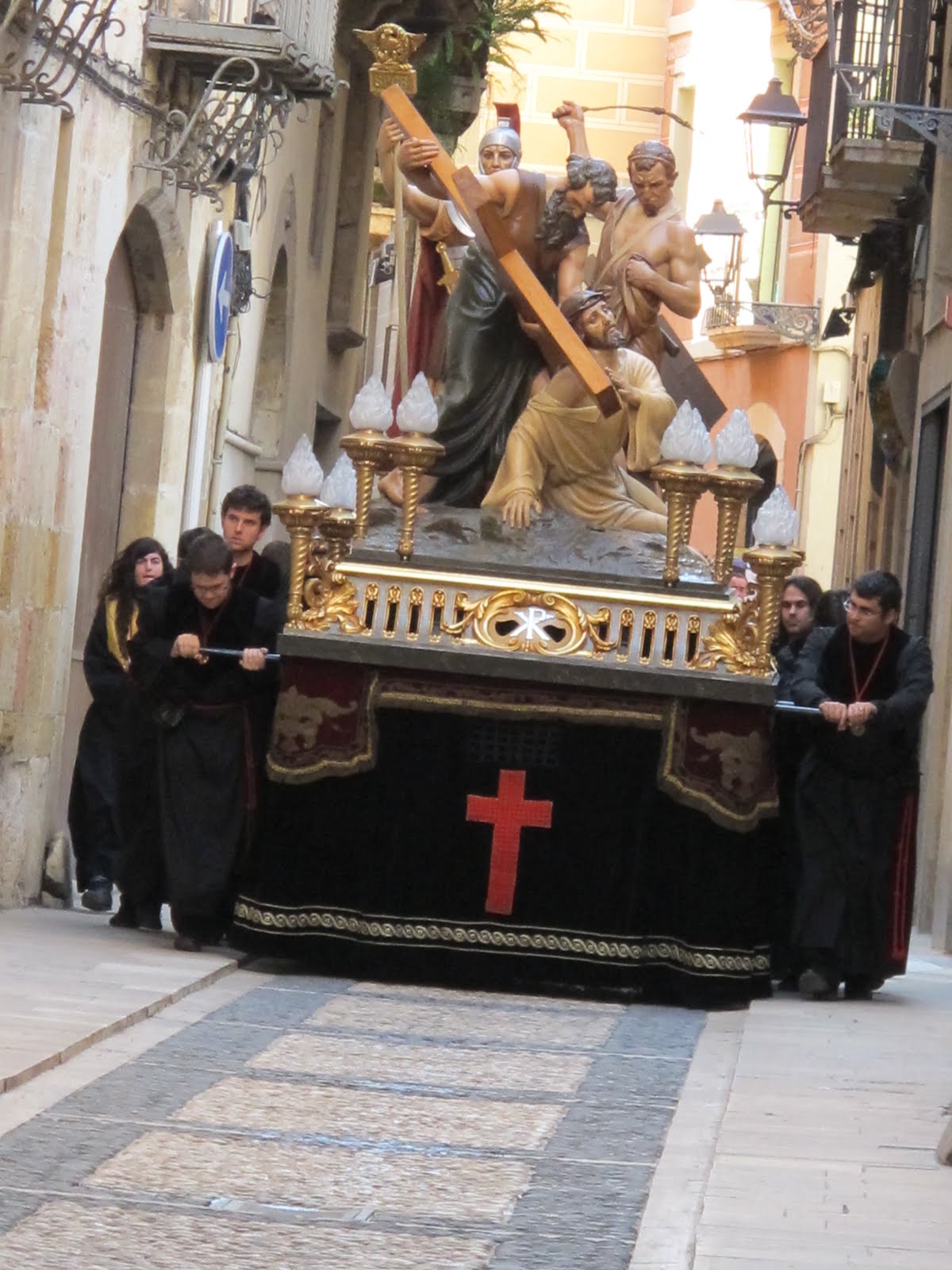
W procesjach uczestniczą cofradias (bractwa), można je rozróżnić po kolorach strojów oraz po figurach ze swoimi świętymi, które niosą na swoich barkach (niektórzy oszukują i platformy, na których znajdują się bogato zdobione figury mają kółka). Procesje trwać mogą kilka a nawet kilkanaście godzin, a platformy ważyć kilka ton.


My mieliśmy okazję uczestniczyć w Wielkopiątkowej procesji w Tarragonie. Najpierw, o godzinie 17, każde bractwo wyniosło swojego świętego (przystrojonego kwiatami i świecami) z parafii i wąskimi uliczkami, przy akompaniamencie bębnów, trąbek i dud, zakończyło pochód na głównym placu. Tam przez następnych kilka godzin można było podziwiać wszystkie platformy- ołtarze, niektóre okryte plastikowymi płachtami z obawy przed deszczem (w niektórych miejscowościach procesje zostały odwołane ze względu na niesprzyjającą pogodę, deszcz mógłby bowiem zniszczyć drewniane, nierzadko wiekowe, ołtarze).


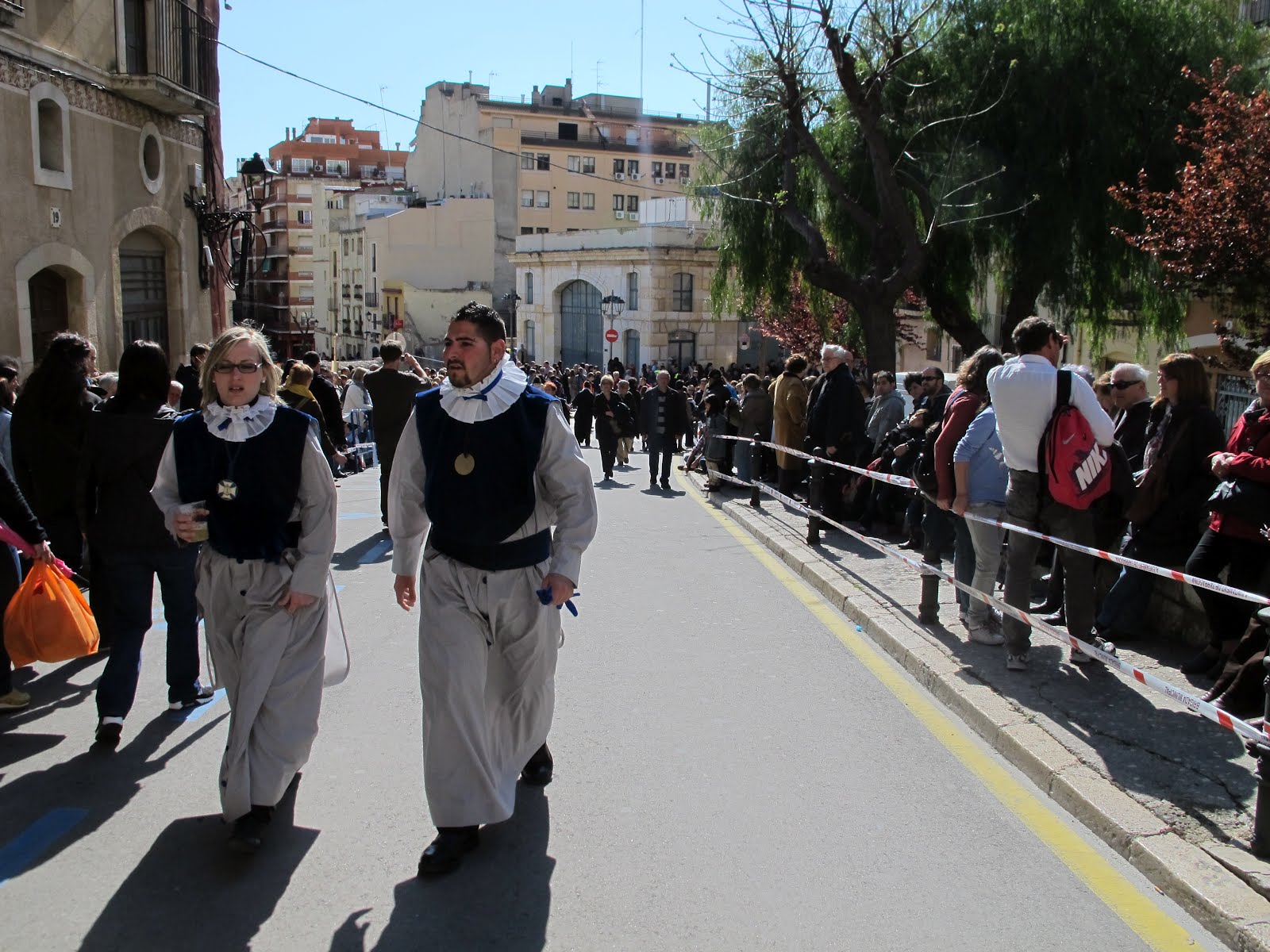
Po zmierzchu, bractwa ponownie wyruszyły w pochód, niosąc na swych barkach świętych. Musicie uwierzyć mi na słowo, atmosfera była podniosła, w powietrzu unosił się zapach świec i kadzideł, rozmowy zagłuszone były przez dźwięk bębnów, kilka rzędów Hiszpanów obserwujących procesje (musieli chyba zająć dobre miejscówki z dużym wyprzedzeniem) skutecznie uniemożliwiały robienie zdjęć. Gdy już straciłam nadzieję, w drodze powrotnej do hotelu, niespodziewanie z zza rogu wyłonił się kilka bractw- jedni przebrani za Rzymian, inni w charakterystycznych spiczastych kapturach (zwanych capirotes).


W Hiszpanii nie ma zwyczaju malowania pisanek, co innego się je, coraz więcej osób zamiast świętować Zmartwychwstanie Jezusa wybiera eskapady poza miasto. W Katalonii w poniedziałek wielkanocny rodzice chrzestni obowiązkowo obdarowują tradycyjnym ciastem, zwanym Mona de Pascua. Tradycyjnie powinno być udekorowane tylko pomalowanymi jajkami, ale coraz częściej są to czekoladowe figurki, cukiernicy dają się także ponieść fantazji.

Dziś idąc do pracy nie musiałam się bać, że z zza rogu niespodziewanie wyskoczy jakiś młodzieniaszek z pistoletem na wodę, czy o zgroza, z wiadrem. Co kraj, to obyczaj. Ale w przyszłym roku chyba nie odpuszczę sernika, chyba że kosztem procesji w Andaluzji.


This year I spent Easter in Spain, away from my family and friends, away from my mum´s delicious cheesecake, babka and stuffed eggs. Instead of being sad and thinking of how much I miss being home, we decided to follow many Spaniards who tend to make the advantage of the long weekend and escape the city. And staying in Catalonia means I can share with you some Easter traditions, which, as you may guess, differs from Polish ones. Every Spanish region celebrate Easter bit differently, and in spite that Barcelona and Catalonia are not really famous for its traditions, and comparing to the craziness of Semana Santa in Sevilla, Andalucía, they are not considered top destination during the Holy Week, there are still few things worth mentioning.

To begin with, Holy Week begins on Palm Sunday (Domingo de Ramos) with a procession and blessing of the palms. It is basically the same traditions as in other Catholic countries, the only difference of what palms are made.


Spain is really famous by its stunning processions. During Semana Santa thousands of people choose to go to Sevilla to assist one of many processions, and they do so probably more due to all the reasons but religious. Processions take place daily in almost every city and small town. Every evening fraternities and brotherhoods and devotes and participants inundate the streets, penitents carry on their shoulders statues of the saints, crosses and candles, the atmosphere is unique, although it varies from region to region.


In hot Andalucía, the processions are more intense, with thousands of people singing, crying, and screaming, while in the north the atmosphere is more sober, people observe in silence the religious figures as they pass. All in all, no matter where you witness these days of fervor, it is impossible to stay indifferent to the solemn atmosphere of Semana Santa. Even if the religiosity seems artificial and most of the people who attend it do that because of simply following the tradition or to experience what they believe to be real Spanish culture. Indeed, it is very pintoresque to see rows and rows of hooded penitents, their faces lit by candles, moving to the beat of drums...


You can distinguish various cofradías (religious fraternities ) by the color of their costumes and the figures of the saints they carry on their shoulders (some floats of the richly decorated figures can weigh several tons) during several hours.


This year, as we went for a small trip, we participated in the Good Friday Procession in Tarragona. First, at 5 pm, every saint (decorated with candles and flowers) was carried from its parish by the cofradía, and the procession flew through narrow streets (sometimes the float could hardly fit), to the accompaniment of drums, trumpets and bagpipes, till it reached the main square. There, for the following hours, all the floats-altars could be admired; some were covered with plastic as to protect the wooden figures (in some cities the processions were cancelled due to the bad weather, as the rain could damage ancient and precious altars). After the nightfall, once again the figures were lifted, once again the sound of the drums was overwhelming, the smell of candles and incense in the air, several row of Spaniard observing the processions (I wonder what time they got there to take a good spot, some of them also brought a blanket, as the night was bit chilly, other a sandwich) made it nearly impossible to see, let alone take photos. When I lost all the hope and decided to give up, on the way back to the hotel, several fraternities suddenly emerged from behind the corner, some dressed as Romans, others in the characteristic pointy hoods (called capirotes).


In Spain there is no tradition of painting Easter eggs, as we do in Poland, the food is different and nowadays more and more people instead of celebrating the Resurrection of Jesus Christ, tend to make short escapades outside the city. In Catalonia, on Easter Monday godparents give the traditional cake called Mona de Pascua. Traditionally, it should only be decorated with painted hard boiled eggs, but bakers create modern versions in all shapes and colors, often inspired by Disney characters or Spanish celebrities.

Today, on my way to work, I didn´t have to be afraid that suddenly somebody appears with a squirt gun or worse, bucket of water (yes, we also have some strange Polish traditions, to know more google śmingus dyngus). Every country has its traditions. But I think next year I will choose my mum´s cheesecake, which I could only give up to see the famous procession in Andalusía.

Wednesday, 4 April 2012

Wiosna na Majorce/ Spring in Mallorca

Wróciliśmy wypoczęci i opaleni. Potrzebne było 5 dni na Majorce, takie mini-wakacje, by zapomnieć o stresie w pracy, zrelaksować się i zregenerować siły na nadchodzące tygodnie.
Wyjazd na Majorkę był pomysłem Ajki, my się niejako podczepiliśmy, bo loty z Barcelony są częste i tanie. A w tym roku mamy plan na częstsze podróżowanie po Hiszpanii, więc zakończenie marca na Balearach idealnie się w ten plan wpisywało :)

Majorka to cel podróży kojarzący się raczej z podpitą młodzieżą bawiąca się w dyskotekach, czy plażach zdominowanych przez Niemców (kilka lat temu był nawet pomysł odkupienia wyspy od Hiszpanii i zamienienia jej w niemiecki land) niż spokojem, piękną przyrodą czy uroczymi miasteczkami. Na szczęście do sezonu jeszcze daleko, pogoda dopisała (co potwierdza nasza świeża, mimo że lekka, opalenizna), odkryliśmy kilka klimatycznych miasteczek, podziwialiśmy zachwycające krajobrazy, oczywiście nie zabrakło dobrego jedzenia (w Arenal zjedliśmy najlepszą paellę i wypiliśmy najsmaczniejszą sangrie). Wszystkie te elementy (plus towarzystwo 2 polskich bloggerek i Justyny) sprawiło, że wyjazd ten na długo pozostanie w naszej pamięci.


Wydaje mi się, że na Majorce każdy może znaleźć coś dla siebie. Poza sezonem: spokój, piękną przyrodę, wyludnione zatoczki z rajskimi plażami i wodą w kilku odcieniach turkusu, w sezonie dla odmiany, tętniące życiem miasteczka kurortowe.


Naszą bazą wypadową było El Arenal, ponieważ Ewa jest tam rezydentką. Miasteczko juz powoli zapełniało się turystami, w większości pochodzącymi z Niemiec, częściej zagadywany do nas na ulicy w obcych językach niż po hiszpańsku, menu w restauracjach wywieszone były po niemiecku, obsługa w dużej części też pochodzi z tego kraju. Promenada przy plaży to bar przy barze, dyskoteki i niezliczone restauracje. Nie jest to miejsce, gdzie bym chciała spędzić choć jeden dzień w pełni lata, z wyżej wymienionych powodów. Turystyka masywna, hordy nastolatków przyjeżdżających się wybawić, czy turyści zainteresowani jedynie smażeniem tyłków na miejskiej plaży i zapełnieniem brzuchów, to zdecydowanie nie moje klimaty.


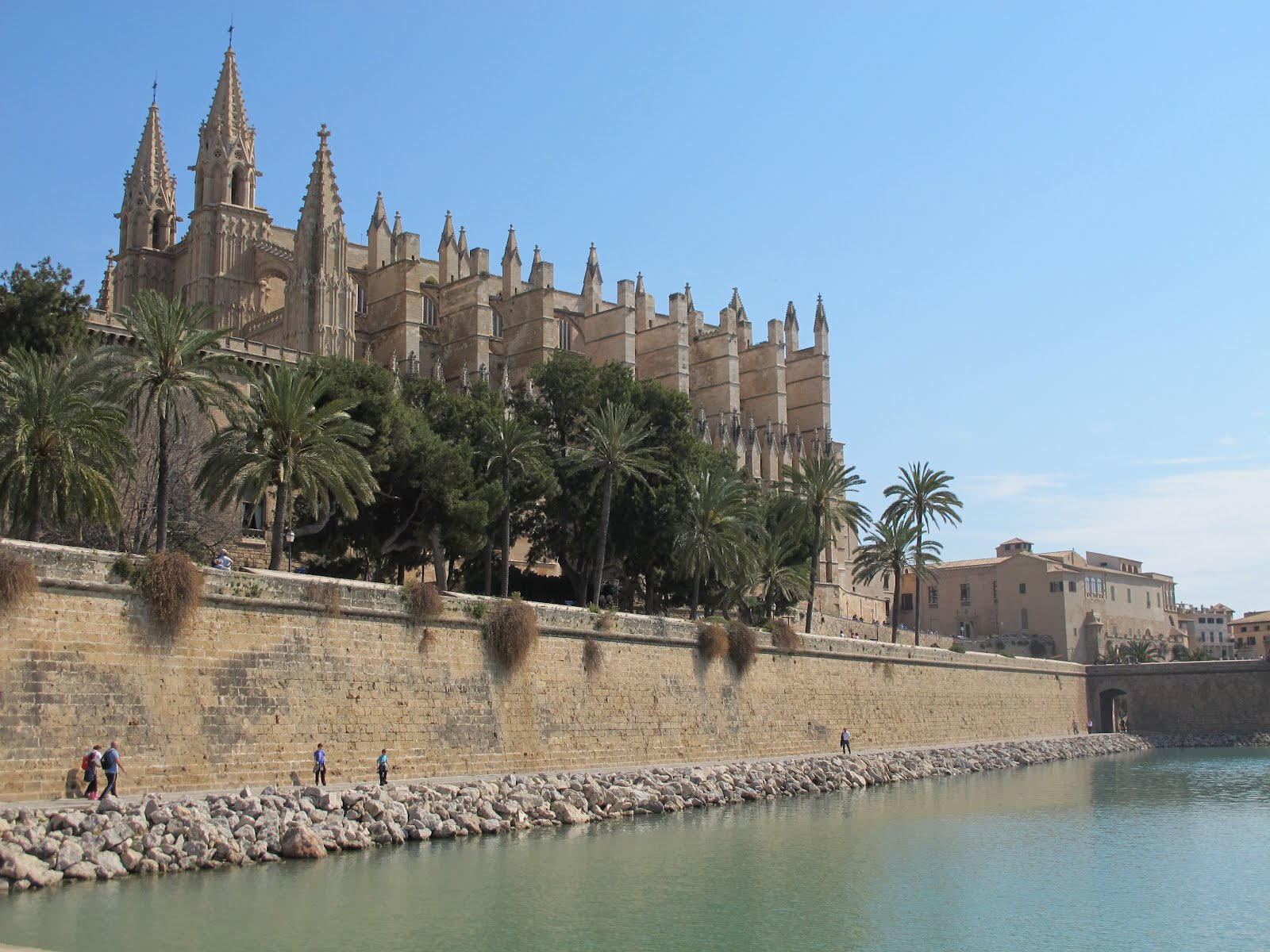
Arenal położony jest blisko Palmy, więc logicznie naszym pierwszym punktem na mapie zwiedzania była Palma de Mallorca. Największe miasto wyspy położone jest nad zatoką i chyba położenie jest największym atutem. Po spacerze po starówce, zrobieniu kilku zdjęć katedry, zjedzeniu ensaimady (typowy deser majorkański), doszliśmy do wniosku, że miasto nas jakoś szczególnie nie zachwyciło, ani atmosferą, ani zabytkami... Na szczęście urokliwe miasteczka, które zobaczyliśmy następnego dnia zrekompensowały z nadwyżką nasze pierwsze rozczarowanie wyspą. Ale o tym w kolejnym poście.


Przy dodawaniu zdjęć przypomniałam sobie, że podczas spacery w Palmie zwróciliśmy uwagę na liczne figurki jaszczurek na ścianach. Gdzieś przeczytałam, że to symbol Majorki czy Balearów, ale nie wiem, czy jest to wiarygodna informacja. Zdjęcia na plaży zostały zrobione w Arenal i mimo że dla mnie woda była zdecydowanie lodowata, Nuno po raz pierwszy w tym roku wykąpał się w morzu. Pozostałe zdjęcia zostały zrobione w Palma de Mallorca.


We came back relaxed and tanned. All we needed were 5 days in Mallorcato forget all the stress work related and slow down, mini-holidays really can do wonders.
Going to Mallorca was Ajka’s idea, somehow we were invited in a casual post comments’ exchange, and as the plane tickets from Barcelona were really cheap, we thought that spending the last days of March in the Balearic Islands. And since we are planning to explore Spain more than last year, it was a perfect destination to add to our places of regions we have already visited.


When I thought about Mallorca as a touristic destination, I rather pictured drunk teenagers having fun in one of countless discos and beaches dominated by Germans (few years ago there was even a project to but the island from Spain and convert it that way in another German land) than a calm island with beautiful nature and charming little towns. Fortunately for us, the peak season was still far away, the weather was just great (which our freshly tanned faces can confirm) and we were able to discover that Mallorca is really a beautiful island, that hides some enchanting little towns, breathtaking landscape and good food (in was in a touristic Arenal that we ate the best paella ever and drunk the most delicious sangria). That and the company of two Polish bloggers and Justyna made that we will remember this trip for a long time.

After spending there only a short time, I got convinced that Mallorca is a holiday destination where everyone can find something he is looking for. During low touristic it would be peace, beautiful nature, secluded coves with turquoise waters and gold sand, and for a change vibrant resorts during the peak season.


We stayed at a hotel in El Arenal, because Ewa is working there. The resort has slowly begun to be invaded by the tourist, most of them being German retirees. It was more probable that people would speak to us in language other than Spanish, the menus were first in German, as were most of the staff on a promenade. The promenade was packed with bars and restaurants and some discos. This was definitely not a place I would like to spend a day, let along more time, during the summer. Massive tourism, meaning hordes of drunk and loud teenagers thinking only about having fun or tourist that limit themselves to expose their bodies to the sun, eating and drinking, is definitely not my cup of tea.


Arenal is located close to Palma de Mallorca, so logically it was the first place we visited. The largest city of the island lies on the Bay of Palma and personally I found it was its biggest asset. After having quite a walk through the old town, taking few pictures of the cathedral, eating ensaimada (typical Mallorcan pastry), we were not particularly impressed, neither by the city’s atmosphere nor its monuments ...Fortunately, the following day we saw few charming little towns that made we almost forgot about our first touristic dissapointment. You may already guess what my next post will be about...


After adding photos, I remembered that we found a lot of lizard on the walls, and I read somewhere it is the island’s symbol (don’t really know if it really is). The photos on the beach were taken in Arenal. And even though I thought the water was freezing, Nuno had his first swim in the Mediterranean this year. Remaining photos were taken in Palma de Mallorca.


Tuesday, 10 April 2012

Tour po malowniczych pueblos/ Tour through charming pueblos

Majorka jest niedużą wyspą, 100 km szerokości i 75 km długości, tak więc przemieszczenie się ¡z jednego końca wyspy na drugi nie zajmuje dużo czasu. Ze względu na wygodę postanowiliśmy wynająć samochód, by jak najwięcej zwiedzić podczas naszego krótkiego pobytu. Ceny wynajmu przed sezonem są sporo niższe (Ewa widziała auta za 10€ za dzień, ale to było w styczniu) i do tego byliśmy w 4, więc nie trzeba było namawiać nikogo na to rozwiązanie transportowe.

Tym razem wiedziałam, że stroną organizacyjną naszego pobytu i planowaniem miejsc wartych zobaczenia zajmie się Ajka oraz że możemy liczyć na rady Ewy, więc przed urlopem jedynie pobieżnie przejrzałam przewodnik. Czasami dobrze jest móc podążać za kimś i nie być głównym głosem decydującym gdzie/co/kiedy.

Pierwszym przystankiem byla Valldemossa, miasteczko w którym Fryderyk Chopin i George Sand spędzili zimę. Podobno Valldemossa niezbyt im się spodobała, nam jednak wydała się urokliwa, z tego też powodu do muzeum poświęconemu Chopinowi nie weszliśmy, woleliśmy powłóczyć się po malowniczych uliczkach. Zwróciłam uwagę, że zdobniczym motywem przewodnim wielu domów byly zawieszone na ścianach donice z kwiatami oraz kafelki ze scenami z życia świętej Cataliny (potem wygooglowalam, że Catalina Thomas jest jedyną świętą pochodzącą z Majorki, stąd pewnie nie było kafli z innymi świętymi).


W Hiszpanii każdy region, podregion, czy miasto ma jakiś lokalny przysmak z jakiego jest znany. Jadąc na Majorkę wiedziałam zatem, że musimy spróbować ensaimady, a w Valldemossa na każdej cukierni/kawiarni ogłaszano, że są dostępne cocas de patata. Nie było wyjścia, musiałam spróbować, kolejny jednak raz hiszpańskie słodycze nas nie zachwyciły, cocas smakują jak zwykle słodkie bułki. Ensaimada to w sumie ciasto francuskie posypane cukrem pudrem, czasami z kremem budyniowym w środku, smakuje, ale szału nie robi .


Po słodkiej przerwie ruszyliśmy dalej w drogę, do Deia, ponoć, jeśli wierzyć słowom kilku przewodników, najpiękniejszemu miasteczku na Majorce. Może pozostaliśmy oporni na uroki Deia, ale po kilkuminutowej wspinaczce stromymi uliczkami i okrążeniu kościoła wraz z cmentarzem, jedynym komentarzem z naszej strony było :to już to? jest coś więcej do zobaczenia? Wsiedliśmy więc do niebieskiej wynajętej pandy.


W Puerto del Soller, zadziwiająco ładnym miasteczku portowym, gdzie patrząc na zacumowane łodzie rozmarzyliśmy się, by jakoś w przyszłości wybrać się na rejsik (najchętniej po greckich wyspach lub Chorwacji), zjedliśmy lunch złożony z tapas.
Na Majorce dużo jest miejscowości, które mają swój odpowiednik portowy, jak Soller ma Port de Soller, Alcudia, Port d’Alcudia. Ewa powiedziała, że to dlatego, żeby bronić się przed piratami i "prawdziwe" miasta znajdowały się wgłąb interioru.


Soller to typowe hiszpańskie miasteczko, gdzie życie toczy się przy głównym, placu, gdzie stoi katedra i ratusz i niezliczone bary i kafejki. Przez środek Placu Konstytucji biegną tory zabytkowego tramwaju (dla mnie wygląda jak tramwaj, ale tak na prawdę jest to kolejka wąskotorowa) o sugestywnej nazwie "Czerwona Strzała". Kolejka łączy Palmę z Sóller, a na trasie można podziwiać piękne widoki, wdychać aromat cytrusów, bowiem uprawia się tu pomarańcze, cytryny i mandarynki i powietrze nasiąka ich intensywnym zapachem.


Ostatnim przystankiem było Fornalutx, urocze, małe miasteczko słynne z pysznych pomarańczy , więc zakończyliśmy podróż na tarasie, każdy ze szklanką świeżo wyciśniętego soczku :)


A wieczorem miała miejsce wyżerka u Ewy :) Kupiliśmy kilka rodzajów oliwek, fuet, chorizo, ser, bagietkę (Nuno zrobił pan amb tomaquet), tortillę, a na deser sałatka owocowa :)


Mallorca is a relatively small island, 100 km wide and 75 km long, so getting from one point of the island to the other doesn't take much time or effort. We wanted some comfort and having to depend on the bus schedule was something we wanted to avoid, so we opted for renting a car, which also made it so much easier to get to all the small cities we wanted to visit. Before the high season car rental prices were quite attractive. Ewa assured us than in January you could rent a car for 10€/day), we weren´t that lucky, cause by the end of March this price doubled.

This time, as I knew that all the organizing and planning is taken care of by Ajka, and we could always depend on Ewa´s help, I only skimmed through the guide before coming to Mallorca. Sometimes I enjoy following someone and not being in charge of deciding where/what/when. Even an organizing freak that I am needs a break from time to time.

The first stop on Friday was Valldemossa, a small town where Frederic Chopin and George Sand spent one winter. Apparently they didn´t like it that much, but we found it quite charming, for this reason, we decided to skip entering a museum devoted to Chopin, as wandering through picturesque streets seemed way more exciting. I noticed that many houses have a decorative theme in common- pots of flowers hanging on the walls and tiles with scenes from the life of Saint Catalina (I googled later that Catalina Thomas was Majorca's only saint which explained why there weren´t any other saints pained on the tiles).


In Spain every single region, if not every city or even the smallest town, is famous for some local food, some typical plate that you must try when visiting it. Going to Mallorca I already knew that I would try ensaimada, and when I saw that in Valldemossa on every single bakery/café there was a poster with "Hay coca de patata", I just had to eat it. Well, honestly, I am not a big fan of typical Spanish confectionery (as much as I love good cakes, ice cream, or almost anything that is labeled as a dessert), and once again it was confirmed, first my the ensaimada, that tasted good but I would say it tasted as any other puff pastry with powdered sugar on the top and cocas de patata tasted like sweet rolls.


After a sweet break, we continued our road trip to Deia, which was called the most charming little town in Mallorca by our guidebooks. Maybe we remained resistant to its charm, as after a short climb on a steep hill to see a church, cemetery and view on the town, the only comment we were able to make was: is it all? Should we see something more? Instead of thinking too much, we just hopped in our blue rented panda and drive off.


In Puerto del Soller, surprisingly cute harbor town where looking at grounded boats, we dreamt about going on a cruise (preferably Greek Islands or Croatia). It is very common in Mallorca, that some villages have their "port" equivalent, as it is the case with Soller - Port de Soller, Alcudia-Port d’Alcudia Ewa explained that it is because of defending the villages against pirates and that the "real" towns were constructed deeper into the interior of the island.


Soller is a typical small Spanish town, where life happens at the main square, where the main monuments, that is cathedral and town hall, are located next to countless bars and cafes. What makes it more special, are the tram tracks that divides the square in two. Taking a tram, suggestively called the Red Arrow, is one of the major attractions of the island. You start this unforgettable journey in Palma, then all along the way you can enjoy beautiful views, breathe the aroma of citrus, as the air is saturated with their heavy smell of orange, lemon and tangerine trees growing right next to the tracks.


The last stop was Fornalutx, a charming, tiny town famous for its delicious and juicy oranges, so we couldn´t finished our day in another way than drinking a freshly squeezes juice on a lovely terrace.


And in the evening, we ended up in Eva´s flat, having a real Spanish feast. We A gorge in the evening took place at Eva :) We bought several types of olives, fuet, chorizo, cheese, baguette (Nuno prepared pan amd tomàquet), tortillas, and fruit salad for dessert :)

Monday, 9 April 2012

Semana Santa czyli procesje i mona/ Semana Santa-processions and mona

W tym roku Wielkanoc spędzić mi przyszło na obczyźnie, z dala od rodziny, bez jajek faszerowanych, sernika i wszystkich innych pyszności, pod którymi pewnie uginał się stół. Zamiast się jednak smucić, postanowiliśmy pójść przykładem Hiszpanów i wyjechać za miasto na ten 3 dniowy weekend. A drugim plusem jest możliwość opisania kilku zwyczajów wielkanocnych, które, jak się można domyślić, są zupełnie odmienne od polskich. I mimo, że Barcelona i ogólnie Katalonia słabo wypadają w porównaniu z najbardziej znanymi procesjami, które mają miejsce w Sewilli, to i tak jest o czym opowiadać.

Na początek podobne obchody Niedzieli Palmowej (Domingo de Ramos), od której zaczyna się Wielki Tydzień. W tym przypadku różnica jest niewielka, bo tradycja w sumie ta sama, jedynie wygląd palemek jest odmienny.


Tym, z czego słynie Hiszpania to procesje męczenników, na czas Semana Santa do Sewilli ściągają tłumy i to chyba bardziej ze względu na koloryt lokalny tych widowiskowych procesji, niż z religijnych pobudek. Procesje trwają codziennie, aż do niedzieli palmowej. Każdego wieczoru ulicami miast wyruszają bractwa, pokutnicy niosący na swoich barkach figury świętych. W różnych regionach procesje mają odmienny charakter. W gorącej Andaluzji są krzyki, płacze, głośne śpiewy, więcej jest emocji (wiedzę tym razem opieram na relacjach uczestników, bo nie miałam okazji uczestniczyć na żywo) . Północ jest bardziej powściągliwa, procesje często odbywane są w ciszy. Najczęściej jednak nikt nie pozostaje obojętny wobec podniosłej atmosfery, mimo że czasami jest to raczej religijność na pokaz i podążanie za tradycją, niż głębokie przeżywanie wiary (niektórzy wierni na procesji zajęli miejsca siedzące, aby się ogrzać przynieśli kocyk, a inny kanapkę). Zakapturzeni pokutnicy, twarze oświetlone blaskiem świec, dudniący hałas bębnów…


W procesjach uczestniczą cofradias (bractwa), można je rozróżnić po kolorach strojów oraz po figurach ze swoimi świętymi, które niosą na swoich barkach (niektórzy oszukują i platformy, na których znajdują się bogato zdobione figury mają kółka). Procesje trwać mogą kilka a nawet kilkanaście godzin, a platformy ważyć kilka ton.


My mieliśmy okazję uczestniczyć w Wielkopiątkowej procesji w Tarragonie. Najpierw, o godzinie 17, każde bractwo wyniosło swojego świętego (przystrojonego kwiatami i świecami) z parafii i wąskimi uliczkami, przy akompaniamencie bębnów, trąbek i dud, zakończyło pochód na głównym placu. Tam przez następnych kilka godzin można było podziwiać wszystkie platformy- ołtarze, niektóre okryte plastikowymi płachtami z obawy przed deszczem (w niektórych miejscowościach procesje zostały odwołane ze względu na niesprzyjającą pogodę, deszcz mógłby bowiem zniszczyć drewniane, nierzadko wiekowe, ołtarze).


Po zmierzchu, bractwa ponownie wyruszyły w pochód, niosąc na swych barkach świętych. Musicie uwierzyć mi na słowo, atmosfera była podniosła, w powietrzu unosił się zapach świec i kadzideł, rozmowy zagłuszone były przez dźwięk bębnów, kilka rzędów Hiszpanów obserwujących procesje (musieli chyba zająć dobre miejscówki z dużym wyprzedzeniem) skutecznie uniemożliwiały robienie zdjęć. Gdy już straciłam nadzieję, w drodze powrotnej do hotelu, niespodziewanie z zza rogu wyłonił się kilka bractw- jedni przebrani za Rzymian, inni w charakterystycznych spiczastych kapturach (zwanych capirotes).


W Hiszpanii nie ma zwyczaju malowania pisanek, co innego się je, coraz więcej osób zamiast świętować Zmartwychwstanie Jezusa wybiera eskapady poza miasto. W Katalonii w poniedziałek wielkanocny rodzice chrzestni obowiązkowo obdarowują tradycyjnym ciastem, zwanym Mona de Pascua. Tradycyjnie powinno być udekorowane tylko pomalowanymi jajkami, ale coraz częściej są to czekoladowe figurki, cukiernicy dają się także ponieść fantazji.

Dziś idąc do pracy nie musiałam się bać, że z zza rogu niespodziewanie wyskoczy jakiś młodzieniaszek z pistoletem na wodę, czy o zgroza, z wiadrem. Co kraj, to obyczaj. Ale w przyszłym roku chyba nie odpuszczę sernika, chyba że kosztem procesji w Andaluzji.


This year I spent Easter in Spain, away from my family and friends, away from my mum´s delicious cheesecake, babka and stuffed eggs. Instead of being sad and thinking of how much I miss being home, we decided to follow many Spaniards who tend to make the advantage of the long weekend and escape the city. And staying in Catalonia means I can share with you some Easter traditions, which, as you may guess, differs from Polish ones. Every Spanish region celebrate Easter bit differently, and in spite that Barcelona and Catalonia are not really famous for its traditions, and comparing to the craziness of Semana Santa in Sevilla, Andalucía, they are not considered top destination during the Holy Week, there are still few things worth mentioning.

To begin with, Holy Week begins on Palm Sunday (Domingo de Ramos) with a procession and blessing of the palms. It is basically the same traditions as in other Catholic countries, the only difference of what palms are made.


Spain is really famous by its stunning processions. During Semana Santa thousands of people choose to go to Sevilla to assist one of many processions, and they do so probably more due to all the reasons but religious. Processions take place daily in almost every city and small town. Every evening fraternities and brotherhoods and devotes and participants inundate the streets, penitents carry on their shoulders statues of the saints, crosses and candles, the atmosphere is unique, although it varies from region to region.


In hot Andalucía, the processions are more intense, with thousands of people singing, crying, and screaming, while in the north the atmosphere is more sober, people observe in silence the religious figures as they pass. All in all, no matter where you witness these days of fervor, it is impossible to stay indifferent to the solemn atmosphere of Semana Santa. Even if the religiosity seems artificial and most of the people who attend it do that because of simply following the tradition or to experience what they believe to be real Spanish culture. Indeed, it is very pintoresque to see rows and rows of hooded penitents, their faces lit by candles, moving to the beat of drums...


You can distinguish various cofradías (religious fraternities ) by the color of their costumes and the figures of the saints they carry on their shoulders (some floats of the richly decorated figures can weigh several tons) during several hours.


This year, as we went for a small trip, we participated in the Good Friday Procession in Tarragona. First, at 5 pm, every saint (decorated with candles and flowers) was carried from its parish by the cofradía, and the procession flew through narrow streets (sometimes the float could hardly fit), to the accompaniment of drums, trumpets and bagpipes, till it reached the main square. There, for the following hours, all the floats-altars could be admired; some were covered with plastic as to protect the wooden figures (in some cities the processions were cancelled due to the bad weather, as the rain could damage ancient and precious altars). After the nightfall, once again the figures were lifted, once again the sound of the drums was overwhelming, the smell of candles and incense in the air, several row of Spaniard observing the processions (I wonder what time they got there to take a good spot, some of them also brought a blanket, as the night was bit chilly, other a sandwich) made it nearly impossible to see, let alone take photos. When I lost all the hope and decided to give up, on the way back to the hotel, several fraternities suddenly emerged from behind the corner, some dressed as Romans, others in the characteristic pointy hoods (called capirotes).


In Spain there is no tradition of painting Easter eggs, as we do in Poland, the food is different and nowadays more and more people instead of celebrating the Resurrection of Jesus Christ, tend to make short escapades outside the city. In Catalonia, on Easter Monday godparents give the traditional cake called Mona de Pascua. Traditionally, it should only be decorated with painted hard boiled eggs, but bakers create modern versions in all shapes and colors, often inspired by Disney characters or Spanish celebrities.

Today, on my way to work, I didn´t have to be afraid that suddenly somebody appears with a squirt gun or worse, bucket of water (yes, we also have some strange Polish traditions, to know more google śmingus dyngus). Every country has its traditions. But I think next year I will choose my mum´s cheesecake, which I could only give up to see the famous procession in Andalusía.

Wednesday, 4 April 2012

Wiosna na Majorce/ Spring in Mallorca

Wróciliśmy wypoczęci i opaleni. Potrzebne było 5 dni na Majorce, takie mini-wakacje, by zapomnieć o stresie w pracy, zrelaksować się i zregenerować siły na nadchodzące tygodnie.
Wyjazd na Majorkę był pomysłem Ajki, my się niejako podczepiliśmy, bo loty z Barcelony są częste i tanie. A w tym roku mamy plan na częstsze podróżowanie po Hiszpanii, więc zakończenie marca na Balearach idealnie się w ten plan wpisywało :)

Majorka to cel podróży kojarzący się raczej z podpitą młodzieżą bawiąca się w dyskotekach, czy plażach zdominowanych przez Niemców (kilka lat temu był nawet pomysł odkupienia wyspy od Hiszpanii i zamienienia jej w niemiecki land) niż spokojem, piękną przyrodą czy uroczymi miasteczkami. Na szczęście do sezonu jeszcze daleko, pogoda dopisała (co potwierdza nasza świeża, mimo że lekka, opalenizna), odkryliśmy kilka klimatycznych miasteczek, podziwialiśmy zachwycające krajobrazy, oczywiście nie zabrakło dobrego jedzenia (w Arenal zjedliśmy najlepszą paellę i wypiliśmy najsmaczniejszą sangrie). Wszystkie te elementy (plus towarzystwo 2 polskich bloggerek i Justyny) sprawiło, że wyjazd ten na długo pozostanie w naszej pamięci.


Wydaje mi się, że na Majorce każdy może znaleźć coś dla siebie. Poza sezonem: spokój, piękną przyrodę, wyludnione zatoczki z rajskimi plażami i wodą w kilku odcieniach turkusu, w sezonie dla odmiany, tętniące życiem miasteczka kurortowe.


Naszą bazą wypadową było El Arenal, ponieważ Ewa jest tam rezydentką. Miasteczko juz powoli zapełniało się turystami, w większości pochodzącymi z Niemiec, częściej zagadywany do nas na ulicy w obcych językach niż po hiszpańsku, menu w restauracjach wywieszone były po niemiecku, obsługa w dużej części też pochodzi z tego kraju. Promenada przy plaży to bar przy barze, dyskoteki i niezliczone restauracje. Nie jest to miejsce, gdzie bym chciała spędzić choć jeden dzień w pełni lata, z wyżej wymienionych powodów. Turystyka masywna, hordy nastolatków przyjeżdżających się wybawić, czy turyści zainteresowani jedynie smażeniem tyłków na miejskiej plaży i zapełnieniem brzuchów, to zdecydowanie nie moje klimaty.


Arenal położony jest blisko Palmy, więc logicznie naszym pierwszym punktem na mapie zwiedzania była Palma de Mallorca. Największe miasto wyspy położone jest nad zatoką i chyba położenie jest największym atutem. Po spacerze po starówce, zrobieniu kilku zdjęć katedry, zjedzeniu ensaimady (typowy deser majorkański), doszliśmy do wniosku, że miasto nas jakoś szczególnie nie zachwyciło, ani atmosferą, ani zabytkami... Na szczęście urokliwe miasteczka, które zobaczyliśmy następnego dnia zrekompensowały z nadwyżką nasze pierwsze rozczarowanie wyspą. Ale o tym w kolejnym poście.


Przy dodawaniu zdjęć przypomniałam sobie, że podczas spacery w Palmie zwróciliśmy uwagę na liczne figurki jaszczurek na ścianach. Gdzieś przeczytałam, że to symbol Majorki czy Balearów, ale nie wiem, czy jest to wiarygodna informacja. Zdjęcia na plaży zostały zrobione w Arenal i mimo że dla mnie woda była zdecydowanie lodowata, Nuno po raz pierwszy w tym roku wykąpał się w morzu. Pozostałe zdjęcia zostały zrobione w Palma de Mallorca.


We came back relaxed and tanned. All we needed were 5 days in Mallorcato forget all the stress work related and slow down, mini-holidays really can do wonders.
Going to Mallorca was Ajka’s idea, somehow we were invited in a casual post comments’ exchange, and as the plane tickets from Barcelona were really cheap, we thought that spending the last days of March in the Balearic Islands. And since we are planning to explore Spain more than last year, it was a perfect destination to add to our places of regions we have already visited.


When I thought about Mallorca as a touristic destination, I rather pictured drunk teenagers having fun in one of countless discos and beaches dominated by Germans (few years ago there was even a project to but the island from Spain and convert it that way in another German land) than a calm island with beautiful nature and charming little towns. Fortunately for us, the peak season was still far away, the weather was just great (which our freshly tanned faces can confirm) and we were able to discover that Mallorca is really a beautiful island, that hides some enchanting little towns, breathtaking landscape and good food (in was in a touristic Arenal that we ate the best paella ever and drunk the most delicious sangria). That and the company of two Polish bloggers and Justyna made that we will remember this trip for a long time.

After spending there only a short time, I got convinced that Mallorca is a holiday destination where everyone can find something he is looking for. During low touristic it would be peace, beautiful nature, secluded coves with turquoise waters and gold sand, and for a change vibrant resorts during the peak season.


We stayed at a hotel in El Arenal, because Ewa is working there. The resort has slowly begun to be invaded by the tourist, most of them being German retirees. It was more probable that people would speak to us in language other than Spanish, the menus were first in German, as were most of the staff on a promenade. The promenade was packed with bars and restaurants and some discos. This was definitely not a place I would like to spend a day, let along more time, during the summer. Massive tourism, meaning hordes of drunk and loud teenagers thinking only about having fun or tourist that limit themselves to expose their bodies to the sun, eating and drinking, is definitely not my cup of tea.


Arenal is located close to Palma de Mallorca, so logically it was the first place we visited. The largest city of the island lies on the Bay of Palma and personally I found it was its biggest asset. After having quite a walk through the old town, taking few pictures of the cathedral, eating ensaimada (typical Mallorcan pastry), we were not particularly impressed, neither by the city’s atmosphere nor its monuments ...Fortunately, the following day we saw few charming little towns that made we almost forgot about our first touristic dissapointment. You may already guess what my next post will be about...


After adding photos, I remembered that we found a lot of lizard on the walls, and I read somewhere it is the island’s symbol (don’t really know if it really is). The photos on the beach were taken in Arenal. And even though I thought the water was freezing, Nuno had his first swim in the Mediterranean this year. Remaining photos were taken in Palma de Mallorca.